


Prevalence of overweight, obesity, and abdominal obesity among urban Saudi adolescents: gender and regional variations
- PMID: 25895197
- PMCID: PMC4438694
Prevalence of overweight, obesity, and abdominal obesity among urban Saudi adolescents: gender and regional variations
Abstract
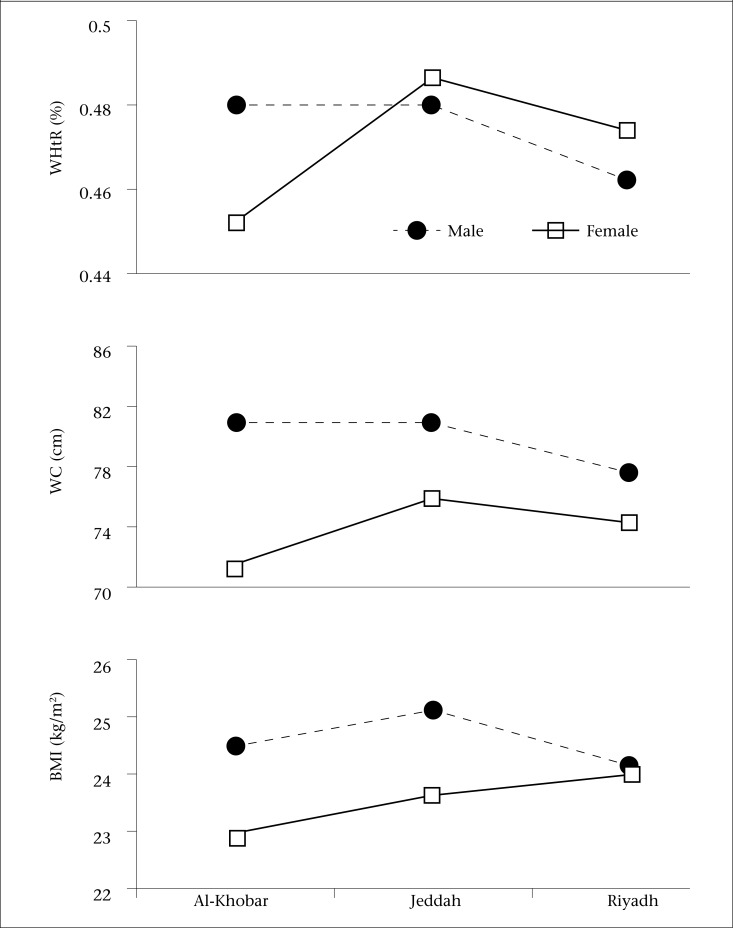
The nutrition transition with associated lifestyle-related non-communicable diseases has rapidly reached many developing countries, including Saudi Arabia. Therefore, the objective of this study was to examine the prevalence of overweight, obesity, and abdominal obesity among Saudi adolescents. This school-based multicentre cross-sectional study was conducted during 2009-2010 in three major cities in Saudi Arabia: Al-Khobar, Jeddah, and Riyadh. Participants included 2,908 students of secondary schools (1,401 males and 1,507 females) aged 14 to 19 years, randomly selected using a multistage stratified cluster-sampling technique. Weight, height, and waist-circumference were measured; prevalence of overweight and obes- ity was determined using age- and sex-specific BMI cutoff reference standards of the International Obesity Task Force (IOTF). Abdominal obesity was determined using waist-to-height ratio (WHtR) cutoffs (above 0.5). The prevalence of overweight was 19.5% in males and 20.8% in females while that of obesity was 24.1% in males and 14% in females. The prevalence of abdominal obesity in males and females was 35.9% and 30.3% respectively. Higher prevalence of obesity was observed among adolescents in private schools. Across all ages, overweight and obesity ranged from 39.9% to 45.6% in males and from 30.4% to 38.7% in females. ANCOVA, controlling for age, showed significant interaction effects (city by gender). It is concluded that the proportions of overweight, obesity, and abdominal obesity, observed among Saudi adolescents were remarkably high. Such high prevalence of overweight and obesity is a major public-health concern.
Figures
References
-
- Lobstein T, Baur L, Uauy R. IASO International Obesity TaskForce. Obesity in children and young people: a crisis in public health. Obes Rev. 2004;5(Suppl 1):4–104. - PubMed
-
- World Health Organization . Geneva: World Health Organization; 2000. Obesity: preventing and managing the global epidemic: report of WHO Consultation; p. 265. (Technical report series no. 894) - PubMed
-
- World Health Organization . Geneva: World Health Organization; 2004. Global strategy on diet, physical activity and health; pp. 38–55. (WHA57.17)
-
- Barlow SE. Expert Committee. Expert committee recommendations regarding the prevention, assessment, and treatment of child and adolescent overweight and obesity: summary report. Pediatrics. 2007;120(Suppl 4):S164–92. - PubMed
-
- Must A, Anderson SE. Effects of obesity on morbidity in children and adolescents. Nutr Clin Care. 2003;6:4–12. - PubMed
Publication types
MeSH terms
LinkOut - more resources
Full Text Sources
Medical