


Engineering T Cells to Functionally Cure HIV-1 Infection
- PMID: 25896251
- PMCID: PMC4817793
- DOI: 10.1038/mt.2015.70
Engineering T Cells to Functionally Cure HIV-1 Infection
Abstract
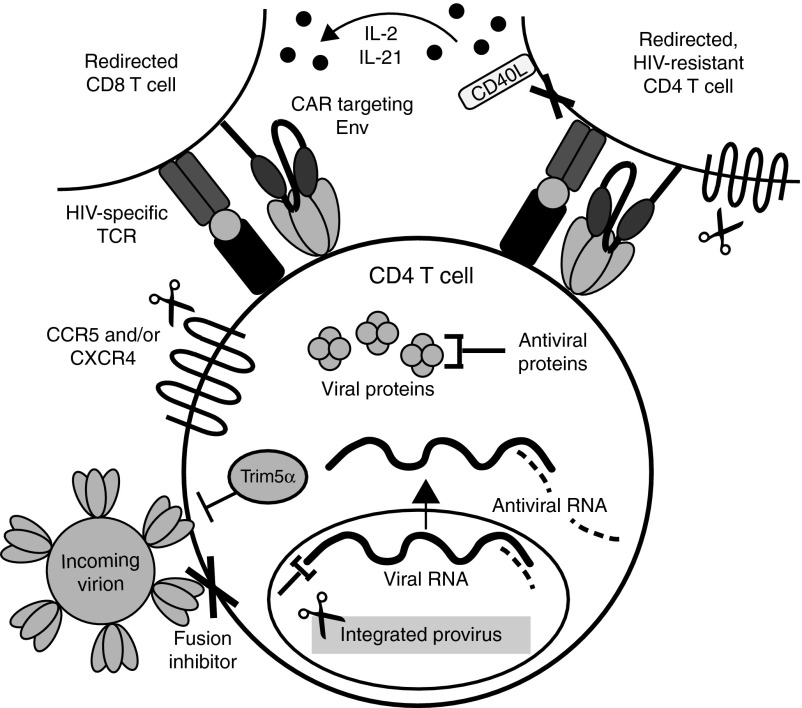
Despite the ability of antiretroviral therapy to minimize human immunodeficiency virus type 1 (HIV-1) replication and increase the duration and quality of patients' lives, the health consequences and financial burden associated with the lifelong treatment regimen render a permanent cure highly attractive. Although T cells play an important role in controlling virus replication, they are themselves targets of HIV-mediated destruction. Direct genetic manipulation of T cells for adoptive cellular therapies could facilitate a functional cure by generating HIV-1-resistant cells, redirecting HIV-1-specific immune responses, or a combination of the two strategies. In contrast to a vaccine approach, which relies on the production and priming of HIV-1-specific lymphocytes within a patient's own body, adoptive T-cell therapy provides an opportunity to customize the therapeutic T cells prior to administration. However, at present, it is unclear how to best engineer T cells so that sustained control over HIV-1 replication can be achieved in the absence of antiretrovirals. This review focuses on T-cell gene-engineering and gene-editing strategies that have been performed in efforts to inhibit HIV-1 replication and highlights the requirements for a successful gene therapy-mediated functional cure.
Figures
References
-
- Walker, BD, Chakrabarti, S, Moss, B, Paradis, TJ, Flynn, T, Durno, AG et al. (1987). HIV-specific cytotoxic T lymphocytes in seropositive individuals. Nature 328: 345–348. - PubMed
-
- Levine, BL, Bernstein, WB, Aronson, NE, Schlienger, K, Cotte, J, Perfetto, S et al. (2002). Adoptive transfer of costimulated CD4+ T cells induces expansion of peripheral T cells and decreased CCR5 expression in HIV infection. Nat Med 8: 47–53. - PubMed
-
- Koenig, S, Conley, AJ, Brewah, YA, Jones, GM, Leath, S, Boots, LJ et al. (1995). Transfer of HIV-1-specific cytotoxic T lymphocytes to an AIDS patient leads to selection for mutant HIV variants and subsequent disease progression. Nat Med 1: 330–336. - PubMed
Publication types
MeSH terms
Grants and funding
LinkOut - more resources
Full Text Sources
Other Literature Sources
Medical
