


Conceptualization and validation of an open-source closed-loop deep brain stimulation system in rat
- PMID: 25897892
- PMCID: PMC4404680
- DOI: 10.1038/srep09921
Conceptualization and validation of an open-source closed-loop deep brain stimulation system in rat
Erratum in
-
Erratum: Conceptualization and validation of an open-source closed-loop deep brain stimulation system in rat.Sci Rep. 2018 Mar 19;8:46954. doi: 10.1038/srep46954. Sci Rep. 2018. PMID: 29553141 Free PMC article.
Abstract
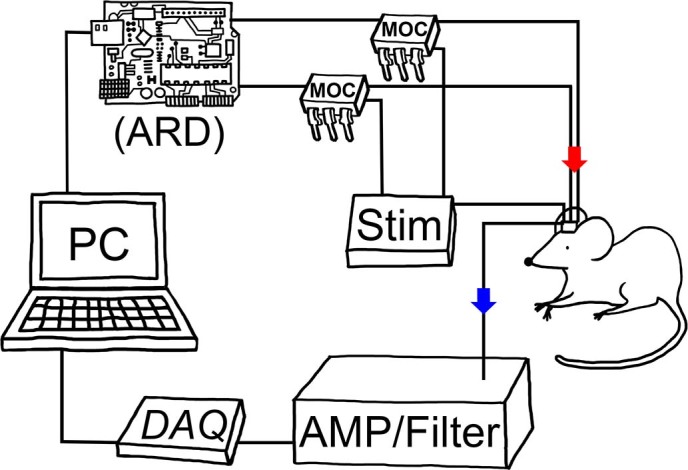
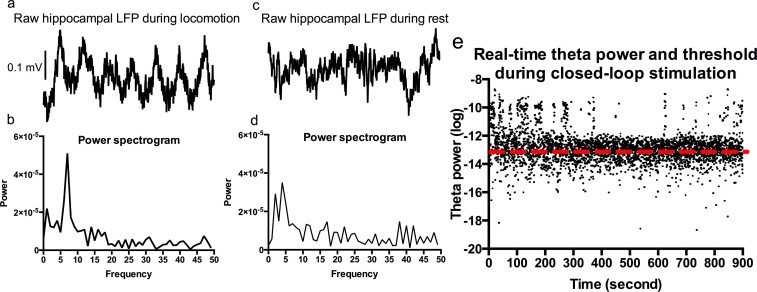
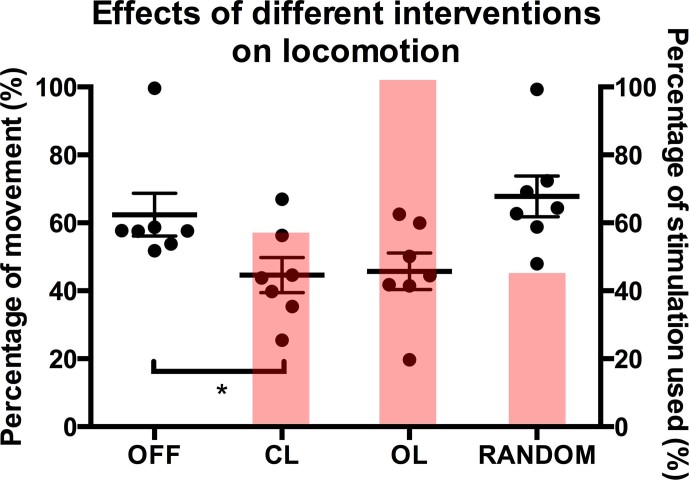
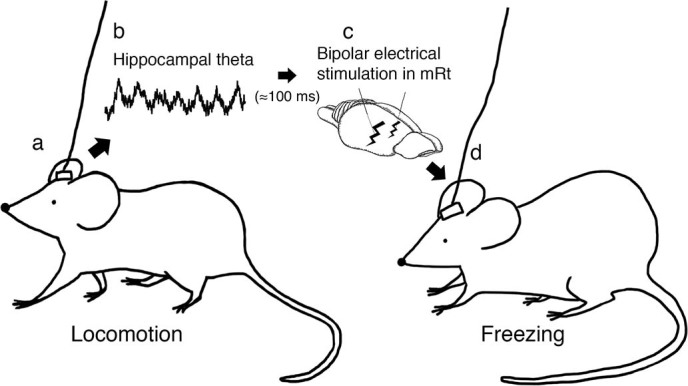
Conventional deep brain stimulation (DBS) applies constant electrical stimulation to specific brain regions to treat neurological disorders. Closed-loop DBS with real-time feedback is gaining attention in recent years, after proved more effective than conventional DBS in terms of pathological symptom control clinically. Here we demonstrate the conceptualization and validation of a closed-loop DBS system using open-source hardware. We used hippocampal theta oscillations as system input, and electrical stimulation in the mesencephalic reticular formation (mRt) as controller output. It is well documented that hippocampal theta oscillations are highly related to locomotion, while electrical stimulation in the mRt induces freezing. We used an Arduino open-source microcontroller between input and output sources. This allowed us to use hippocampal local field potentials (LFPs) to steer electrical stimulation in the mRt. Our results showed that closed-loop DBS significantly suppressed locomotion compared to no stimulation, and required on average only 56% of the stimulation used in open-loop DBS to reach similar effects. The main advantages of open-source hardware include wide selection and availability, high customizability, and affordability. Our open-source closed-loop DBS system is effective, and warrants further research using open-source hardware for closed-loop neuromodulation.
Conflict of interest statement
BN holds a chair ‘Neurosurgery for psychiatric disorders', a donation from Medtronic. BN received grants for travel, research and education from Medtronic. BN owns a patent on deep brain stimulation for obsessive-compulsive disorder. The other authors declare that they have no competing financial interests.
Figures
References
-
- Rosin B. et al. Closed-loop deep brain stimulation is superior in ameliorating parkinsonism. Neuron. 72, 370–84 (2011). - PubMed
-
- Kramis R., Vanderwolf C. H. & Bland B. H. Two types of hippocampal rhythmical slow activity in both the rabbit and the rat: relations to behavior and effects of atropine, diethyl ether, urethane, and pentobarbital. Exp. Neurol. 49, 58–85 (1975). - PubMed
-
- Robinson T. E. Electrical stimulation of the brain stem in freely moving rats: I. Effects on behavior. Physiol. Behav. 21, 223–31 (1978). - PubMed
Publication types
MeSH terms
LinkOut - more resources
Full Text Sources
Other Literature Sources
