


Causal factors for seismicity near Azle, Texas
- PMID: 25898170
- PMCID: PMC4410634
- DOI: 10.1038/ncomms7728
Causal factors for seismicity near Azle, Texas
Abstract
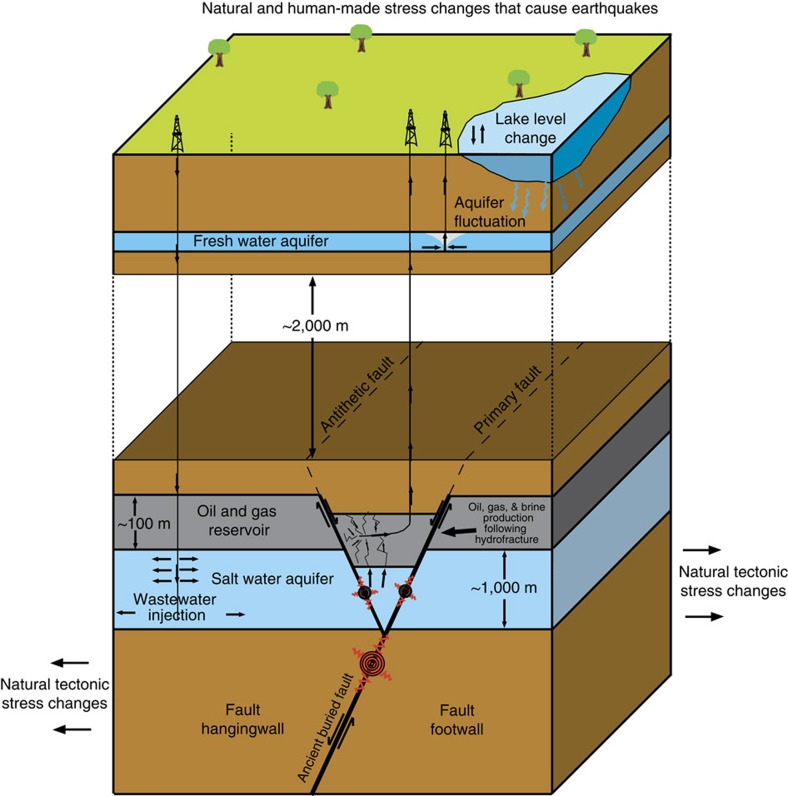
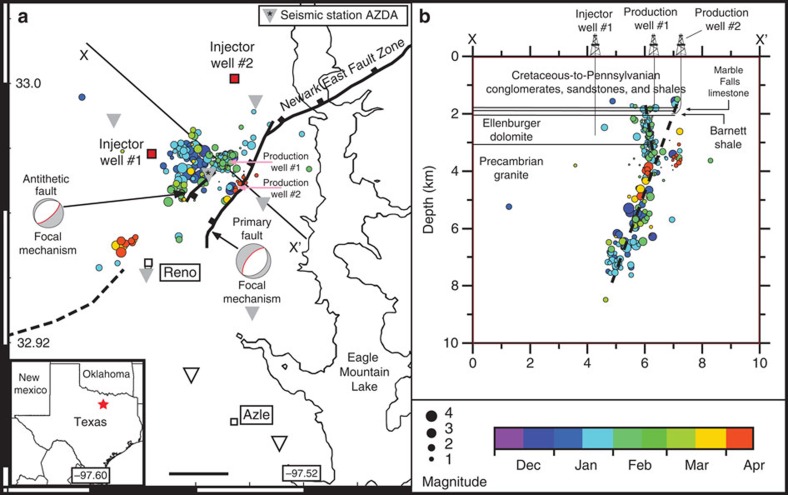
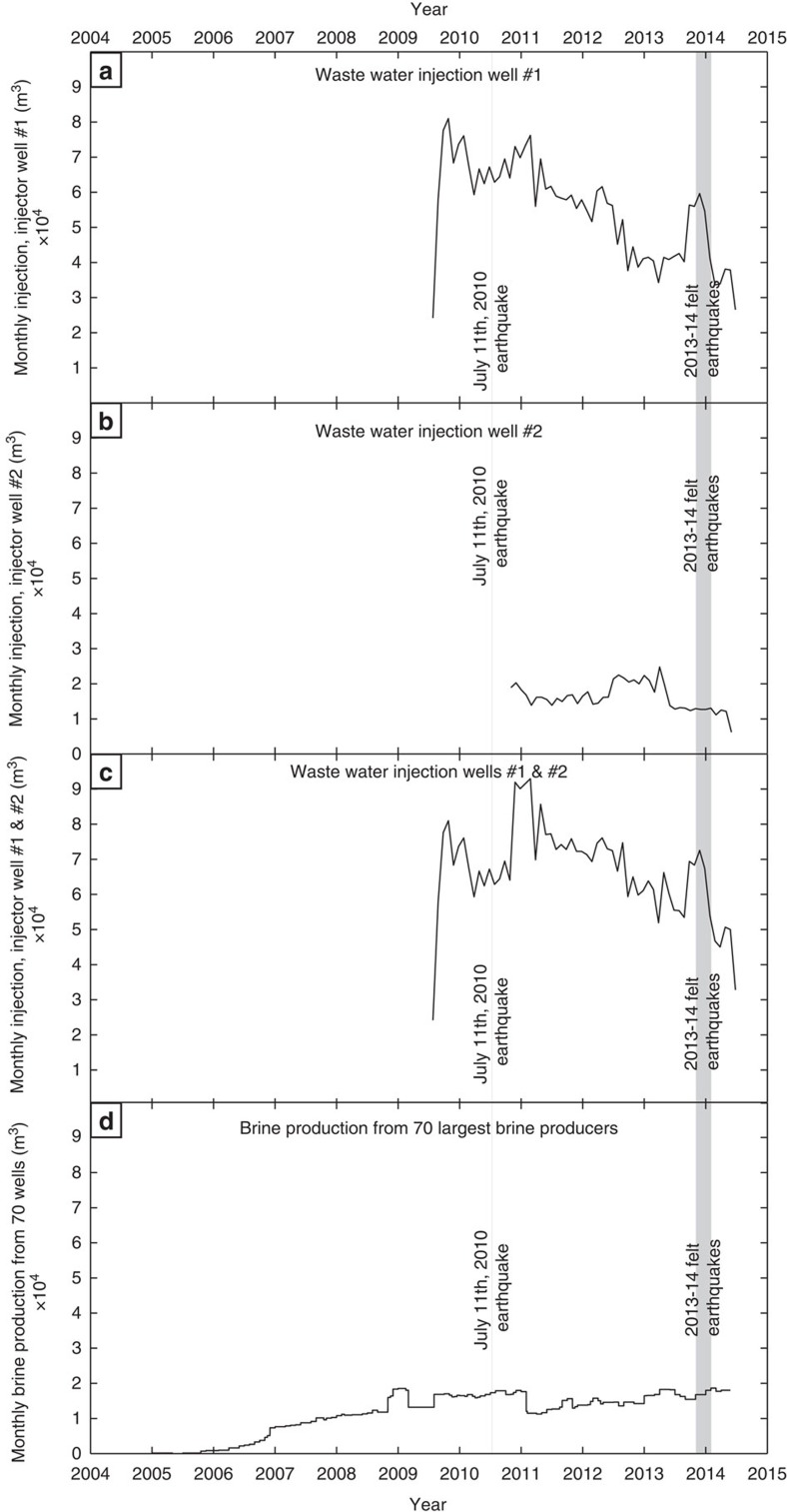
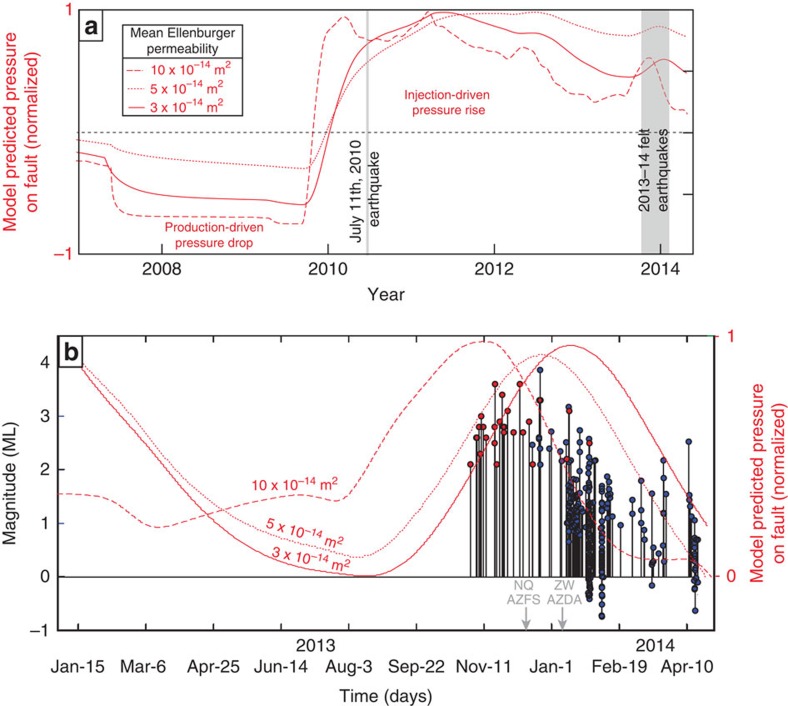
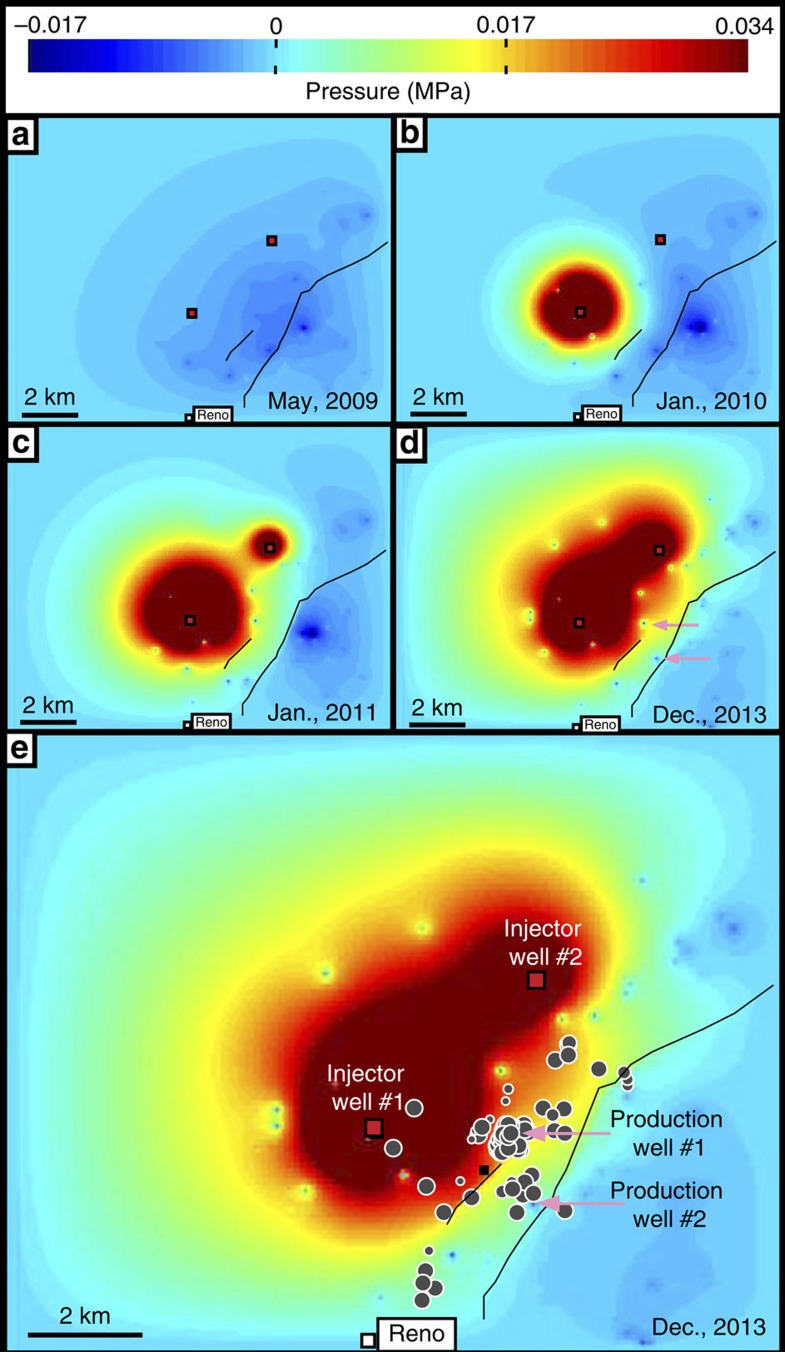
In November 2013, a series of earthquakes began along a mapped ancient fault system near Azle, Texas. Here we assess whether it is plausible that human activity caused these earthquakes. Analysis of both lake and groundwater variations near Azle shows that no significant stress changes were associated with the shallow water table before or during the earthquake sequence. In contrast, pore-pressure models demonstrate that a combination of brine production and wastewater injection near the fault generated subsurface pressures sufficient to induce earthquakes on near-critically stressed faults. On the basis of modelling results and the absence of historical earthquakes near Azle, brine production combined with wastewater disposal represent the most likely cause of recent seismicity near Azle. For assessing the earthquake cause, our research underscores the necessity of monitoring subsurface wastewater formation pressures and monitoring earthquakes having magnitudes of ∼M2 and greater. Currently, monitoring at these levels is not standard across Texas or the United States.
Figures
References
-
- Ellsworth W. L. Injection-induced earthquakes. Science 341, 1225942 (2013). - PubMed
-
- Carder D. S. Seismic investigations in the Boulder Dam area, 1940-1944, and the influence of reservoir loading on local earthquake activity. Bull. Seism. Soc. Am. 35, 175–192 (1945).
-
- Amos C. B. et al. Uplift and seismicity driven by groundwater depletion in central California. Nature 509, 483–486 (2014). - PubMed
-
- National Research Council. Induced Seismicity Potential in Energy Technologies National Academies Press (2013).
-
- Zoback M. L. & Zoback M. D. State of stress in the conterminous United States. J. Geophys. Res. 85, 6113–6156 (1980).
Publication types
LinkOut - more resources
Full Text Sources
Other Literature Sources
