


Cerebrospinal fluid biomarkers of neurovascular dysfunction in mild dementia and Alzheimer's disease
- PMID: 25899298
- PMCID: PMC4640280
- DOI: 10.1038/jcbfm.2015.76
Cerebrospinal fluid biomarkers of neurovascular dysfunction in mild dementia and Alzheimer's disease
Abstract
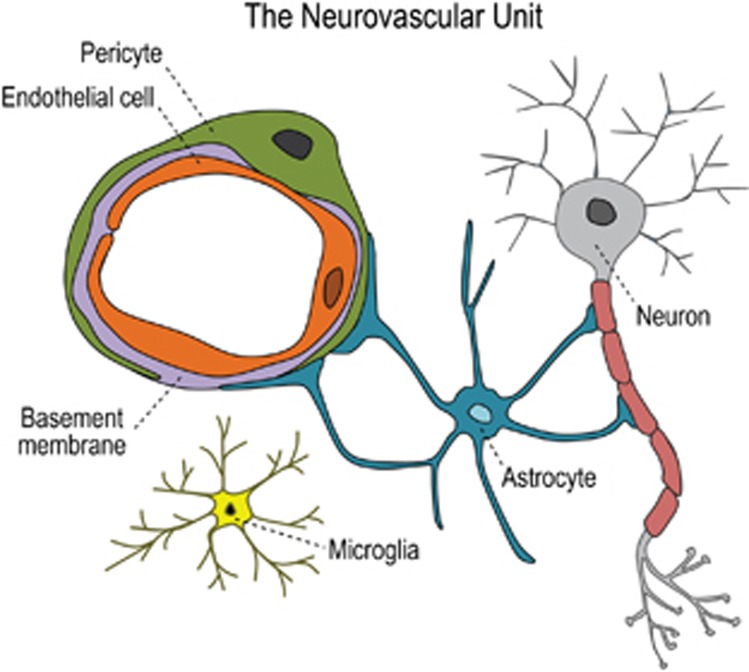
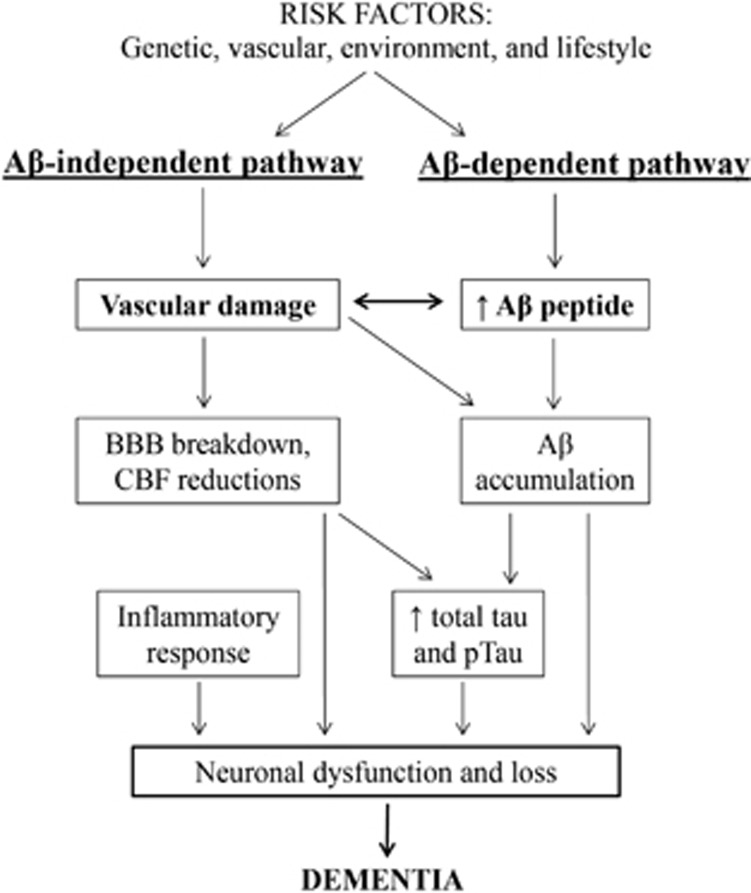
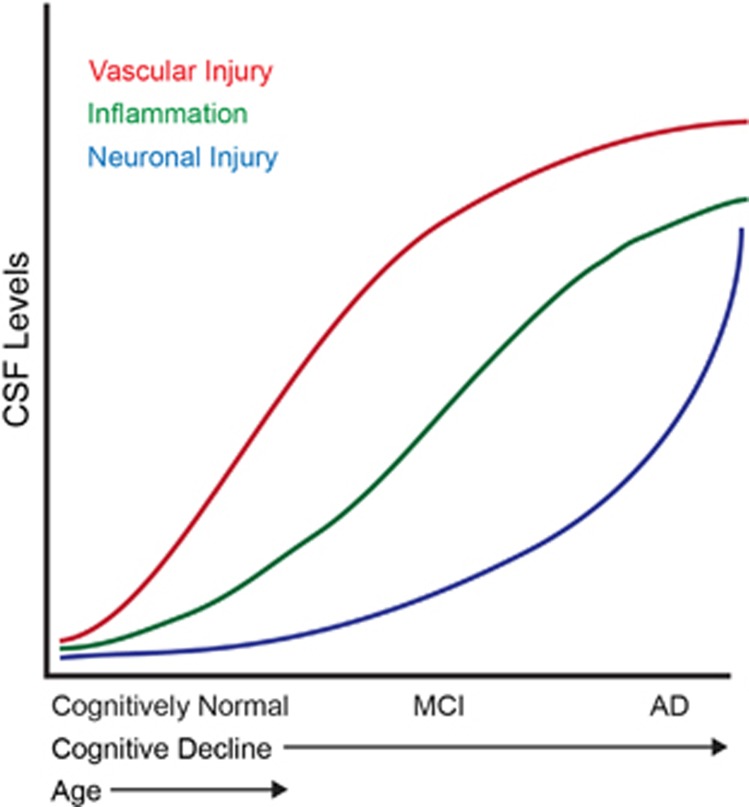
Alzheimer's disease (AD) is the most common form of age-related dementias. In addition to genetics, environment, and lifestyle, growing evidence supports vascular contributions to dementias including dementia because of AD. Alzheimer's disease affects multiple cell types within the neurovascular unit (NVU), including brain vascular cells (endothelial cells, pericytes, and vascular smooth muscle cells), glial cells (astrocytes and microglia), and neurons. Thus, identifying and integrating biomarkers of the NVU cell-specific responses and injury with established AD biomarkers, amyloid-β (Aβ) and tau, has a potential to contribute to better understanding of the disease process in dementias including AD. Here, we discuss the existing literature on cerebrospinal fluid biomarkers of the NVU cell-specific responses during early stages of dementia and AD. We suggest that the clinical usefulness of established AD biomarkers, Aβ and tau, could be further improved by developing an algorithm that will incorporate biomarkers of the NVU cell-specific responses and injury. Such biomarker algorithm could aid in early detection and intervention as well as identify novel treatment targets to delay disease onset, slow progression, and/or prevent AD.
Figures
References
-
- 1Prince M, Albanese E, Guerchet M, Prina M. World Alzheimer Report 2014: dementia and risk reduction: an analysis of protective and modifiable factors. Alzheimers Dis Int 2014, 1–99.
-
- 2Alzheimer's Association. 2014 Alzheimer's disease facts and figures. Alzheimers Dement 2014; 10: e47–e92. - PubMed
-
- 3Sano M, Dahlman K, Sewell M, Zhu CW. The economics of caring for individuals with Alzheimer's disease: caregiving for Alzheimer's Disease and related disorders. Springer: New York. 2013.
-
- 4Zlokovic BV. Neurovascular mechanisms of Alzheimer's neurodegeneration. Trends Neurosci 2005; 28: 202–208. - PubMed
-
- 5Zlokovic BV. The blood-brain barrier in health and chronic neurodegenerative disorders. Neuron 2008; 57: 178–201. - PubMed
Publication types
MeSH terms
Substances
Grants and funding
LinkOut - more resources
Full Text Sources
Other Literature Sources
Medical
