


Autism spectrum disorder and epilepsy: Disorders with a shared biology
- PMID: 25900226
- PMCID: PMC4475437
- DOI: 10.1016/j.yebeh.2015.03.017
Autism spectrum disorder and epilepsy: Disorders with a shared biology
Abstract
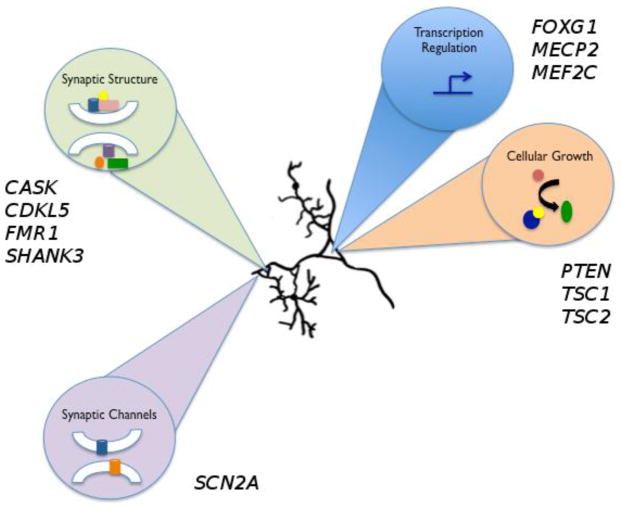
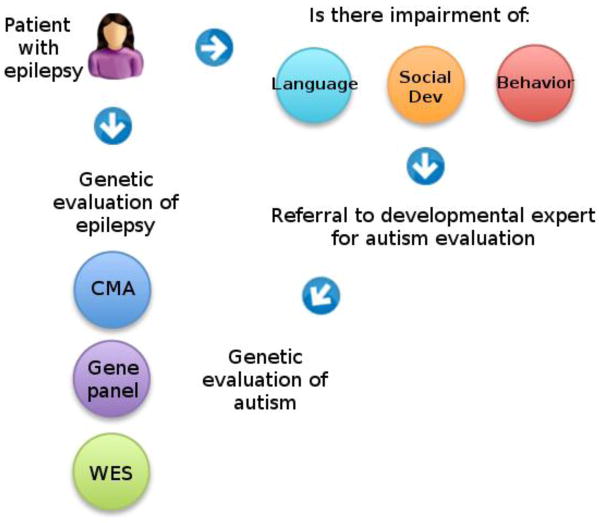
There is an increasing recognition of clinical overlap in patients presenting with epilepsy and autism spectrum disorder (ASD), and a great deal of new information regarding the genetic causes of both disorders is available. Several biological pathways appear to be involved in both disease processes, including gene transcription regulation, cellular growth, synaptic channel function, and maintenance of synaptic structure. We review several genetic disorders where ASD and epilepsy frequently co-occur, and we discuss the screening tools available for practicing neurologists and epileptologists to help determine which patients should be referred for formal ASD diagnostic evaluation. Finally, we make recommendations regarding the workflow of genetic diagnostic testing available for children with both ASD and epilepsy. This article is part of a Special Issue entitled "Autism and Epilepsy".
Keywords: Autism; Autism spectrum disorder; Epilepsy; Genetic testing.
Copyright © 2015 Elsevier Inc. All rights reserved.
Conflict of interest statement
The authors have no financial conflicts of interest to disclose.
Figures
References
-
- Salpekar JA, Mishra G. Key Issues in Addressing the Comorbidity of Attention Deficit Hyperactivity Disorder and Pediatric Epilepsy. Epilepsy Behav. 2014;37C:310–5. - PubMed
-
- Taft LT, Cohen HJ. Hypsarythmia and infantile autism: a clinical report. J Autism Child Schizophr. 1971;3:327–36. - PubMed
-
- Knobloch H, Pasamanick B. Some etiologic and prognostic factors in early infantile autism and psychosis. Pediatrics. 1975;2:182–91. - PubMed
-
- Deykin EY, MacMahon B. The incidence of seizures among children with autistic symptoms. Am J Psychiatry. 1979;10:1310–2. - PubMed
-
- Riikonen R, Amnell G. Psychiatric disorders in children with earlier infantile spasms. Dev Med Child Neurol. 1981;6:747–60. - PubMed
Publication types
MeSH terms
Grants and funding
LinkOut - more resources
Full Text Sources
Other Literature Sources
Medical
