Review
. 2015 Apr;8(2):410-9.
doi: 10.1161/CIRCGENETICS.114.000223.

Integrated metabolomics and genomics: systems approaches to biomarkers and mechanisms of cardiovascular disease

Affiliations
Review

Integrated metabolomics and genomics: systems approaches to biomarkers and mechanisms of cardiovascular disease

Svati H Shah et al. Circ Cardiovasc Genet. 2015 Apr.

Abstract

The genetic architecture underlying the heritability of cardiovascular disease is incompletely understood. Metabolomics is an emerging technology platform that has shown early success in identifying biomarkers and mechanisms of common chronic diseases. Integration of metabolomics, genetics, and other omics platforms in a systems biology approach holds potential for elucidating novel genetic markers and mechanisms for cardiovascular disease. We review important studies that have used metabolomic profiling in cardiometabolic diseases, approaches for integrating metabolomics with genetics and other molecular profiling platforms, and key studies showing the potential for such studies in deciphering cardiovascular disease genetics, biomarkers, and mechanisms.

Keywords: genomics; metabolism; metabolomics; risk factor.


Conflict of interest statement

Conflict of Interest Disclosures: Both authors hold a patent on a related finding. Dr. Newgard is a member of the Pfizer CVMED scientific advisory board.

Figures

Figure 1
Figure 1
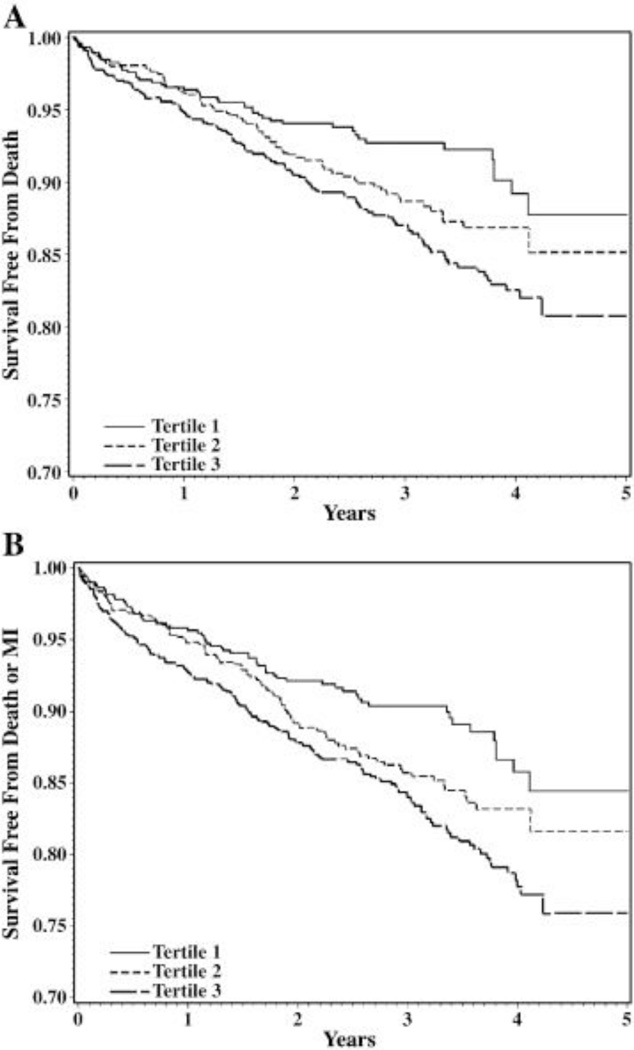
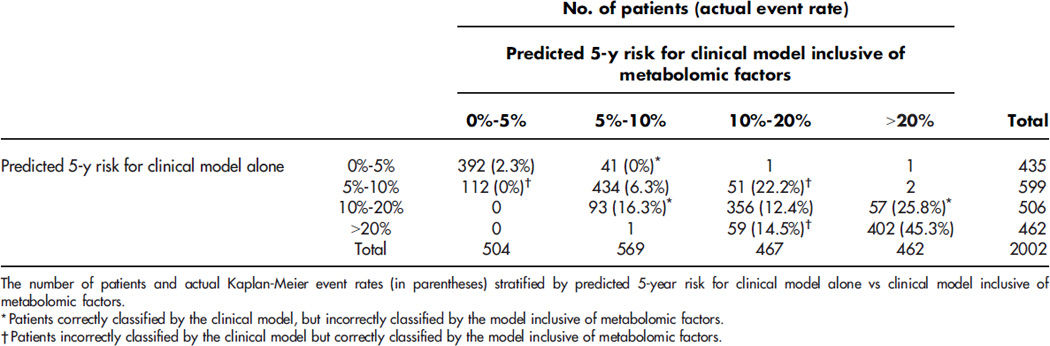
Short-chain dicarboxylacylcarnitine levels predict cardiovascular events. Unadjusted (a) and adjusted (b) Kaplan-Meier curves demonstrating increasing risk of death with higher baseline levels of SCDA metabolites; (c) risk reclassification analyses showing incremental risk prediction to 23 variable clinical model (net reclassification index [NRI] 8.8%). Reproduced with permission.
Figure 1
Figure 1
Short-chain dicarboxylacylcarnitine levels predict cardiovascular events. Unadjusted (a) and adjusted (b) Kaplan-Meier curves demonstrating increasing risk of death with higher baseline levels of SCDA metabolites; (c) risk reclassification analyses showing incremental risk prediction to 23 variable clinical model (net reclassification index [NRI] 8.8%). Reproduced with permission.
Figure 2
Figure 2
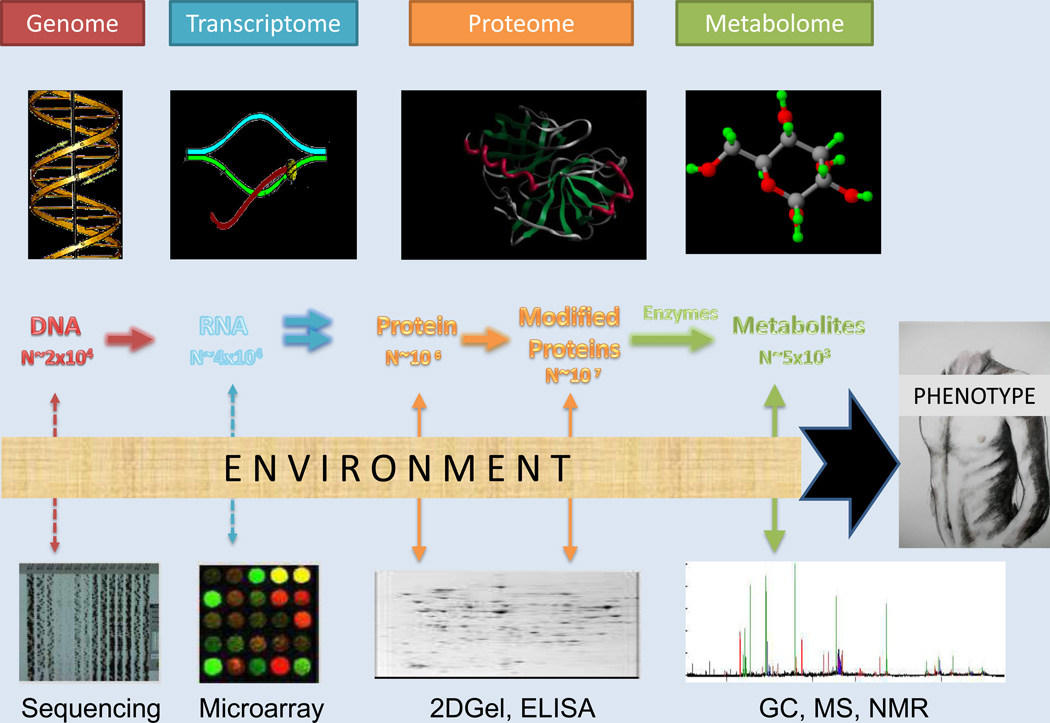
Visual representation of ‘omics technologies available for integrated analyses. Molecular changes reflected in these markers, in combination with environmental influences, result in the health or disease phenotype. Modified with permission.
Figure 3
Figure 3
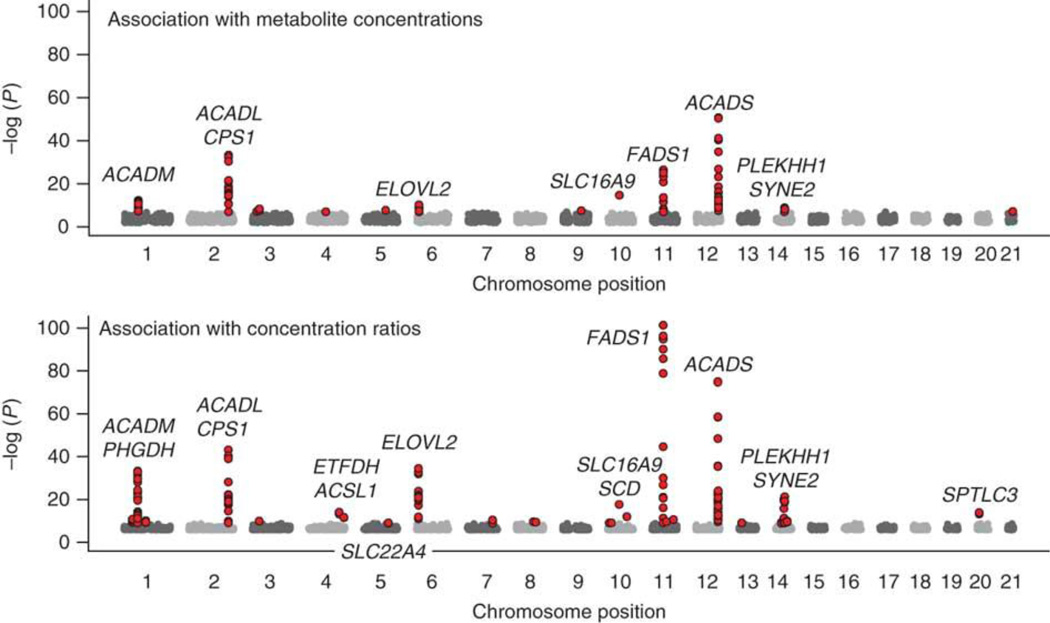
Manhattan plot of GWAS of metabolites from the KORA study. Displayed is the strength of association with metabolite concentrations (top; p<10−7 in red) and concentration ratios (bottom; p<10−9 in red). Reproduced with permission.
Figure 4
Figure 4
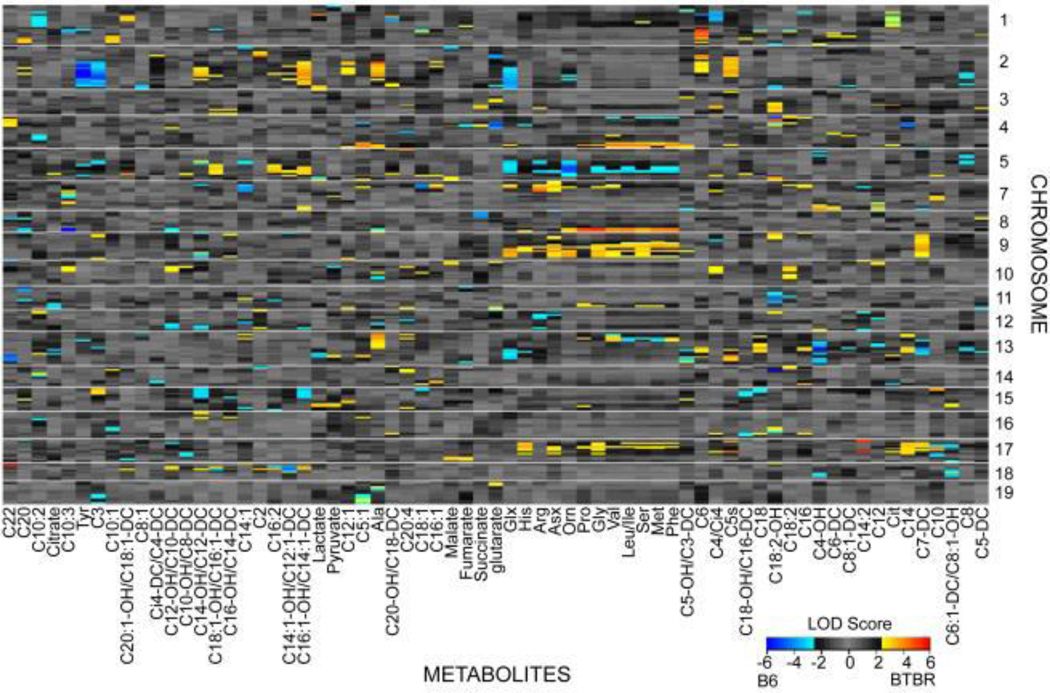
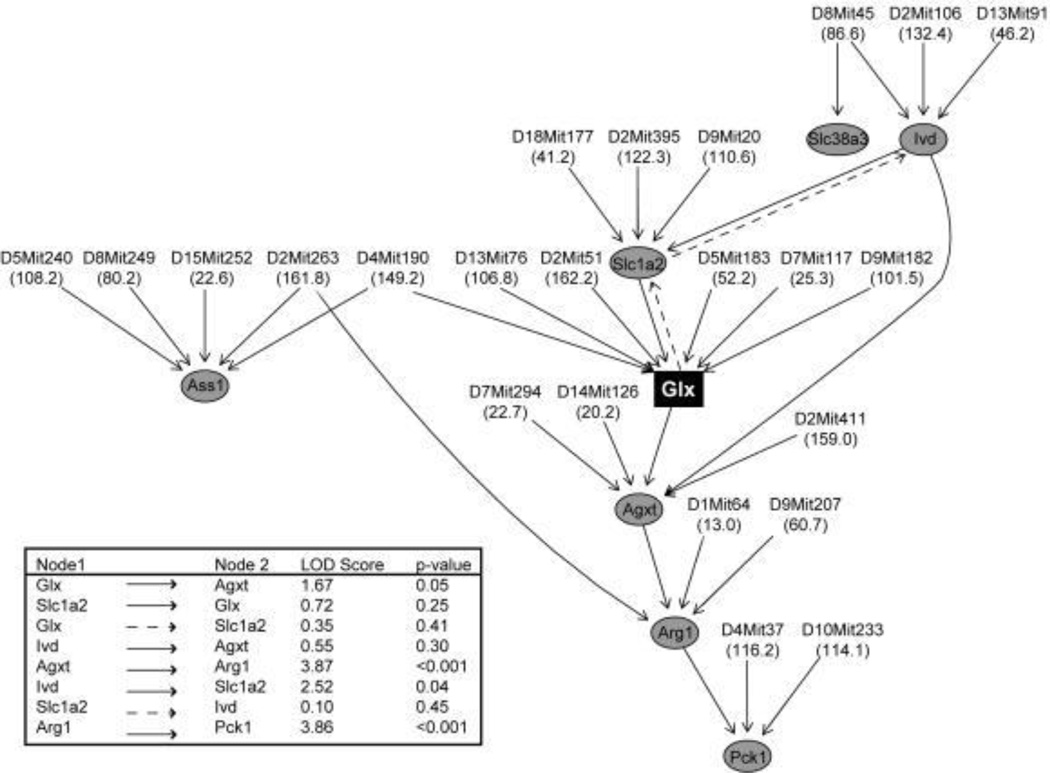
Genetic networks of liver metabolism revealed by integration of metabolic and transcriptional profiling. Results from a study of F2 intercross between diabetes-resistant C57BL/6 leptinob/ob and diabetes-susceptible BTBR leptinob/ob mouse strains: (a) metabolic quantitative trait loci (mQTL) mapping identifying genetic hotspots for metabolite regulation; and (b) causal network analysis links gene expression and metabolic changes in the context of glutamate metabolism. Reproduced with permission.
Figure 4
Figure 4
Genetic networks of liver metabolism revealed by integration of metabolic and transcriptional profiling. Results from a study of F2 intercross between diabetes-resistant C57BL/6 leptinob/ob and diabetes-susceptible BTBR leptinob/ob mouse strains: (a) metabolic quantitative trait loci (mQTL) mapping identifying genetic hotspots for metabolite regulation; and (b) causal network analysis links gene expression and metabolic changes in the context of glutamate metabolism. Reproduced with permission.

References

    1. Shah SH, Bain JR, Muehlbauer MJ, Stevens RD, Crosslin DR, Haynes C, et al. Association of a peripheral blood metabolic profile with coronary artery disease and risk of subsequent cardiovascular events. Circ Cardiovasc Genet. 2010;3:207–214. - PubMed
    1. Kitano H. Systems biology: A brief overview. Science. 2002;295:1662–1664. - PubMed
    1. Helgadottir A, Thorleifsson G, Manolescu A, Gretarsdottir S, Blondal T, Jonasdottir A, et al. A common variant on chromosome 9p21 affects the risk of myocardial infarction. Science. 2007;316:1491–1493. - PubMed
    1. Brindle JT, Antti H, Holmes E, Tranter G, Nicholson JK, Bethell HW, et al. Rapid and noninvasive diagnosis of the presence and severity of coronary heart disease using 1h–nmr-based metabonomics. Nat Med. 2002;8:1439–1444. - PubMed
    1. Kirschenlohr HL, Griffin JL, Clarke SC, Rhydwen R, Grace AA, Schofield PM, et al. Proton nmr analysis of plasma is a weak predictor of coronary artery disease. Nat Med. 2006;12:705–710. - PubMed

Publication types