


Association between Cardiorespiratory Fitness and Health-Related Quality of Life among Patients at Risk for Cardiovascular Disease in Uruguay
- PMID: 25901358
- PMCID: PMC4406735
- DOI: 10.1371/journal.pone.0123989
Association between Cardiorespiratory Fitness and Health-Related Quality of Life among Patients at Risk for Cardiovascular Disease in Uruguay
Abstract
Purpose: To examine the association between objectively measured CRF and physical and mental components of HRQoL in a Uruguayan cohort at risk for developing CVD.
Methods: Patient data records from 2002-2012 at the Calidad de Vida Center were examined. To assess CRF, participants performed a submaximal exercise test. During the evaluation, participants also completed the SF-36, a HRQoL measure comprised of eight dimensions that are summarized by physical and mental component scores (PCS and MCS, respectively). ANCOVA was used to examine the relationship between HRQoL dimensions and CRF. Logistic regression was then used to compare the odds of having a HRQoL component score above the norm across CRF. All analyses were performed separately for males and females with additional stratified analyses across age and BMI conducted among significant trends.
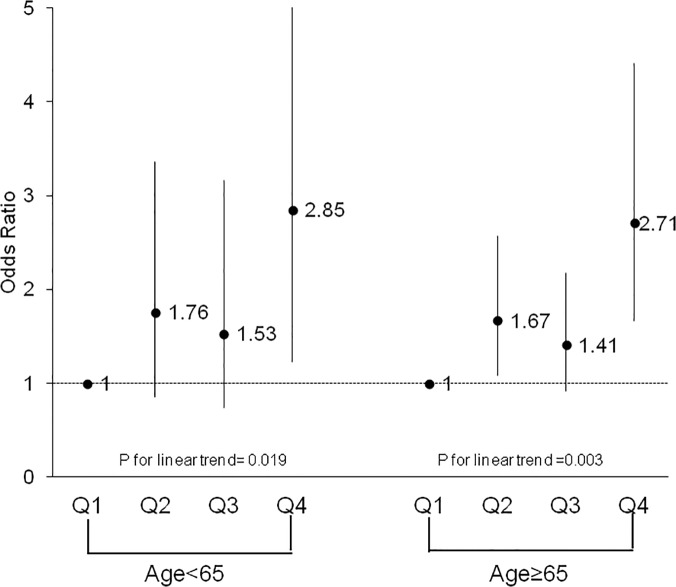
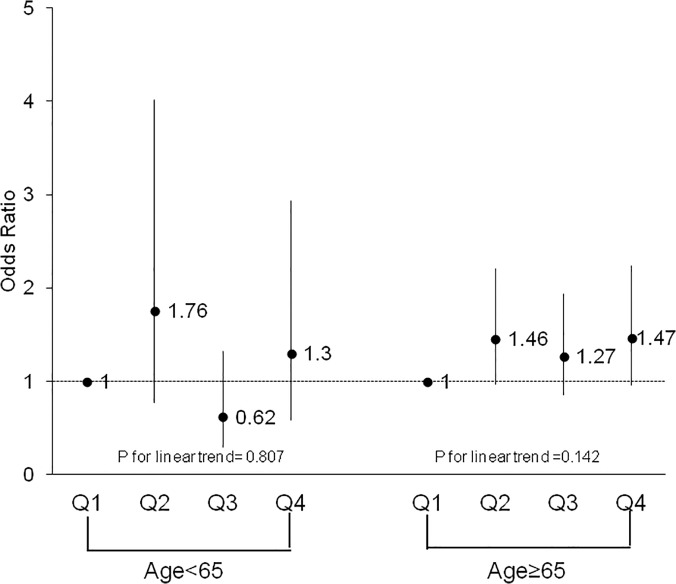
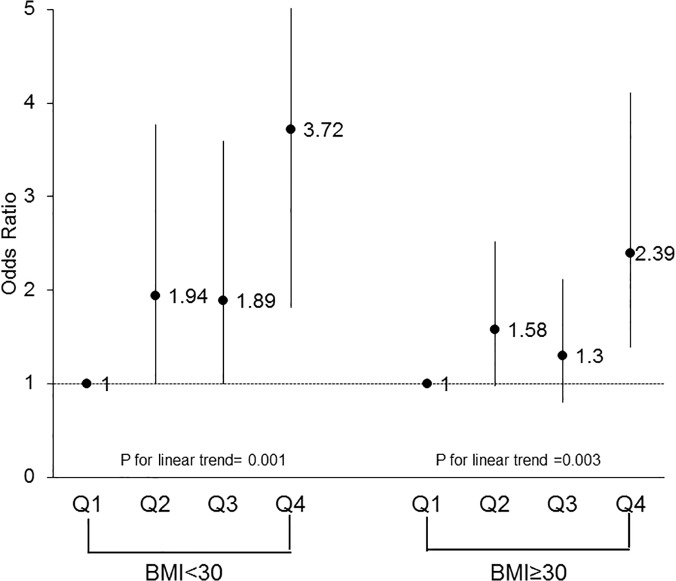
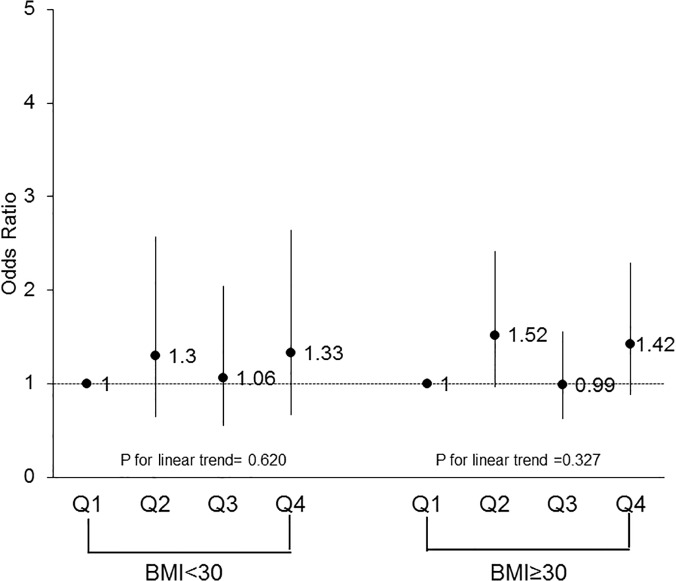
Results: A total of 2,302 subjects were included in the analysis. Among females, a significant relationship was observed between CRF and vitality, physical functioning, physical role, bodily pain, and general health dimensions. However, for males the only dimension found to be significantly associated with CRF was physical health. After adjusting for potential confounders, a significant linear trend (p<0.001) for PCS scores above the norm across CRF levels was observed for females only.
Conclusion: Among females with one or more risk factors for developing CVD, higher levels of CRF were positively associated with the vitality and physical dimensions of HRQoL, as well as the overall PCS. However, among males the only dimension associated with CRF was physical functioning. Future studies should examine this relationship among populations at risk for developing CVD in more detail and over time.
Conflict of interest statement
Figures
References
-
- Global Atlas on Cardiovascular Disease Prevention and Control. Mendis S, Puska P, Norrving B editors. World Health Organization, Geneva; 2011. pp. 1–164.
-
- Deaton C, Froelicher ES, Wu LH, Ho C, Shishani K, Jaarsma T. The global burden of cardiovascular disease. Eur J Cardiovasc Nurs. 2011;10(2 suppl):S5–S13. - PubMed
-
- O'Donovan G, Blazevich AJ, Boreham C, Cooper AR, Crank H, Ekelund U, et al. The ABC of physical activity for health: a consensus statement from the British Association of Sport and Exercise Sciences. J Sport Sci. 2010; 28: 573–591. - PubMed
-
- Blair SN. Physical inactivity: the biggest public health problem of the 21st century. Brit J Sport Med. 2009; 43: 1–2. - PubMed
-
- World Health Organization. Global helath risk: mortality and burden of disease attributable to selected major risk Geneva: World Health Organization; 2009; Available from: ttp://www.who.int/healthinfo/global_burden_disease/ GlobalHealthRisks_ report_full.pdf.
Publication types
MeSH terms
LinkOut - more resources
Full Text Sources
Other Literature Sources
Medical
