. 2015 May;7(5):394-402.
doi: 10.1038/nchem.2224. Epub 2015 Apr 6.

Chemical tagging and customizing of cellular chromatin states using ultrafast trans-splicing inteins

Affiliations

Chemical tagging and customizing of cellular chromatin states using ultrafast trans-splicing inteins

Yael David et al. Nat Chem. 2015 May.

Abstract

Post-translational modification of the histone proteins in chromatin plays a central role in the epigenetic control of DNA-templated processes in eukaryotic cells. Developing methods that enable the structure of histones to be manipulated is, therefore, essential to understand the biochemical mechanisms that underlie genomic regulation. Here we present a synthetic biology method to engineer histones that bear site-specific modifications on cellular chromatin using protein trans-splicing (PTS). We genetically fused the N-terminal fragment of ultrafast split intein to the C terminus of histone H2B, which, on reaction with a complementary synthetic C intein, generated labelled histone. Using this approach, we incorporated various non-native chemical modifications into chromatin in vivo with temporal control. Furthermore, the time and concentration dependence of PTS performed in nucleo enabled us to examine differences in the accessibility of the euchromatin and heterochromatin regions of the epigenome. Finally, we used PTS to semisynthesize a native histone modification, H2BK120 ubiquitination, in isolated nuclei and showed that this can trigger downstream epigenetic crosstalk of H3K79 methylation.


Conflict of interest statement

Competing financial interests

The authors declare no competing financial interests

Figures

Figure 1
Figure 1. Modification of native chromatin using protein trans-splicing
a) Schematic of the approach. A peptide containing the IntC sequence and the desired cargo (purple star) is conjugated to a cell penetrating peptide (CPP) via a disulfide bond and added to cultured live cells. (i) Cellular uptake of the CPP-conjugate via endocytosis. (ii) Endosomal lysis releases the peptide into the cytoplasm. (iii) Reduction of the disulfide bond in the cytosol yields a protein trans-splicing competent version of IntC. (iv) Passive diffusion of the IntC-cargo into the nucleus where it reacts with a histone fused to the complementary IntN fragment, which is embedded in native chromatin. b) Details of the protein constructs used in this study. IntN and IntC refer to the N- and C-terminal fragments of the Ava and Npu DnaE split inteins, respectively. The product as well as the experimental setting of each reaction is noted.
Figure 2
Figure 2. Modification of histone H2B in native chromatin
a) Western blot analysis of MNase-treated chromatin extracted from 293T cells, with or without H2B-IntN (1) overexpression, and subsequently incubated with 0.5 μM of construct 2, at 37°C, for the indicated times. b) Western blot analysis of cultured 293T cells expressing H2B-IntN (1) that were treated with different concentrations of construct 3 for the indicated times. c) Characterization of the in-cell splicing product by MS. The reaction was performed as in panel b, using 2.5 μM of construct 3 for two hours. Following cell lysis and DNA shearing, chromatin containing the splicing product, H2B-HA was enriched by ChIP against the HA tag. The isolated histones were then trypsinized and analyzed by high-resolution nano-UPLC/MS. Presented here is the CID MS/MS spectrum for one of the identified peptide products from the ligation reaction. Bottom, MS/MS of the [M+2H]2+ peptide FAEYcFNK (Cys is carbamidomethylated) shown with b- and y-ions indicated in red and blue, respectively. Top left, high resolution MS spectrum of the parent ion at m/z 539.73742. Top right, the peptide sequence is annotated to indicate the detected b- and y- ions. d) Fluorescence-labeling of native chromatin detected by confocal microscopy. Top: reaction scheme depicting the formation of TMR (pink star) labeled H2B from the PTS reaction between H2B-IntN (1) and IntC peptide (4) containing TMR, QSY quencher (purple crescent), and a cell penetrating peptide (CPP). Upon splicing, the TMR fluorophore is no longer quenched by QSY. Bottom: 293T cells expressing H2B-IntN (1) were incubated with 2.5 μM of quenched construct 4 for two hours and visualized by confocal microscopy. Representative images from non-transfected (left) and H2B-IntN transfected cells (right). Each panel is composed of a fluorescence image (left), bright field image (middle) and an overlay of both (right). Scale bar corresponds to a size of 10 μm. See supplementary figure 15 for more images.
Figure 3
Figure 3. Protein trans-splicing as a function of chromatin state
a) Schematic of in nucleo procedure for assessing chromatin accessibility using PTS. (b–d) ChIP-qPCR analysis of the in nucleo protein trans-splicing reaction between 1 and 2 under the following set of conditions; 1 hour reaction with 0.5 μM construct 2 (b), 5 minute reaction with 0.5 μM construct 2 (c) and, 5 minute reaction with 0.05 μM construct 2 (d). All reactions were conducted at 37 °C as described under material and methods. The input signal for each gene was normalized to Rhob. e) Same as panel d only using nuclei isolated from 293T cells synchronized with nocodazole. (error bars, s.e.m. *P value ≤ 0.05, n.s. = not significant). Three independent experiments were performed for each condition. Note that labeling of the heterochromatin and euchromatin genomic loci occurs to a similar degree when high concentration (0.5 μM) of the IntC peptide was used (b, c). When lower concentration of peptide was used (0.05 μM), a difference in labeling of these regions was observed (d). Synchronizing the cells into M-phase, where chromatin is in a more compact state, prevents the differential labeling of these regions (e).
Figure 4
Figure 4. Synthesis of IntC-H2B-K120Ub (construct 6)
a) Semi-synthesis of 6 using expressed protein ligation. A synthetic peptide corresponding to the NpuC intein sequence (green) and the histone H2B C-terminal tail residues 117–125 (blue) was assembled using Fmoc-SPPS. This peptide underwent (i) alloc deprotection with Pd(PPh3)4 followed by (ii) coupling of Fmoc-Cys(Trt)-OH to the newly exposed Lys side chain and (iii) peptide cleavage with TFA. (iv) Chemical ligation of an N-terminally HA-tagged ubiquitin α-thioester. (v) Radical-based desulfurization followed by Acm deprotection with mercury (II) acetate. b) Characterization of purified 6 by RP-HPLC (left) and ESI-MS (right).
Figure 5
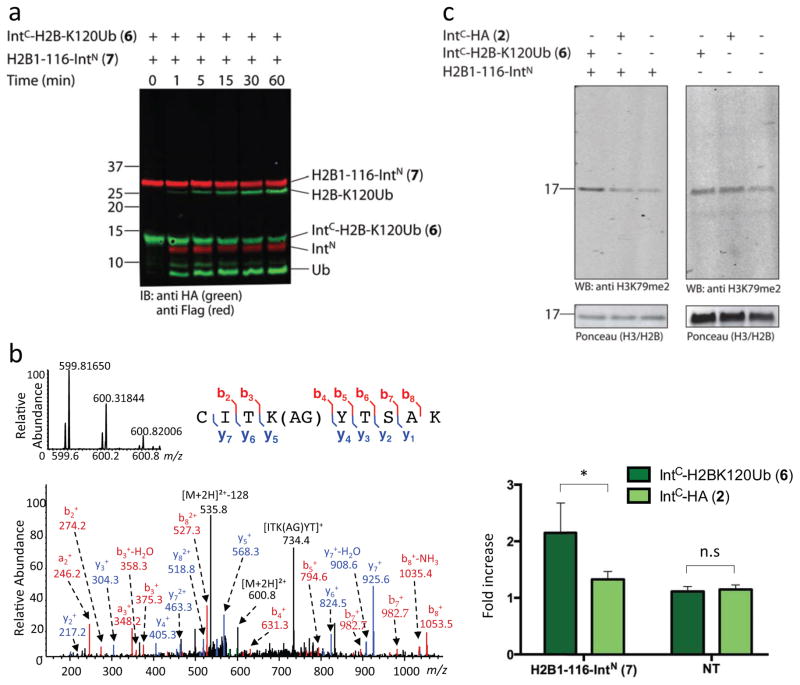
Figure 5. In nucleo semi-synthesis of H2B-K120Ub and its effect on H3K79 methylation
a) Nuclei isolated from 293T cells expressing H2B1-116-IntN (construct 7) were incubated with 1 μM of construct 6, at 37 °C, for the indicated times and then analyzed by western blot with the indicated antibodies. Note, that the ubiquitin within construct 6 contains an HA epitope tag at its N-terminus. In addition to the product of the splicing product, H2B-K120Ub, we also see the generation free HA-tagged ubiquitin presumably generated by de-ubiquitination of the reactant 6 or the PTS product (see Supplemental Fig. 25). b) Characterization of the splicing product, H2B-K120Ub, by MS. Reaction was performed as in a, using 1 μM of construct 6 for 1 hour at 37°C. Chromatin fraction containing the slicing product was enriched and analyzed as in Fig. 2c. Shown is the MS/MS spectrum from the tryptic peptide ion corresponding to the branched peptide from the splice junction. Bottom, MS/MS of the [M+2H]2+ peptide CITK(AG)YTSAK shown with b- and y-ions indicated in red and blue, respectively. Top left, high resolution MS spectrum of the parent ion at m/z 599.81650. Top right, the peptide sequence is annotated to indicate the detected b- and y- ions. The major peak showing neutral loss of Δ128 Da corresponds to the gas-phase loss of Ala-Gly from the lysine side chain. c) Reactions performed on isolated nuclei from non-transfected cells or cells overexpressing H2B1-116-IntN (7) as in a in the presence of SAM. Reactions were quenched after 30 minutes and analyzed by western blot using anti-H3K79me2 (top panel). Membranes were stained with ponceau to account for sample loading. Bottom panel: H3K79me2 signal was quantified by densitometry as fold change relative to the negative control (no peptide, lane 3 of each blot) after normalizing for loading (error bars, s.e.m.;. *P value ≤ 0.05, n.s. = not significant). Three independent experiments were performed for each bar (see Supplemental Fig. 26).

Comment in

References

    1. Badeaux AI, Shi Y. Emerging roles for chromatin as a signal integration and storage platform. Nature reviews. Molecular cell biology. 2013;14:211–224. - PMC - PubMed
    1. Dawson MA, Kouzarides T. Cancer epigenetics: from mechanism to therapy. Cell. 2012;150:12–27. doi: 10.1016/j.cell.2012.06.013. - DOI - PubMed
    1. Sturm D, et al. Paediatric and adult glioblastoma: multiform (epi)genomic culprits emerge. Nature reviews. Cancer. 2014;14:92–107. doi: 10.1038/nrc3655. - DOI - PMC - PubMed
    1. Rodriguez-Paredes M, Esteller M. Cancer epigenetics reaches mainstream oncology. Nature medicine. 2011;17:330–339. doi: 10.1038/nm.2305. - DOI - PubMed
    1. An integrated encyclopedia of DNA elements in the human genome. Nature. 2012;489:57–74. doi: 10.1038/nature11247. - DOI - PMC - PubMed

Publication types