


Genome-wide Pathway Analysis Using Gene Expression Data of Colonic Mucosa in Patients with Inflammatory Bowel Disease
- PMID: 25901971
- PMCID: PMC4450908
- DOI: 10.1097/MIB.0000000000000370
Genome-wide Pathway Analysis Using Gene Expression Data of Colonic Mucosa in Patients with Inflammatory Bowel Disease
Abstract
Background: Ulcerative colitis (UC) and Crohn's disease (CD) share some pathogenetic features. To provide new steps on the role of altered gene expression, and the involvement of gene networks, in the pathogenesis of these diseases, we performed a genome-wide analysis in 15 patients with CD and 14 patients with UC by comparing the RNA from inflamed and noninflamed colonic mucosa.
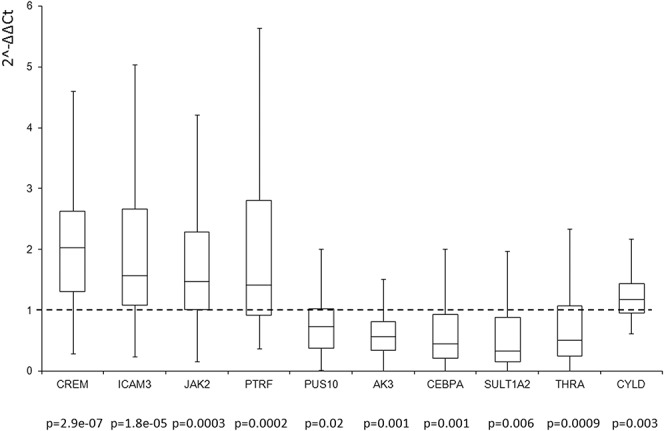
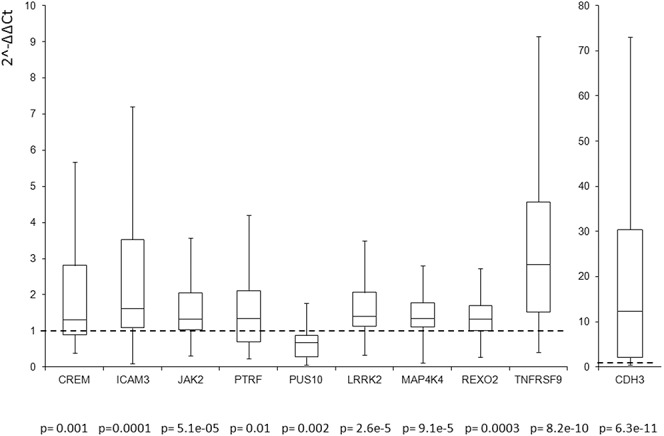
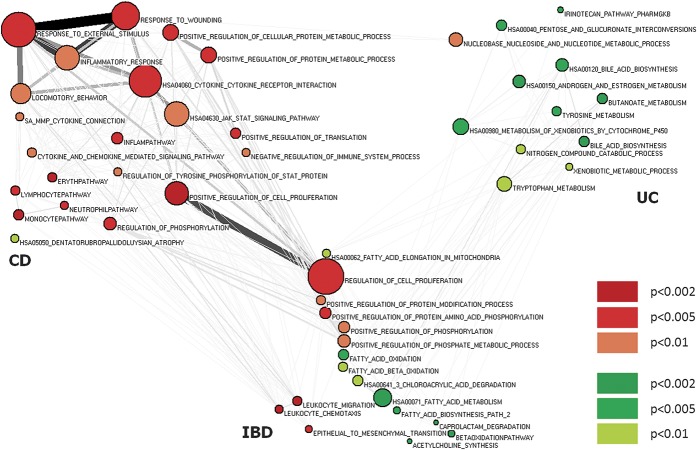
Methods: Two hundred ninety-eight differentially expressed genes in CD and 520 genes in UC were identified. By bioinformatic analyses, 34 pathways for CD, 6 of them enriched in noninflamed and 28 in inflamed tissues, and 19 pathways for UC, 17 in noninflamed and 2 in inflamed tissues, were also highlighted.
Results: In CD, the pathways included genes associated with cytokines and cytokine receptors connection, response to external stimuli, activation of cell proliferation or differentiation, cell migration, apoptosis, and immune regulation. In UC, the pathways were associated with genes related to metabolic and catabolic processes, biosynthesis and interconversion processes, leukocyte migration, regulation of cell proliferation, and epithelial-to-mesenchymal transition.
Conclusions: In UC, the pattern of inflammation of colonic mucosa is due to a complex interaction network between host, gut microbiome, and diet, suggesting that bacterial products or endogenous synthetic/catabolic molecules contribute to impairment of the immune response, to breakdown of epithelial barrier, and to enhance the inflammatory process. In patients with CD, genes encoding a large variety of proteins, growth factors, cytokines, chemokines, and adhesion molecules may lead to uncontrolled inflammation with ensuing destruction of epithelial cells, inappropriate stimulation of antimicrobial and T cells differentiation, and inflammasome events.
Conflict of interest statement
The authors have no conflicts of interest to disclose.
Figures
References
Publication types
MeSH terms
Substances
LinkOut - more resources
Full Text Sources
Molecular Biology Databases
