


Dysbiosis and Staphylococcus aureus Colonization Drives Inflammation in Atopic Dermatitis
- PMID: 25902485
- PMCID: PMC4407815
- DOI: 10.1016/j.immuni.2015.03.014
Dysbiosis and Staphylococcus aureus Colonization Drives Inflammation in Atopic Dermatitis
Abstract
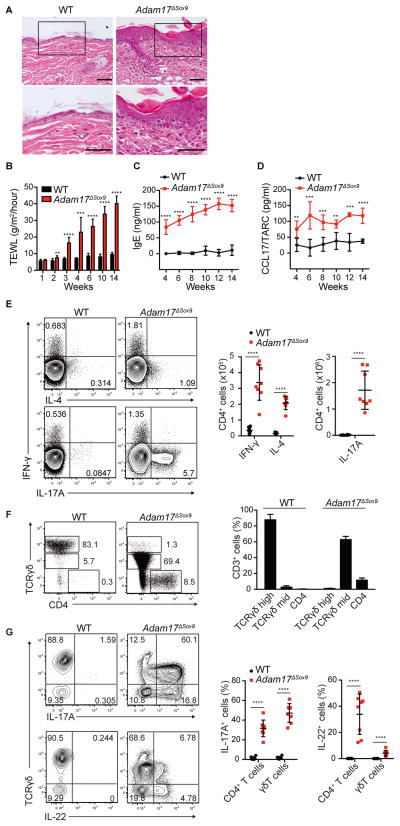
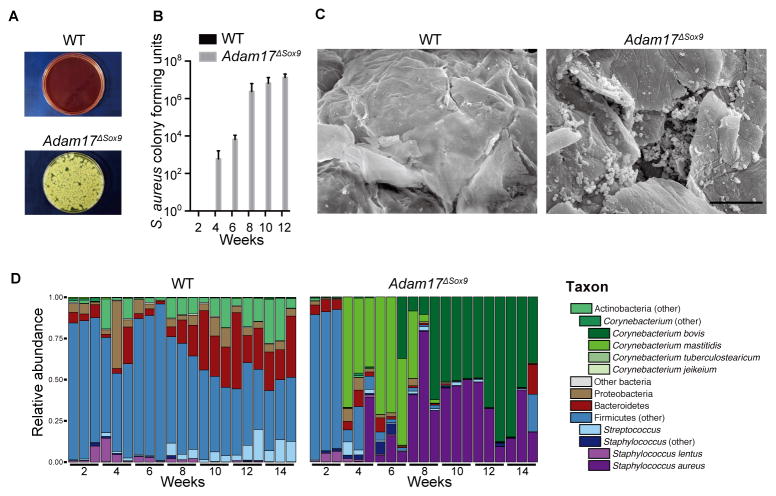
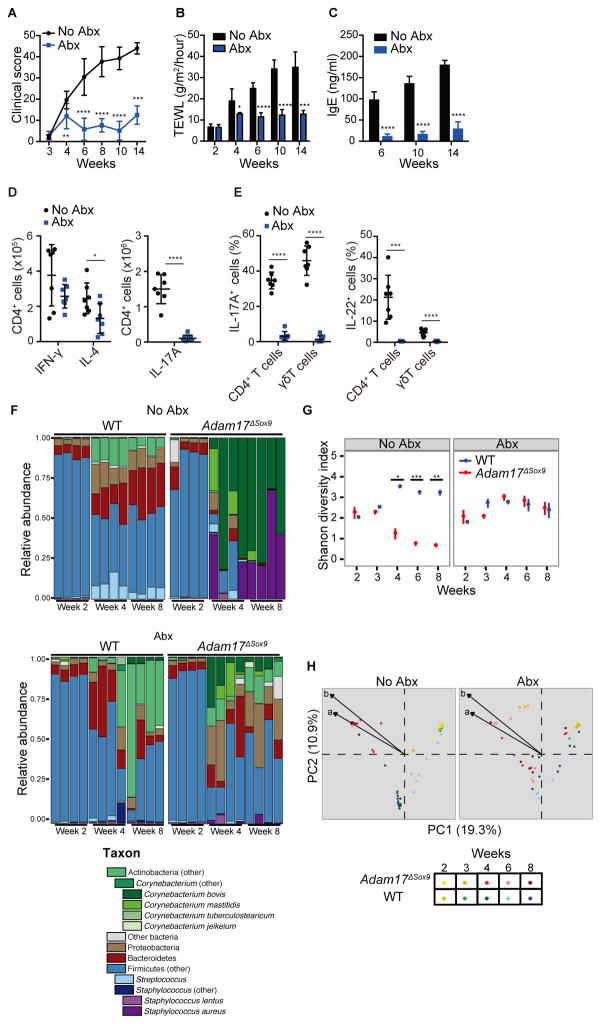
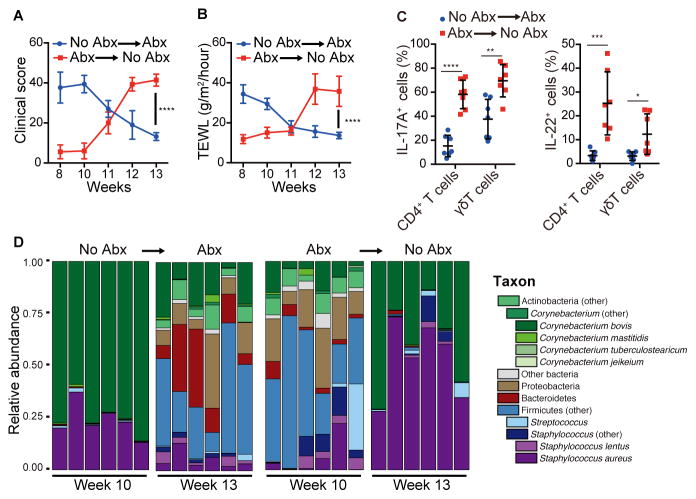
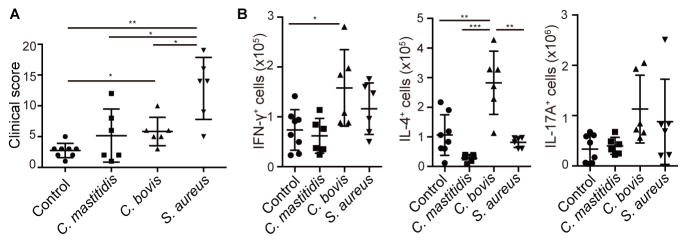
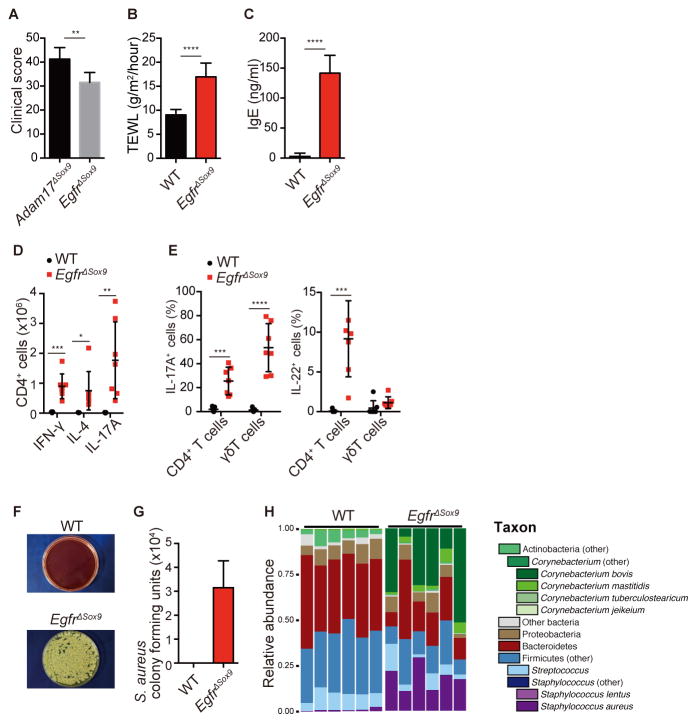
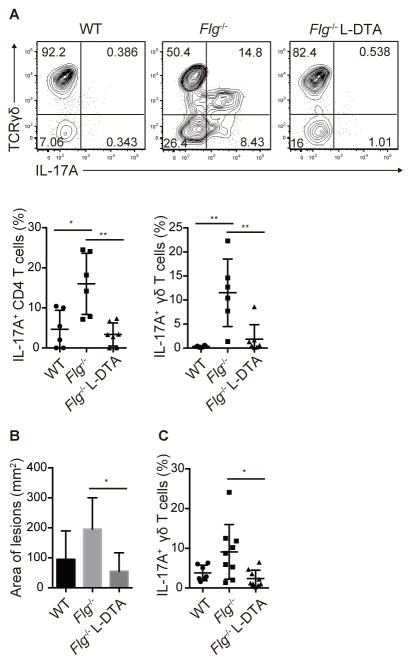
Staphylococcus aureus skin colonization is universal in atopic dermatitis and common in cancer patients treated with epidermal growth factor receptor inhibitors. However, the causal relationship of dysbiosis and eczema has yet to be clarified. Herein, we demonstrate that Adam17(fl/fl)Sox9-(Cre) mice, generated to model ADAM17-deficiency in human, developed eczematous dermatitis with naturally occurring dysbiosis, similar to that observed in atopic dermatitis. Corynebacterium mastitidis, S. aureus, and Corynebacterium bovis sequentially emerged during the onset of eczematous dermatitis, and antibiotics specific for these bacterial species almost completely reversed dysbiosis and eliminated skin inflammation. Whereas S. aureus prominently drove eczema formation, C. bovis induced robust T helper 2 cell responses. Langerhans cells were required for eliciting immune responses against S. aureus inoculation. These results characterize differential contributions of dysbiotic flora during eczema formation, and highlight the microbiota-host immunity axis as a possible target for future therapeutics in eczematous dermatitis.
Copyright © 2015 Elsevier Inc. All rights reserved.
Figures
References
-
- Bath-Hextall FJ, Birnie AJ, Ravenscroft JC, Williams HC. Interventions to reduce Staphylococcus aureus in the management of atopic eczema: an updated Cochrane review. Br J Dermatol. 2010;163:12–26. - PubMed
-
- Blaydon DC, Biancheri P, Di WL, Plagnol V, Cabral RM, Brooke MA, van Heel DA, Ruschendorf F, Toynbee M, Walne A, et al. Inflammatory skin and bowel disease linked to ADAM17 deletion. N Engl J Med. 2011;365:1502–1508. - PubMed
-
- Blobel CP. ADAMs: key components in EGFR signalling and development. Nat Rev Mol Cell Biol. 2005;6:32–43. - PubMed
-
- Chavanas S, Bodemer C, Rochat A, Hamel-Teillac D, Ali M, Irvine AD, Bonafe JL, Wilkinson J, Taieb A, Barrandon Y, et al. Mutations in SPINK5, encoding a serine protease inhibitor, cause Netherton syndrome. Nat Genet. 2000;25:141–142. - PubMed
-
- Chey WD, Wong BC. American College of Gastroenterology guideline on the management of Helicobacter pylori infection. Am J Gastroenterol. 2007;102:1808–1825. - PubMed
Publication types
MeSH terms
Substances
Associated data
Grants and funding
LinkOut - more resources
Full Text Sources
Other Literature Sources
Medical
Molecular Biology Databases
Research Materials
Miscellaneous
