Depressive Symptoms before and after Treatment of Obstructive Sleep Apnea in Men and Women
- PMID: 25902824
- PMCID: PMC4543247
- DOI: 10.5664/jcsm.5020
Depressive Symptoms before and after Treatment of Obstructive Sleep Apnea in Men and Women
Abstract
Study objectives: To determine prevalence of depressive symptoms in obstructive sleep apnea (OSA) and the impact of OSA treatment on depression scores.
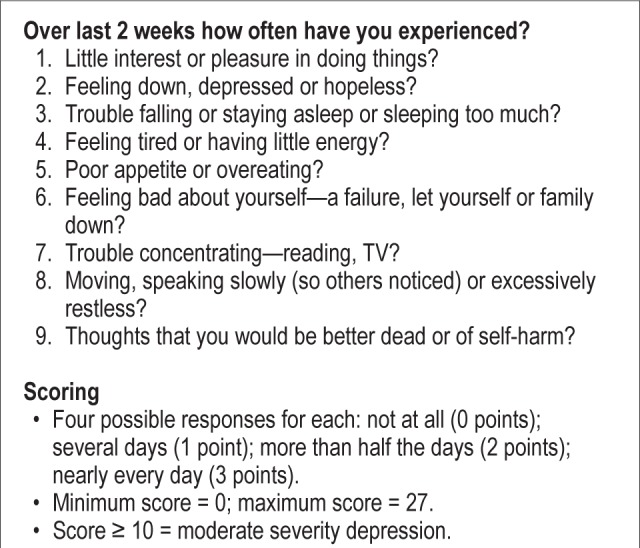
Methods: Consecutive new patients referred for investigation of suspected OSA were approached. Consenting patients completed a patient health questionnaire (PHQ-9) for depressive symptoms when attending for laboratory polysomnography. Those with moderate/severe (apneahypopnea index [AHI] ≥ 15 events/h) and/or symptomatic mild OSA (AHI 5-14.99 events/h) were offered continuous positive airway pressure (CPAP) therapy. PHQ-9 was repeated after 3 months of CPAP with compliance recorded. Of a maximum PHQ-9 score of 27, a cut point ≥ 10 (PHQ-9 ≥ 10) was used to indicate presence of clinically significant depressive symptoms.
Results: A total of 426 participants (243 males) were recruited. Mean ± standard deviation body mass index (BMI) was 32.1 ± 7.1 kg/m2 and AHI 33.6 ± 28.9 events/h. PHQ-9 was 10.5 ± 6.1 and independently related to AHI (p < 0.001) and BMI (p < 0.001). In those without OSA, PHQ-9 ≥ 10 was more common in women, but no gender difference was evident with OSA. Of 293 patients offered CPAP, 228 were compliant (mean nightly use > 5 h) over 3 months of therapy. In them, with therapy, AHI decreased from 46.7 ± 27.4 to 6.5 ± 1.6 events/h, PHQ-9 from 11.3 ± 6.1 to 3.7 ± 2.9 and PHQ-9 ≥ 10 from 74.6% to 3.9% (p < 0.001 in each case). Magnitude of change in PHQ-9 was similar in men and women. Antidepressant use was constant throughout.
Conclusions: Depressive symptoms are common in OSA and related to its severity. They improve markedly with CPAP, implying a relationship to untreated OSA.
Keywords: continuous positive airway pressure; depression; depressive symptoms; obstructive sleep apnea; patient health questionnaire.
© 2015 American Academy of Sleep Medicine.
Figures
References
-
- Kamphuis J, Meerlo P, Koolhaas JM, Lancel M. Poor sleep as a potential causal factor in aggression and violence. Sleep Med. 2012;13:327–34. - PubMed
-
- Mosko S, Zetin M, Glen S, et al. Self-reported depressive symptomatology, mood ratings, and treatment outcome in sleep disorders patients. J Clin Psychol. 1989;45:51–60. - PubMed
-
- Douglas N, Young A, Roebuck T, et al. Prevalence of depression in patients referred with snoring and obstructive sleep apnoea. Intern Med J. 2013;43:630–4. - PubMed
Publication types
MeSH terms
LinkOut - more resources
Full Text Sources
Other Literature Sources