


Cyclic vomiting presentations following marijuana liberalization in Colorado
- PMID: 25903855
- PMCID: PMC4469074
- DOI: 10.1111/acem.12655
Cyclic vomiting presentations following marijuana liberalization in Colorado
Abstract
Objectives: Case reports have described a syndrome of cyclic vomiting associated with chronic marijuana use, termed cannabinoid hyperemesis syndrome. The primary objective was to determine the prevalence of patients presenting with cyclic vomiting before and after the liberalization of medical marijuana in Colorado in 2009. The secondary objective was to describe the odds of marijuana use among cyclic vomiting visits in these same time periods.
Methods: This was a cross-sectional study of cyclic vomiting visits to the emergency department (ED) before and after marijuana liberalization. ED visits with International Classification of Diseases, ninth revision, coding for cyclic vomiting or that met diagnostic criteria for cyclic vomiting by the Rome III criteria were included.
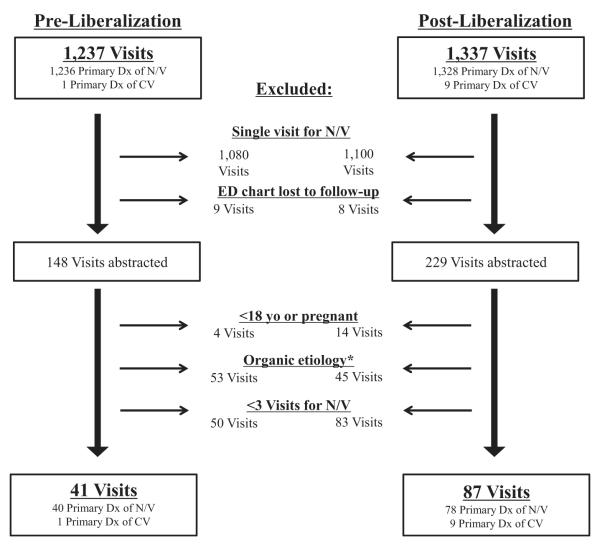
Results: The authors reviewed 2,574 visits and identified 36 patients diagnosed with cyclic vomiting over 128 visits. The prevalence of cyclic vomiting visits increased from 41 per 113,262 ED visits to 87 per 125,095 ED visits after marijuana liberalization, corresponding to a prevalence ratio of 1.92 (95% confidence interval [CI] = 1.33 to 2.79). Patients with cyclic vomiting in the postliberalization period were more likely to have marijuana use documented than patients in the preliberalization period (odds ratio = 3.59, 95% CI = 1.44 to 9.00).
Conclusions: The prevalence of cyclic vomiting presentations nearly doubled after the liberalization of medical marijuana. Patients presenting with cyclic vomiting in the postliberalization period were more likely to endorse marijuana use, although it is unclear whether this was secondary to increased marijuana use, more accurate marijuana reporting, or both.
© 2015 by the Society for Academic Emergency Medicine.
Figures
References
-
- Stout D, Moore S. U.S. Won’t Prosecute in States That Allow Medical Marijuana. The New York Times. 2009 Oct 19;
-
- Substance Abuse and Mental Health Services Administration . Results from the 2012 National Survey on Drug Use and Health: summary of national findings, NSDUH Series H-46, HHS Publication No. (SMA) 13-4795. SAMHSA; Rockville, MD: 2013.
-
- Donnino MW, Cocchi MN, Miller J, Fisher J. Cannabinoid hyperemesis: a case series. J Emerg Med. 2011;40:e63–6. - PubMed
Publication types
MeSH terms
Grants and funding
LinkOut - more resources
Full Text Sources
Other Literature Sources
Medical
Miscellaneous
