


Evaluation of voiding assays in mice: impact of genetic strains and sex
- PMID: 25904700
- PMCID: PMC4469884
- DOI: 10.1152/ajprenal.00072.2015
Evaluation of voiding assays in mice: impact of genetic strains and sex
Abstract
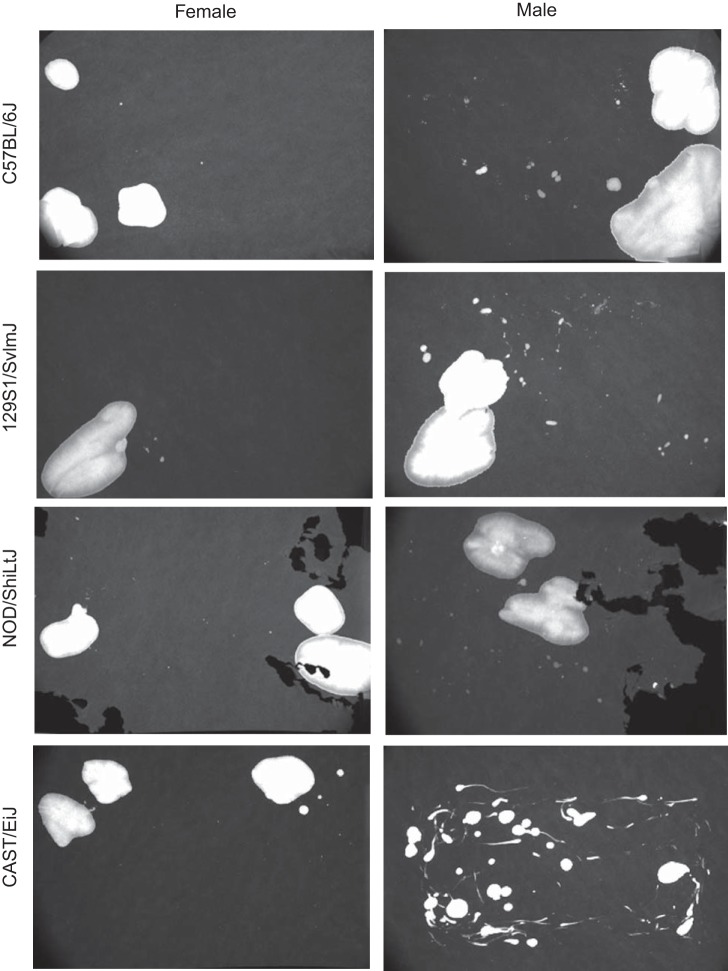
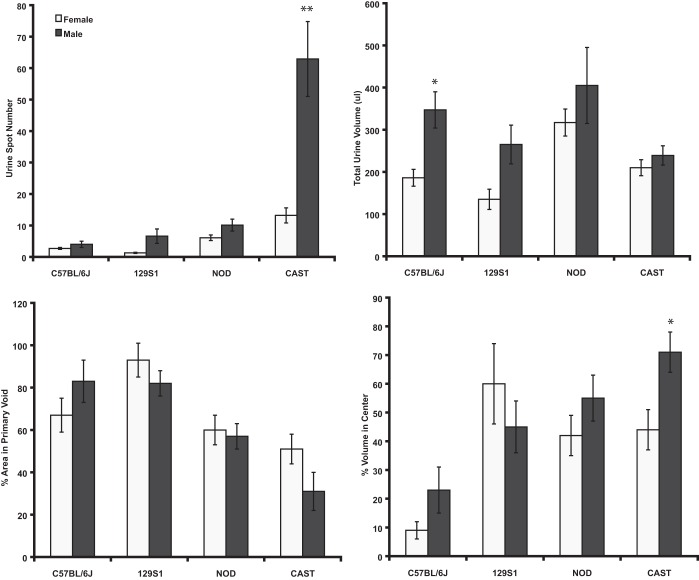
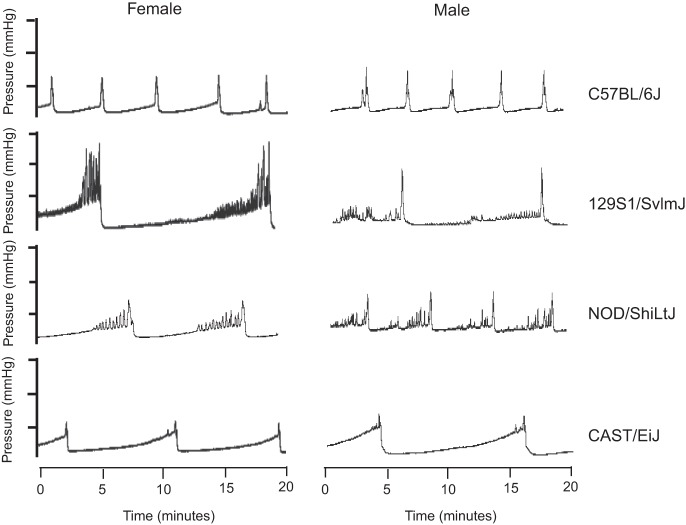
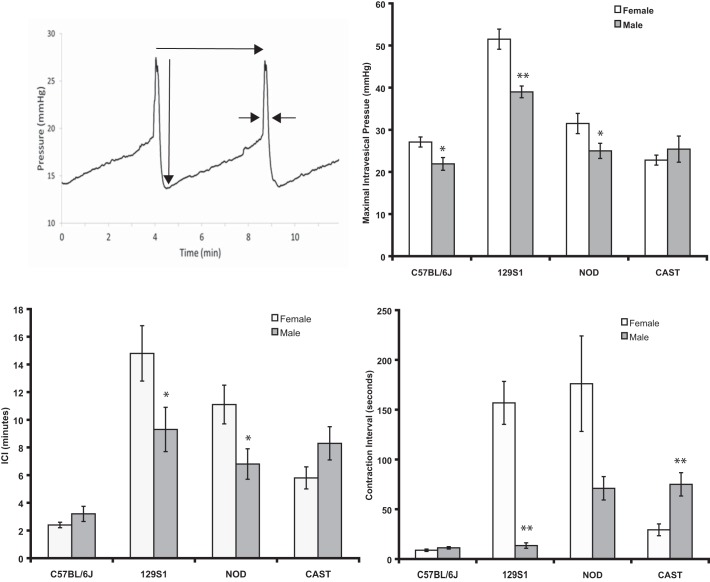
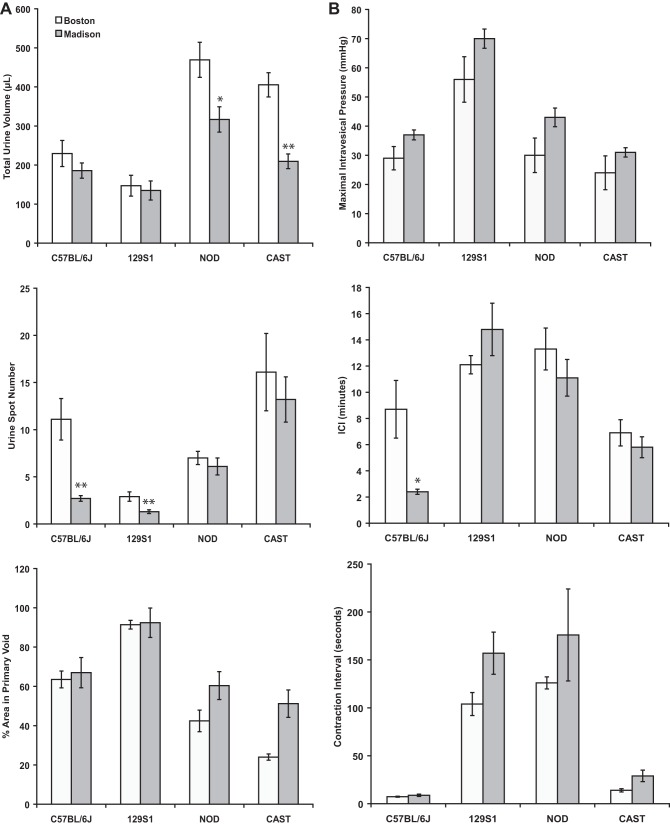
Void spot assays (VSA) and cystometry are two of the most common tests performed in mice to assess lower urinary tract function. Assay protocols and methodology vary greatly among laboratories, and little is known about reproducibility of results generated by different laboratories. We performed VSA in four mouse strains, comparing males with females and comparing results between two independent laboratories. Unique aspects of the current study include direct comparison of results of VSA performed in a similar manner in two locations and comparison of cystometry performed using two different rates of infusion in these two laboratories. Both assays were performed in male and female 129S1/SvImJ, C57BL/6J, NOD/ShiLtJ, and CAST/EiJ mice, and cystometry was performed under urethane anesthesia (10/group). Assays were performed and results analyzed as previously described. Results obtained in female mice were compared with previously reported values. Results of lower urinary tract function testing in mice vary in a consistent manner with strain and sex. Variables in husbandry, testing techniques, and analysis of results can significantly affect conclusions, particularly those obtained by cystometry. Although VSA results were remarkably similar between the two laboratories, consistent methods for performing lower urinary tract function testing in mice are required to compare results among studies with confidence.
Keywords: cystometry; genetic; mice; micturition; sex.
Copyright © 2015 the American Physiological Society.
Figures
Comment in
-
Continence and micturition: physiological mechanisms under behavioral control.Am J Physiol Renal Physiol. 2015 Jul 1;309(1):F33-4. doi: 10.1152/ajprenal.00193.2015. Epub 2015 May 13. Am J Physiol Renal Physiol. 2015. PMID: 25972511 No abstract available.
References
-
- Abrams P, Cardozo L, Fall M, Griffiths D, Rosier P, Ulmsten U, van Kerrebroeck P, Victor A, Wein A. The standardisation of terminology of lower urinary tract function: report from the Standardisation Sub-committee of the International Continence Society. Neurourol Urodyn 21: 167–178, 2002. - PubMed
-
- Andersson KE, Soler R, Füllhase C. Rodent models for urodynamic investigation. Neurourol Urodyn 30: 636–646, 2011. - PubMed
-
- Birder LA, Nakamura Y, Kiss S, Nealen ML, Barrick S, Kanai AJ, Wang E, Ruiz G, De Groat WC, Apodaca G, Watkins S, Caterina MJ. Altered urinary bladder function in mice lacking the vanilloid receptor TRPV1. Nat Neurosci 5: 856–860, 2002. - PubMed
-
- Brown ET, Krlin RM, Winters JC. Urodynamics: examining the current role of UDS testing. What is the role of urodynamic testing in light of recent AUA urodynamics and overactive bladder guidelines and the VALUE study? Curr Urol Rep 14: 403–408, 2013. - PubMed
Publication types
MeSH terms
Substances
Grants and funding
LinkOut - more resources
Full Text Sources
Other Literature Sources
Medical
Miscellaneous
