


Heart rate variability parameters and fetal movement complement fetal behavioral states detection via magnetography to monitor neurovegetative development
- PMID: 25904855
- PMCID: PMC4388008
- DOI: 10.3389/fnhum.2015.00147
Heart rate variability parameters and fetal movement complement fetal behavioral states detection via magnetography to monitor neurovegetative development
Abstract
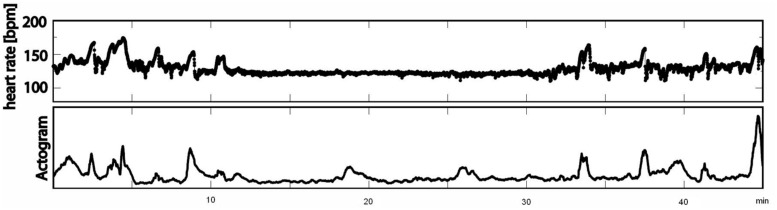
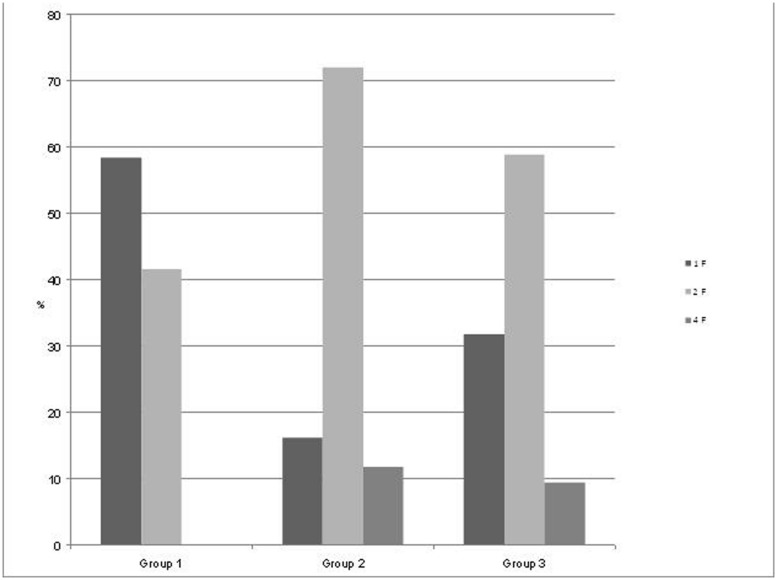
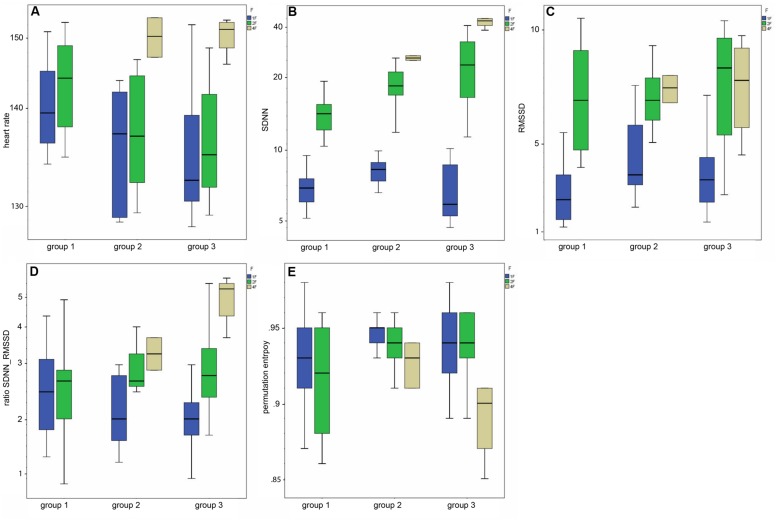
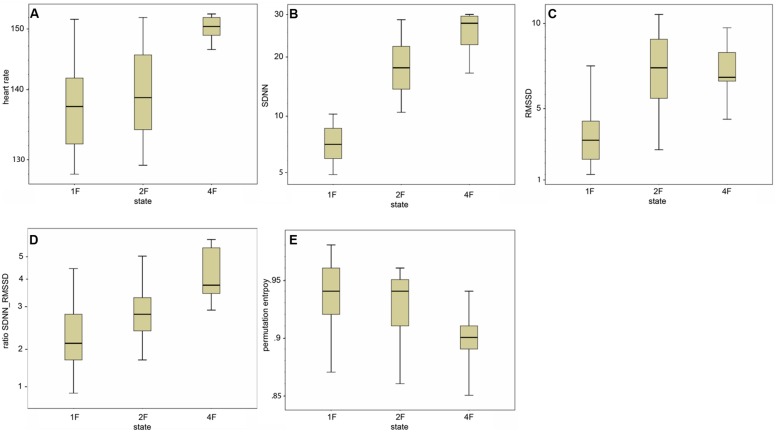
Fetal behavioral states are defined by fetal movement and heart rate variability (HRV). At 32 weeks of gestational age (GA) the distinction of four fetal behavioral states represented by combinations of quiet or active sleep or awakeness is possible. Prior to 32 weeks, only periods of fetal activity and quiesence can be distinguished. The increasing synchronization of fetal movement and HRV reflects the development of the autonomic nervous system (ANS) control. Fetal magnetocardiography (fMCG) detects fetal heart activity at high temporal resolution, enabling the calculation of HRV parameters. This study combined the criteria of fetal movement with the HRV analysis to complete the criteria for fetal state detection. HRV parameters were calculated including the standard deviation of the normal-to-normal R-R interval (SDNN), the mean square of successive differences of the R-R intervals (RMSSD, SDNN/RMSSD ratio, and permutation entropy (PE) to gain information about the developing influence of the ANS within each fetal state. In this study, 55 magnetocardiograms from healthy fetuses of 24-41 weeks' GA were recorded for up to 45 min using a fetal biomagnetometer. Fetal states were classified based on HRV and movement detection. HRV parameters were calculated for each state. Before GA 32 weeks, 58.4% quiescence and 41.6% activity cycles were observed. Later, 24% quiet sleep state (1F), 65.4% active sleep state (2F), and 10.6% active awake state (4F) were observed. SDNN increased over gestation. Changes of HRV parameters between the fetal behavioral states, especially between 1F and 4F, were statistically significant. Increasing fetal activity was confirmed by a decrease in PE complexity measures. The fHRV parameters support the differentiation between states and indicate the development of autonomous nervous control of heart rate function.
Keywords: autonomic nervous system (ANS); fetal behavioral states; fetal magnetocardiography (fMCG); fetal maturation; heart rate variability (HRV).
Figures
References
LinkOut - more resources
Full Text Sources
Other Literature Sources
