Intergenerational transmission of the effects of acculturation on health in Hispanic Americans: a fetal programming perspective
- PMID: 25905831
- PMCID: PMC4455494
- DOI: 10.2105/AJPH.2015.302571
Intergenerational transmission of the effects of acculturation on health in Hispanic Americans: a fetal programming perspective
Abstract
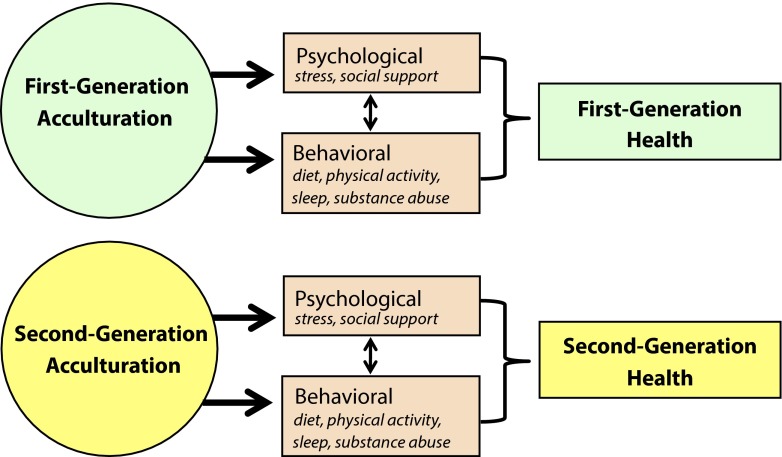
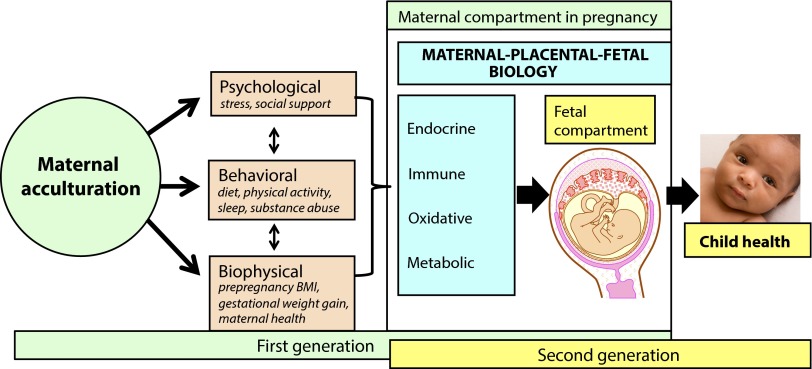
We propose a transdisciplinary, life span framework for examining the underlying cause of the observed intergenerational decline in health among Hispanic Americans. We focus on acculturation, and we posit that acculturation-related processes in first-generation Hispanic immigrant mothers may affect the intrauterine development of an unborn child, via the process of fetal programming, to produce phenotypic effects that may alter the susceptibility for noncommunicable chronic diseases. In this manner, an intergenerational cascade of perpetuation may become established. Our framework may shed light on the biological, behavioral, and social causes of intergenerational cycles of vulnerability among immigrant minority groups, with public health and policy implications for primary prevention and intervention.
Figures
References
-
- Passel J, Cohn D. Population projections: 2005-2050. 2008. Available at: http://www.pewhispanic.org/2008/02/11/us-population-projections-2005-2050. Accessed December 18, 2013.
-
- Lopez MH, Cohn D. Hispanic poverty rate highest in new supplemental census measure. 2011. Available at: http://www.pewhispanic.org/2011/11/08/hispanic-poverty-rate-highest-in-n.... Accessed November 11, 2013.
-
- Suro R, Passel JS. The rise of the second generation: changing patterns in Hispanic population growth. 2003: Available at: http://pewhispanic.org/files/reports/22.pdf. Accessed November 26, 2013.
-
- Cho Y, Frisbie WP, Hummer RA, Rogers RG. Nativity, duration of residence, and the health of Hispanic adults in the United States. Int Migr Rev. 2004;38(1):184–211.
Publication types
MeSH terms
Grants and funding
LinkOut - more resources
Full Text Sources
Medical