Review
. 2015;4(3):179-92.
doi: 10.2217/cns.15.2. Epub 2015 Apr 23.

Chemotherapy in glioma

Affiliations
Review

Chemotherapy in glioma

Walter Taal et al. CNS Oncol. 2015.

Abstract

The treatment of glial brain tumors begins with surgery, and standard adjuvant treatment at the end of the past millennium for high-grade glioma and high-risk low-grade glioma was radiotherapy and chemotherapy was given at recurrence. However, over the past 10 years much has changed regarding the role of chemotherapy in gliomas and it is now clear that chemotherapy has a role in the treatment of almost all newly diagnosed diffuse gliomas (WHO grade II-IV). This is the result of several prospective studies that showed survival benefit after combined chemoradiotherapy with temozolomide in glioblastoma (WHO grade IV) or after procarbazine, CCNU (lomustine) and vincristine chemotherapy in diffuse low-grade (WHO grade II) and anaplastic (WHO grade III) glioma. The current standard of treatment for diffuse gliomas is described in this overview and in addition some attention is given to targeted therapies.

Keywords: anaplastic glioma; astrocytoma; chemotherapy; glioblastoma; glioma; high-grade glioma; low-grade glioma; oligoastrocytoma; oligodendroglioma.


Conflict of interest statement

Financial & competing interests disclosure

The authors have no relevant affiliations or financial involvement with any organization or entity with a financial interest in or financial conflict with the subject matter or materials discussed in the manuscript. This includes employment, consultancies, honoraria, stock ownership or options, expert testimony, grants or patents received or pending, or royalties.

No writing assistance was utilized in the production of this manuscript.

Figures

<b>Figure 1.</b>
Figure 1.. Classification of glioma in types and WHO grades.
<b>Figure 2.</b>
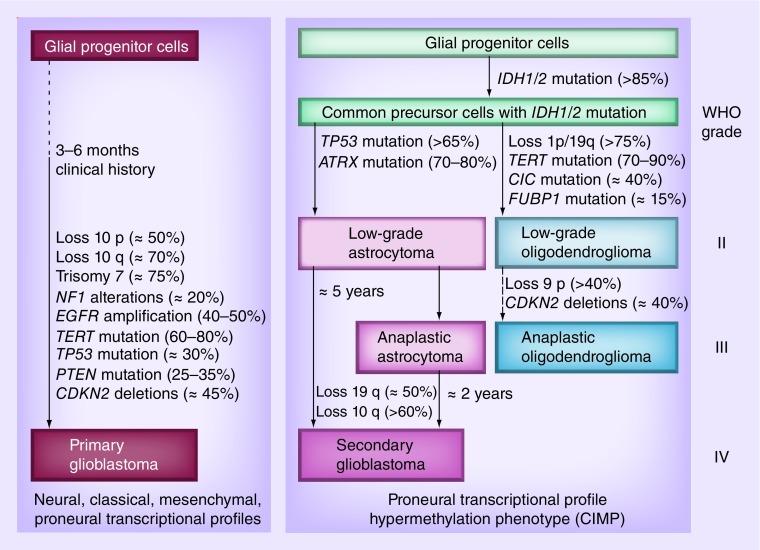
Figure 2.. Possible genetic pathways in glioma.
Glioblastomas (WHO grade IV) can be differentiated into de novo glioblastomas (primary) or secondary glioblastomas, which originate from low-grade astrocytomas (WHO grade II) directly or via malignant transformation from anaplastic astrocytomas (WHO grade III). It has been demonstrated that the two glioblastoma pathways show different genetic alterations. Mutations of IDH1/2 are almost exclusively present in WHO grade II and III gliomas and are early events occurring before codeletion of chromosomes 1p and 19q in oligodendrogliomas or TP53 mutation in astrocytomas. CIMP: CpG island hypermethylated phenotype.

References

    1. Ohgaki H, Kim YH, Steinbach JP. Nervous system tumors associated with familial tumor syndromes. Curr. Opin. Neurol. 2010;23(6):583–591. - PubMed
    1. Ohgaki H, Kleihues P. The definition of primary and secondary glioblastoma. Clin. Cancer Res. 2013;19(4):764–772. - PubMed
    1. Labussiere M, Di Stefano AL, Gleize V, et al. TERT promoter mutations in gliomas, genetic associations and clinico-pathological correlations. Br. J. Cancer. 2014 - PMC - PubMed
    1. Jiao Y, Killela PJ, Reitman ZJ, et al. Frequent ATRX, CIC, FUBP1 and IDH1 mutations refine the classification of malignant gliomas. Oncotarget. 2012;3(7):709–722. - PMC - PubMed
    1. Van Den Bent MJ. Interobserver variation of the histopathological diagnosis in clinical trials on glioma: a clinician's perspective. Acta Neuropathol. 2010;120(3):297–304. - PMC - PubMed

MeSH terms

Substances

LinkOut - more resources