


Pituitary involvement in granulomatosis with polyangiitis: report of 9 patients and review of the literature
- PMID: 25906106
- PMCID: PMC4602700
- DOI: 10.1097/MD.0000000000000748
Pituitary involvement in granulomatosis with polyangiitis: report of 9 patients and review of the literature
Abstract
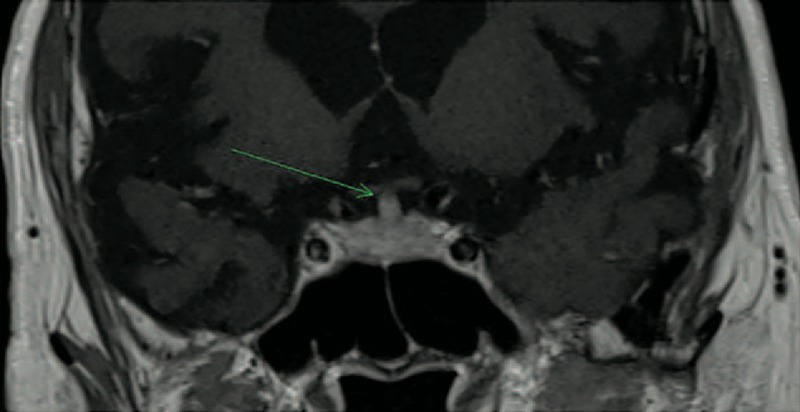
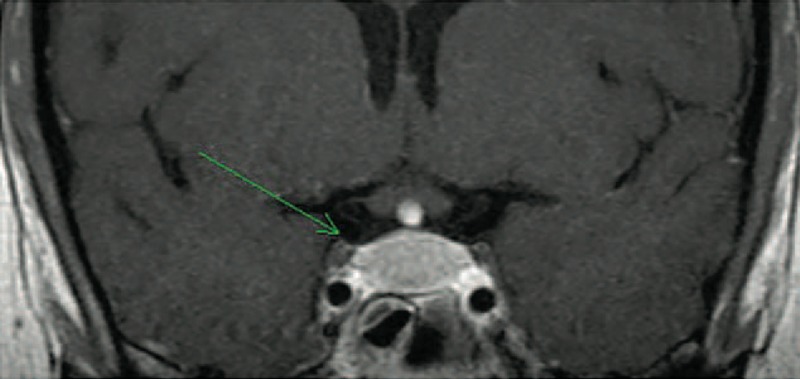
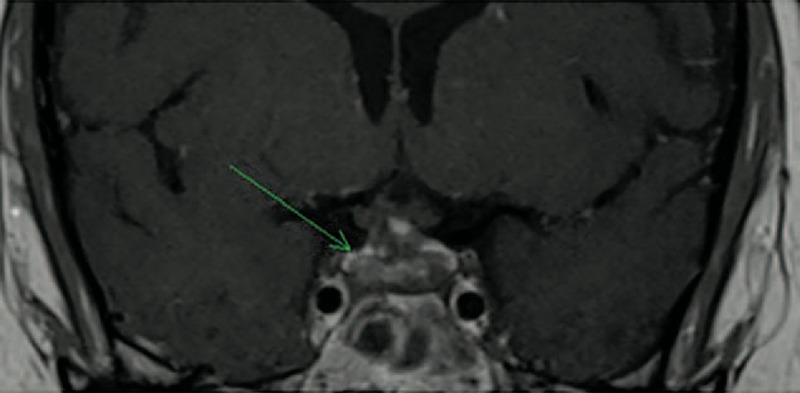
Pituitary dysfunction is a rare manifestation of granulomatosis with polyangiitis (GPA) (Wegener). The main aim of this multicenter retrospective study was to describe the characteristics and outcomes of pituitary manifestations in patients with GPA included in the French Vasculitis Study Group database.Among the 819 GPA patients included in the database, 9 (1.1%) had pituitary involvement. The median age at diagnosis of GPA and pituitary involvement was 46 and 50.8 years, respectively. Pituitary involvement was present at onset of GPA in 1 case and occurred later in 8 patients after a median follow up of 58.5 months. When pituitary dysfunction occurred, 8 patients had active disease at other sites including ENT (n = 6), eye (n = 4), or central nervous system (n = 3) involvement. The most common hormonal dysfunctions were diabetes insipidus (n = 7) and hypogonadism (n = 7). Magnetic resonance imaging was abnormal in 7 patients. The most common lesions were an enlargement of the pituitary gland, thickening of the pituitary stalk, and loss of posterior hypersignal on T1-weighed images. All patients were treated with corticosteroid therapy and 8 patients received immunosuppressive agents for the pituitary involvement, including cyclophosphamide (n = 3), rituximab (n = 2), and methotrexate (n = 3). After a median follow-up of 9.2 years, GPA was in complete remission in 7 patients, but 8 patients were still under hormone replacement therapy. Among the 5 patients who had a subsequent MRI, 2 had complete resolution of pituitary lesions.By combining our study and the literature review, the frequency of hypogonadism and diabetes insipidus, among the patients with pituitary dysfunction, can be estimated at 78% and 71% respectively. Despite a high rate of systemic disease remission on maintenance therapy, 86% of the patients had persistent pituitary dysfunction. The patients who recovered from pituitary dysfunction had all been treated by cyclophosphamide.Pituitary disease in GPA occurs mostly several months or years after diagnosis. There is no correlation between hormonal, radiologic, and systemic outcome. Although immunosuppressive drugs improve the systemic disease, hormonal deficiencies usually persist. It is therefore important to shorten diagnostic delays and treat these patients early in the course of disease before irreversible damage occur.
Conflict of interest statement
The authors report no conflicts of interest.
Figures
References
-
- Nishino H, Rubino FA, DeRemee RA, et al. Neurological involvement in Wegener's granulomatosis: an analysis of 324 consecutive patients at the Mayo Clinic. Ann Neurol 1993; 33:4–9. - PubMed
-
- Seror R, Mahr A, Ramanoelina J, et al. Central nervous system involvement in Wegener granulomatosis. Medicine 2006; 85:54–65. - PubMed
-
- Kapoor E, Cartin-Ceba R, Specks U, et al. Pituitary dysfunction in granulomatosis with polyangiitis: The Mayo Clinic Experience. J Clin Endocrinol Metab 2014; 99:3988–3994. - PubMed
-
- Leavitt RY, Fauci AS, Bloch DA, et al. The American College of Rheumatology 1990 criteria for the classification of Wegener's granulomatosis. Arthritis Rheum 1990; 33:1101–1107. - PubMed
-
- Jennette JC, Falk RJ, Bacon PA, et al. 2012 revised International Chapel Hill Consensus Conference Nomenclature of Vasculitides. Arthritis Rheum 2013; 65:1–11. - PubMed
MeSH terms
Substances
LinkOut - more resources
Full Text Sources
Medical
Research Materials
Miscellaneous
