


Resveratrol Preconditioning Protects Against Cerebral Ischemic Injury via Nuclear Erythroid 2-Related Factor 2
- PMID: 25908459
- PMCID: PMC4442036
- DOI: 10.1161/STROKEAHA.115.008921
Resveratrol Preconditioning Protects Against Cerebral Ischemic Injury via Nuclear Erythroid 2-Related Factor 2
Abstract
Background and purpose: Nuclear erythroid 2 related factor 2 (Nrf2) is an astrocyte-enriched transcription factor that has previously been shown to upregulate cellular antioxidant systems in response to ischemia. Although resveratrol preconditioning (RPC) has emerged as a potential neuroprotective therapy, the involvement of Nrf2 in RPC-induced neuroprotection and mitochondrial reactive oxygen species production after cerebral ischemia remains unclear. The goal of our study was to study the contribution of Nrf2 to RPC and its effects on mitochondrial function.
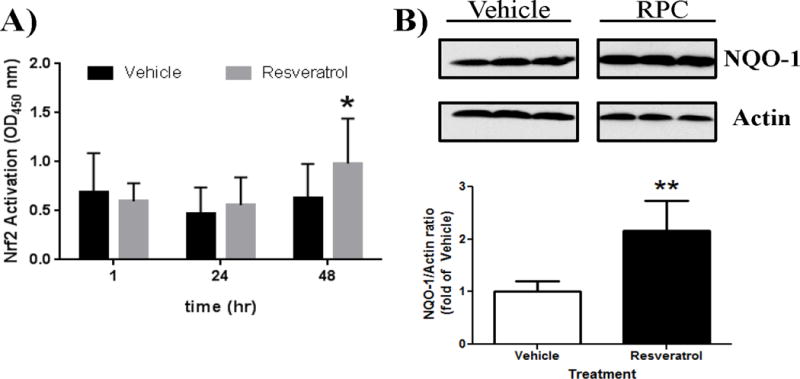
Methods: We used rodent astrocyte cultures and an in vivo stroke model with RPC. An Nrf2 DNA binding ELISA and protein analysis via Western blotting of downstream Nrf2 targets were performed to determine RPC-induced activation of Nrf2 in rat and mouse astrocytes. After RPC, mitochondrial function was determined by measuring reactive oxygen species production and mitochondrial respiration in both wild-type and Nrf2-/- mice. Infarct volume was measured to determine neuroprotection, whereas protein levels were measured by immunoblotting.
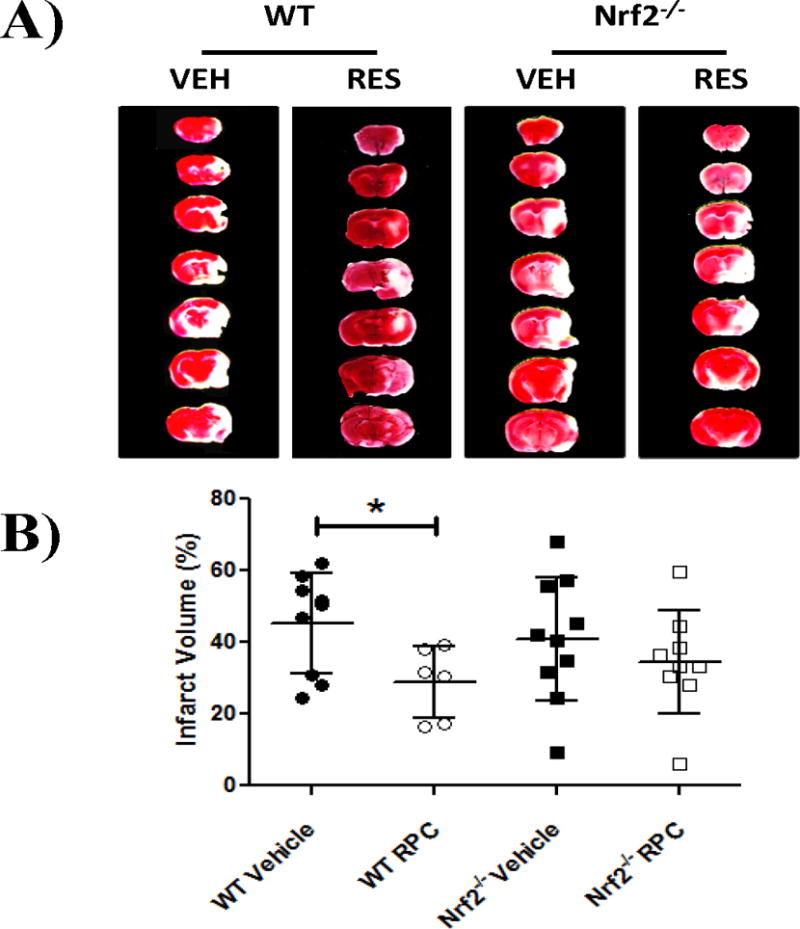
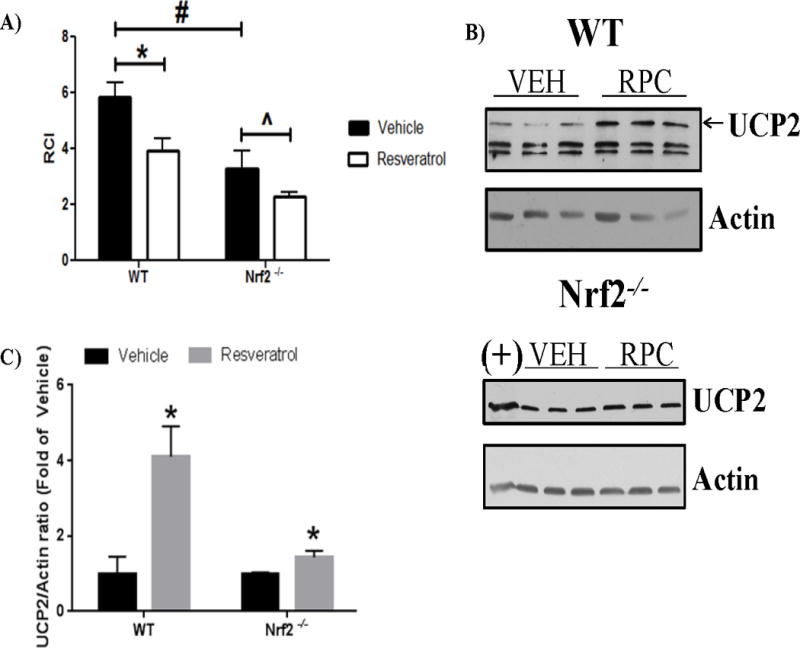
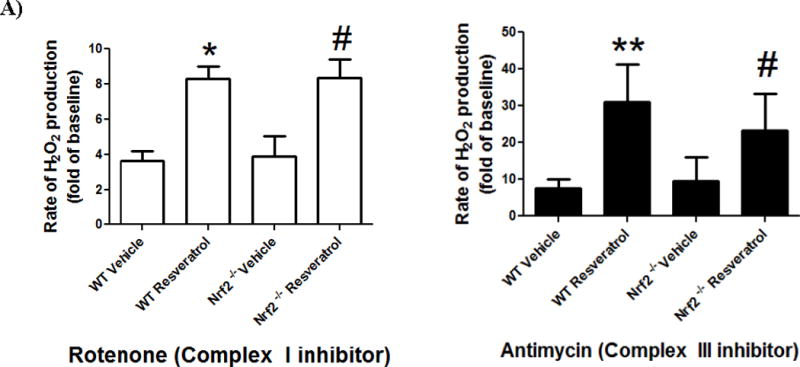
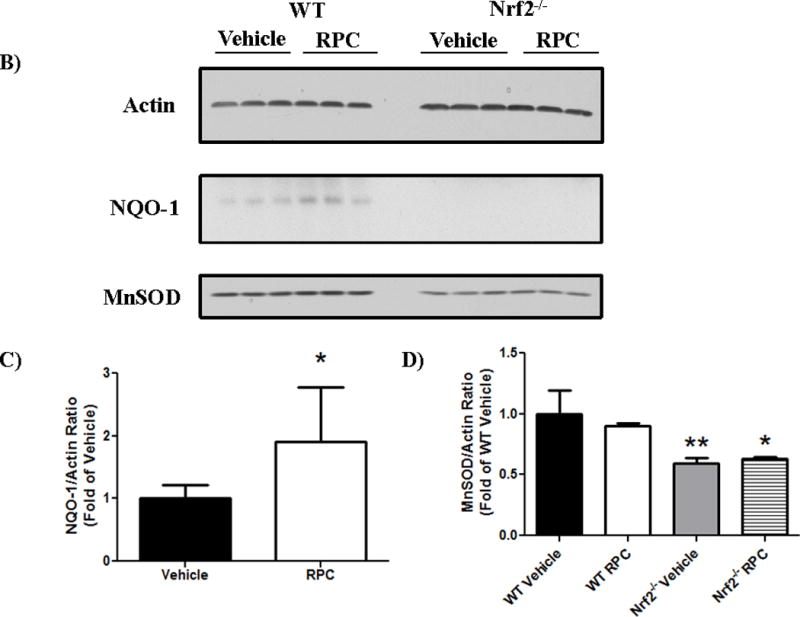
Results: We report that Nrf2 is activated by RPC in rodent astrocyte cultures, and that loss of Nrf2 reduced RPC-mediated neuroprotection in a mouse model of focal cerebral ischemia. In addition, we observed that wild-type and Nrf2-/- cortical mitochondria exhibited increased uncoupling and reactive oxygen species production after RPC treatments. Finally, Nrf2-/- astrocytes exhibited decreased mitochondrial antioxidant expression and were unable to upregulate cellular antioxidants after RPC treatment.
Conclusions: Nrf2 contributes to RPC-induced neuroprotection through maintaining mitochondrial coupling and antioxidant protein expression.
Keywords: ischemic preconditioning; mitochondria; reactive oxygen species; resveratrol.
© 2015 American Heart Association, Inc.
Figures
References
-
- Mozaffarian D, Benjamin EJ, Go AS, Arnett DK, Blaha MJ, Cushman M, et al. Heart disease and stroke statistics-2015 update: A report from the american heart association. Circulation. 2014;131:e29–e322. - PubMed
-
- Dave KR, Lange-Asschenfeldt C, Raval AP, Prado R, Busto R, Saul I, et al. Ischemic preconditioning ameliorates excitotoxicity by shifting glutamate/gamma-aminobutyric acid release and biosynthesis. Journal of neuroscience research. 2005;82:665–673. - PubMed
-
- Raval AP, Dave KR, Perez-Pinzon MA. Resveratrol mimics ischemic preconditioning in the brain. Journal of cerebral blood flow and metabolism: official journal of the International Society of Cerebral Blood Flow and Metabolism. 2006;26:1141–1147. - PubMed
-
- Yan H, Jihong Y, Feng Z, Xiaomei X, Xiaohan Z, Guangzhi W, et al. Sirtuin 1-mediated inhibition of p66shc expression alleviates liver ischemia/reperfusion injury. Critical care medicine. 2014;42:e373–381. - PubMed
Publication types
MeSH terms
Substances
Grants and funding
LinkOut - more resources
Full Text Sources
Other Literature Sources
