


Genome editing. The mutagenic chain reaction: a method for converting heterozygous to homozygous mutations
- PMID: 25908821
- PMCID: PMC4687737
- DOI: 10.1126/science.aaa5945
Genome editing. The mutagenic chain reaction: a method for converting heterozygous to homozygous mutations
Abstract
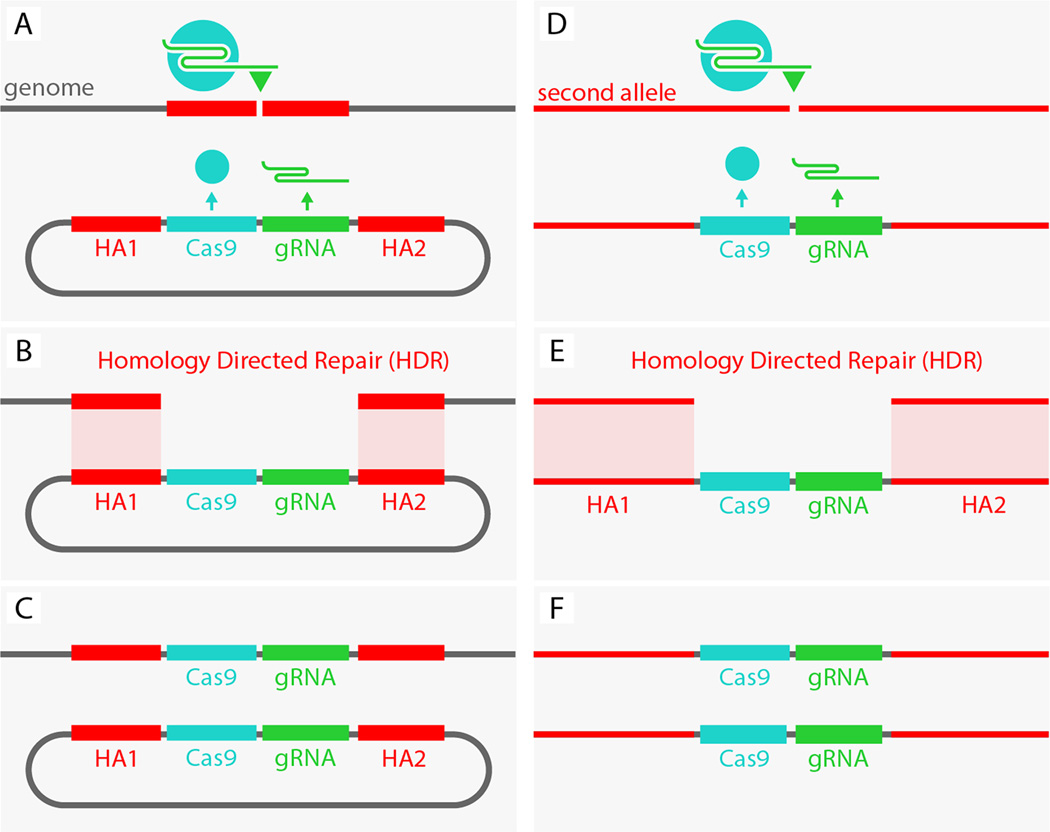
An organism with a single recessive loss-of-function allele will typically have a wild-type phenotype, whereas individuals homozygous for two copies of the allele will display a mutant phenotype. We have developed a method called the mutagenic chain reaction (MCR), which is based on the CRISPR/Cas9 genome-editing system for generating autocatalytic mutations, to produce homozygous loss-of-function mutations. In Drosophila, we found that MCR mutations efficiently spread from their chromosome of origin to the homologous chromosome, thereby converting heterozygous mutations to homozygosity in the vast majority of somatic and germline cells. MCR technology should have broad applications in diverse organisms.
Copyright © 2015, American Association for the Advancement of Science.
Figures

Comment in
-
Technology. Breaking Mendelian inheritance with CRISPR-Cas.Nat Rev Genet. 2015 May;16(5):258-9. doi: 10.1038/nrg3942. Epub 2015 Apr 14. Nat Rev Genet. 2015. PMID: 25869790 No abstract available.
References
-
- Zhang F, Wen Y, Guo X. Hum Mol Genet. 2014 Sep 15;23:R40. - PubMed
Publication types
MeSH terms
Grants and funding
LinkOut - more resources
Full Text Sources
Other Literature Sources
Molecular Biology Databases
Research Materials
