


Hyperammonemia due to urea cycle disorders: a potentially fatal condition in the intensive care setting
- PMID: 25908985
- PMCID: PMC4407289
- DOI: 10.1186/2052-0492-2-22
Hyperammonemia due to urea cycle disorders: a potentially fatal condition in the intensive care setting
Abstract
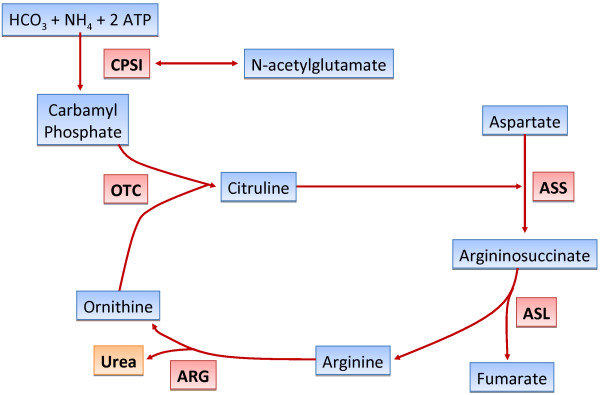
Disorders of the urea cycle are secondary to a defect in the system that converts ammonia into urea, resulting in accumulation of ammonia and other products. This results in encephalopathy, coma, and death if not recognized and treated rapidly. Late-onset urea cycle disorders may be precipitated by acute disease and can be difficult to recognize because patients are already ill. Diagnosis of urea cycle disorders is based on clinical suspicion and determination of blood ammonia in suspected patients with neurological symptoms in the intensive care setting. Treatment is based on the removal of ammonia by dialysis or hemofiltration, reduction of the catabolic state, abolishment of nitrogen administration, and use of pharmacological nitrogen scavenging agents.
Keywords: Hyperammonemia; Intensive care unit; Neurological disorders.
Figures
References
-
- Batshaw ML, Monahan PS. Treatment of urea cycle disorders. Enzyme. 1987;38(1–4):242–250. - PubMed
-
- Lanpher BC, Gropman A, Chapman KA, Lichter-Konecki U, Urea Cycle Disorders C, Summar ML: Urea cycle disorders overview. In GeneReviews. Edited by: Pagon RA, Bird TD, Dolan CR, Stephens K, Adam MP. Seattle: NCBI1993; Updated September 1,2011
Publication types
LinkOut - more resources
Full Text Sources
Other Literature Sources
