Is diabetes a risk factor for a severe clinical presentation of dengue?--review and meta-analysis
- PMID: 25909658
- PMCID: PMC4409149
- DOI: 10.1371/journal.pntd.0003741
Is diabetes a risk factor for a severe clinical presentation of dengue?--review and meta-analysis
Abstract
Background: The mean age of acute dengue has undergone a shift towards older ages. This fact points towards the relevance of assessing the influence of age-related comorbidities, such as diabetes, on the clinical presentation of dengue episodes. Identification of factors associated with a severe presentation is of high relevance, because timely treatment is the most important intervention to avert complications and death. This review summarizes and evaluates the published evidence on the association between diabetes and the risk of a severe clinical presentation of dengue.
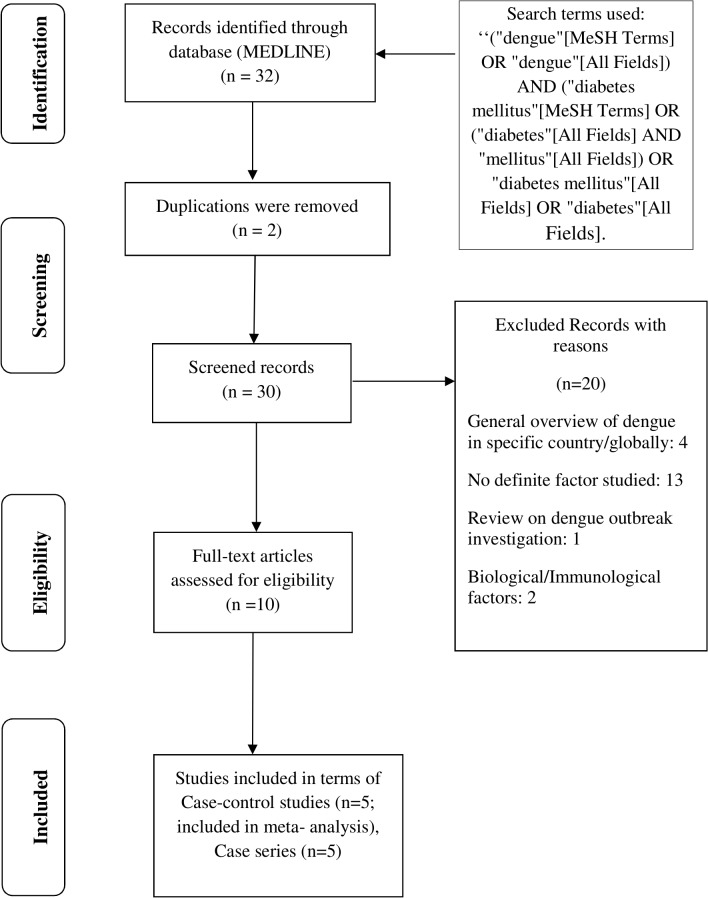
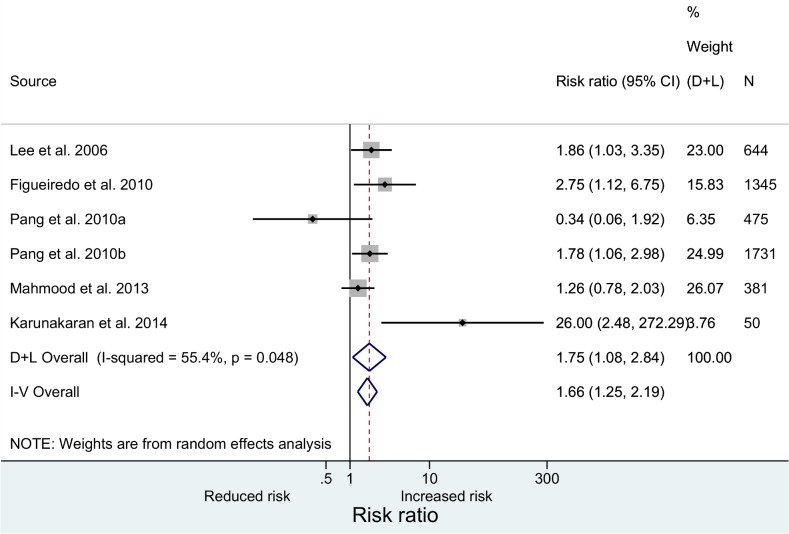
Methodology/findings: A systematic literature review was conducted using the MEDLINE database to access any relevant association between dengue and diabetes. Five case-control studies (4 hospital-based, 1 population-based) compared the prevalence of diabetes (self-reported or abstracted from medical records) of persons with dengue (acute or past; controls) and patients with severe clinical manifestations. All except one study were conducted before 2009 and all studies collected information towards WHO 1997 classification system. The reported odds ratios were formally summarized by random-effects meta-analyses. A diagnosis of diabetes was associated with an increased risk for a severe clinical presentation of dengue (OR 1.75; 95% CI: 1.08-2.84, p = 0.022).
Conclusions/significance: Large prospective studies that systematically and objectively obtain relevant signs and symptoms of dengue fever episodes as well as of hyperglycemia in the past, and at the time of dengue diagnosis, are needed to properly address the effect of diabetes on the clinical presentation of an acute dengue fever episode. The currently available epidemiological evidence is very limited and only suggestive. The increasing global prevalence of both dengue and diabetes justifies further studies. At this point, confirmation of dengue infection as early as possible in diabetes patients with fever if living in dengue endemic regions seems justified. The presence of this co-morbidity may warrant closer observation for glycemic control and adapted fluid management to diminish the risk for a severe clinical presentation of dengue.
Conflict of interest statement
The authors have declared that no competing interests exist.
Figures
References
-
- Bygbjerg IC. Double burden of noncommunicable and infectious diseases in developing countries. Science. 2012;337(6101):1499–501. - PubMed
-
- Murray CJL, Vos T, Lozano R, Naghavi M, Flaxman AD, Michaud C, et al. Disability-adjusted life years (DALYs) for 291 diseases and injuries in 21 regions, 1990–2010: a systematic analysis for the Global Burden of Disease Study 2010. The Lancet. 2012;380(9859):2197–223. 10.1016/S0140-6736(12)61689-4 - DOI - PubMed
-
- Danaei G, Finucane MM, Lu Y, Singh GM, Cowan MJ, Paciorek CJ, et al. National, regional, and global trends in fasting plasma glucose and diabetes prevalence since 1980: systematic analysis of health examination surveys and epidemiological studies with 370 country-years and 2·7 million participants. Lancet. 2011;378(9785):31–40. 10.1016/S0140-6736(11)60679-X - DOI - PubMed
-
- World Health Organization. 10 facts about diabetes. 2014 [cited 25 February 2014]. http://www.who.int/features/factfiles/diabetes/facts/en/index4.html.
Publication types
MeSH terms
LinkOut - more resources
Full Text Sources
Other Literature Sources
Medical
Miscellaneous