


G6PD Deficiency and Hemoglobinopathies: Molecular Epidemiological Characteristics and Healthy Effects on Malaria Endemic Bioko Island, Equatorial Guinea
- PMID: 25915902
- PMCID: PMC4411145
- DOI: 10.1371/journal.pone.0123991
G6PD Deficiency and Hemoglobinopathies: Molecular Epidemiological Characteristics and Healthy Effects on Malaria Endemic Bioko Island, Equatorial Guinea
Abstract
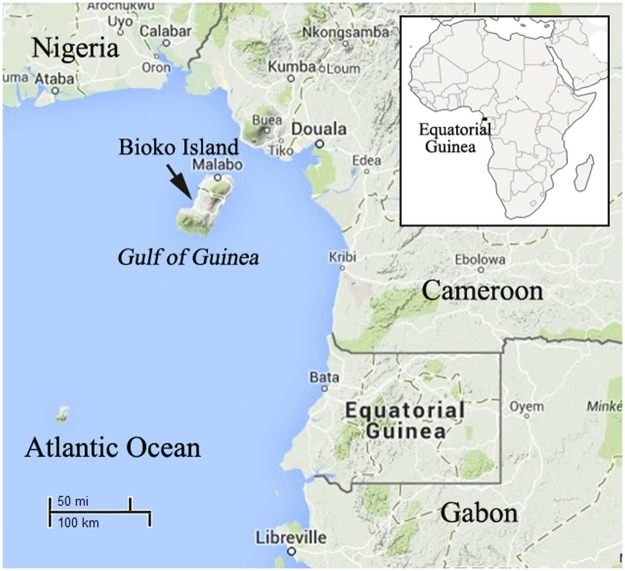
Background: Glucose-6-phosphate dehydrogenase (G6PD) deficiency and hemoglobinopathies were the inherited conditions found mostly in African. However, few epidemiological data of these disorders was reported in Equatorial Guinea (EQG). This study aimed to assess the prevalence and healthy effects of G6PD deficiency and hemoglobinopathies among the people on malaria endemic Bioko Island, EQG.
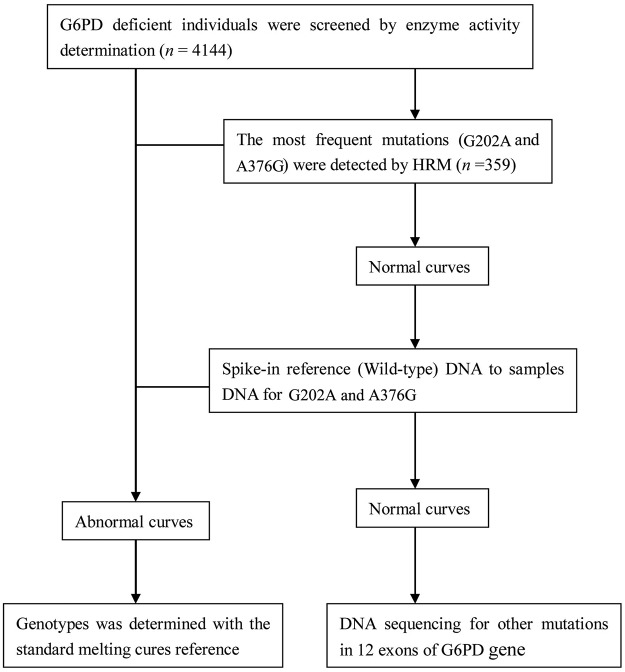
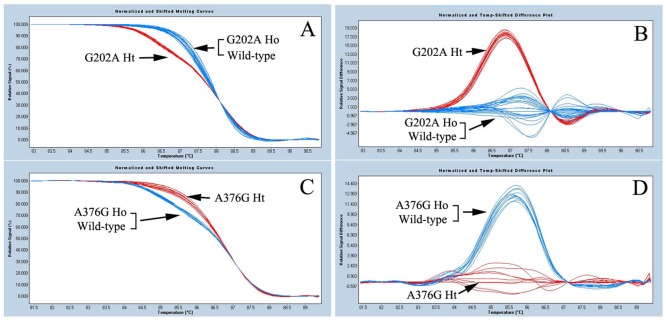
Materials and methods: Blood samples from 4,144 unrelated subjects were analyzed for G6PD deficiency by fluorescence spot test (FST), high-resolution melting assay and PCR-DNA sequencing. In addition, 1,186 samples were randomly selected from the 4,144 subjects for detection of hemoglobin S (HbS), HbC, and α-thalassemia deletion by complete blood count, PCR-DNA sequencing and reverse dot blot (RDB).
Results: The prevalence of malaria and anemia was 12.6% (522/4,144) and 32.8% (389/1,186), respectively. Overall, 8.7% subjects (359/4,144) were G6PD-deficient by FST, including 9.0% (249/2,758) males and 7.9% (110/1,386) females. Among the 359 G6PD-deficient individuals molecularly studied, the G6PD A- (G202A/A376G) were detected in 356 cases (99.2%), G6PD Betica (T968C/A376G) in 3 cases. Among the 1,186 subjects, 201 cases were HbS heterozygotes, 35 cases were HbC heterozygotes, and 2 cases were HbCS double heterozygotes; 452 cases showed heterozygous α-thalassemia 3.7 kb deletion (-α3.7 kb deletion) and 85 homozygous - α3.7 kb deletion. The overall allele frequencies were HbS 17.1% (203/1186); HbC, 3.1% (37/1186); and -α3.7 kb deletion 52.4% (622/1186), respectively.
Conclusions: High G6PD deficiency in this population indicate that diagnosis and management of G6PD deficiency is necessary on Bioko Island. Obligatory newborn screening, prenatal screening and counseling for these genetic disorders, especially HbS, are needed on the island.
Conflict of interest statement
Figures
References
Publication types
MeSH terms
Substances
LinkOut - more resources
Full Text Sources
Other Literature Sources
Medical
Miscellaneous
