


Alpha-actinin binding kinetics modulate cellular dynamics and force generation
- PMID: 25918384
- PMCID: PMC4450414
- DOI: 10.1073/pnas.1505652112
Alpha-actinin binding kinetics modulate cellular dynamics and force generation
Abstract
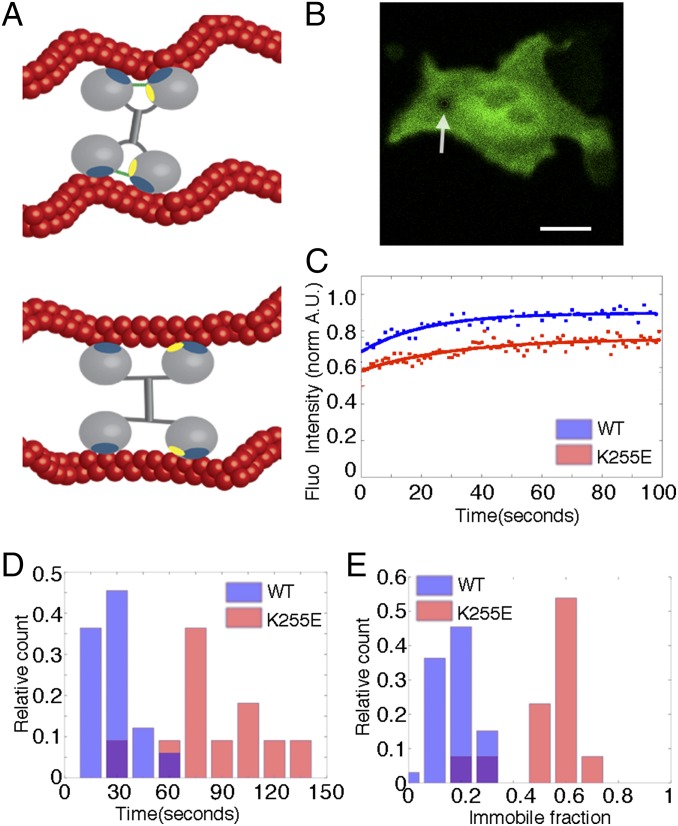
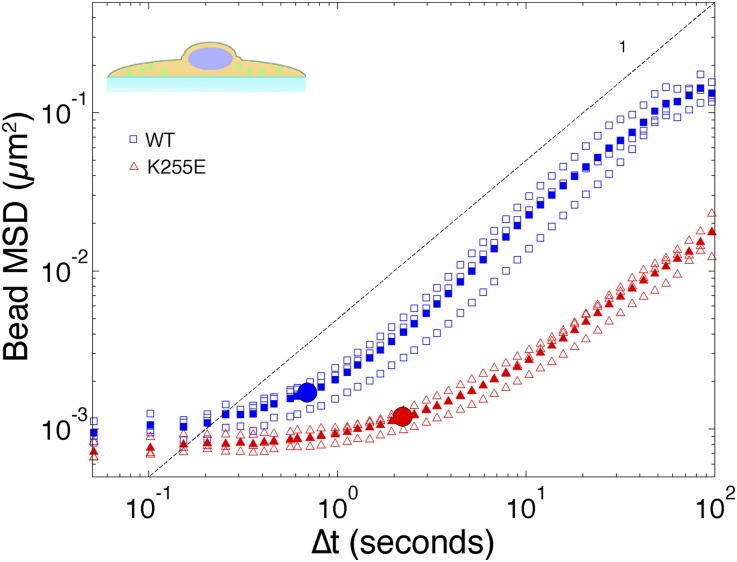
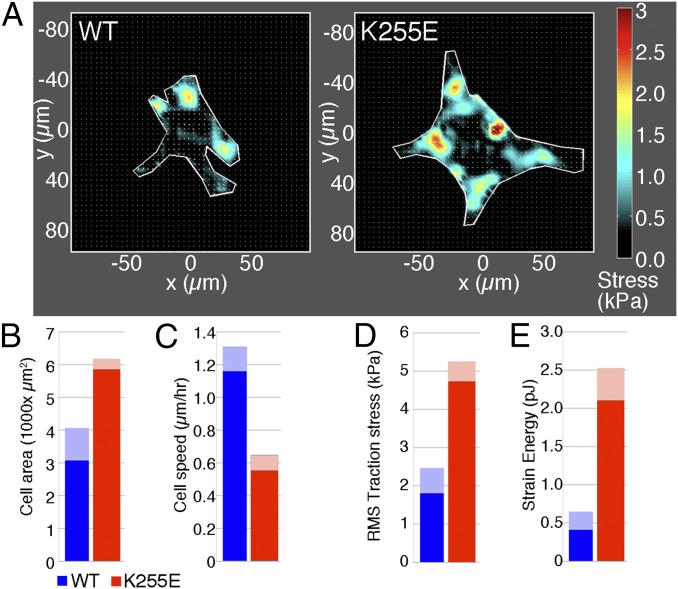
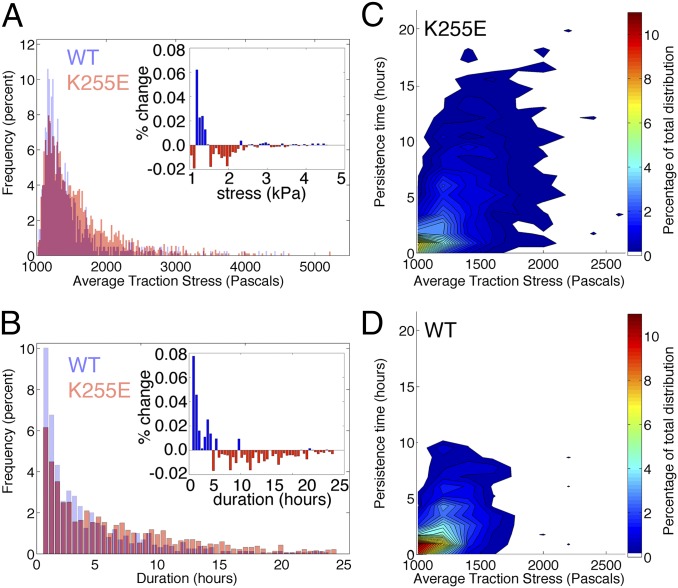
The actin cytoskeleton is a key element of cell structure and movement whose properties are determined by a host of accessory proteins. Actin cross-linking proteins create a connected network from individual actin filaments, and though the mechanical effects of cross-linker binding affinity on actin networks have been investigated in reconstituted systems, their impact on cellular forces is unknown. Here we show that the binding affinity of the actin cross-linker α-actinin 4 (ACTN4) in cells modulates cytoplasmic mobility, cellular movement, and traction forces. Using fluorescence recovery after photobleaching, we show that an ACTN4 mutation that causes human kidney disease roughly triples the wild-type binding affinity of ACTN4 to F-actin in cells, increasing the dissociation time from 29 ± 13 to 86 ± 29 s. This increased affinity creates a less dynamic cytoplasm, as demonstrated by reduced intracellular microsphere movement, and an approximate halving of cell speed. Surprisingly, these less motile cells generate larger forces. Using traction force microscopy, we show that increased binding affinity of ACTN4 increases the average contractile stress (from 1.8 ± 0.7 to 4.7 ± 0.5 kPa), and the average strain energy (0.4 ± 0.2 to 2.1 ± 0.4 pJ). We speculate that these changes may be explained by an increased solid-like nature of the cytoskeleton, where myosin activity is more partitioned into tension and less is dissipated through filament sliding. These findings demonstrate the impact of cross-linker point mutations on cell dynamics and forces, and suggest mechanisms by which such physical defects lead to human disease.
Keywords: Alpha-actinin; actin; cell mechanics; kidney disease; traction force.
Conflict of interest statement
The authors declare no conflict of interest.
Figures
Comment in
-
Dynamic cross-links tune the solid-fluid behavior of living cells.Proc Natl Acad Sci U S A. 2015 May 26;112(21):6527-8. doi: 10.1073/pnas.1507100112. Epub 2015 May 18. Proc Natl Acad Sci U S A. 2015. PMID: 26015553 Free PMC article. No abstract available.
References
Publication types
MeSH terms
Substances
Grants and funding
LinkOut - more resources
Full Text Sources
Other Literature Sources
Molecular Biology Databases
Miscellaneous
