


Poplar trees for phytoremediation of high levels of nitrate and applications in bioenergy
- PMID: 25923308
- PMCID: PMC11629805
- DOI: 10.1111/pbi.12384
Poplar trees for phytoremediation of high levels of nitrate and applications in bioenergy
Abstract
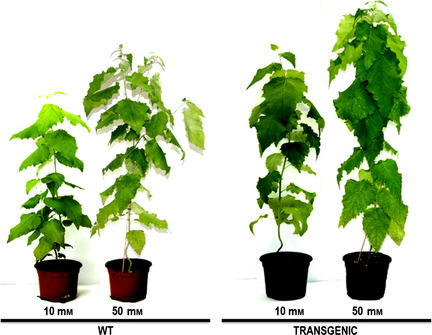
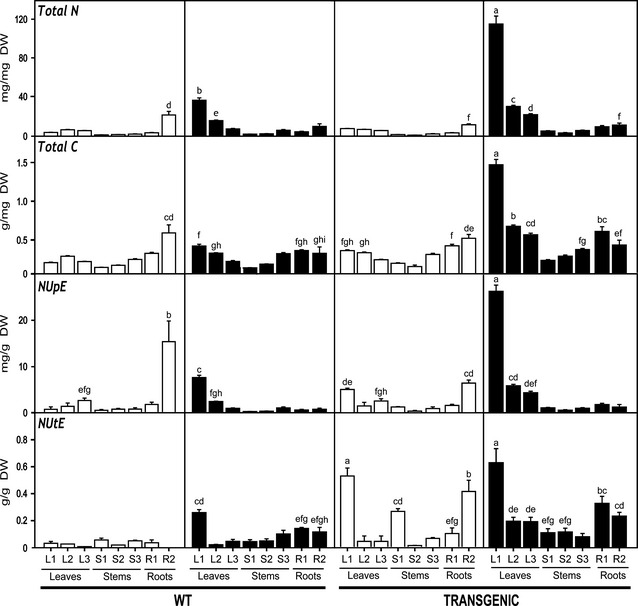
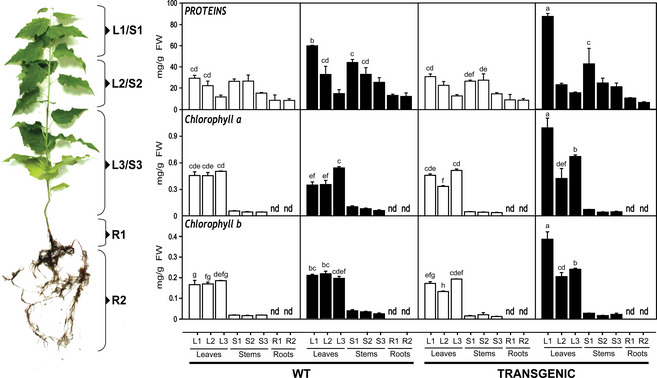
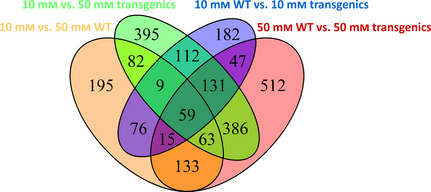
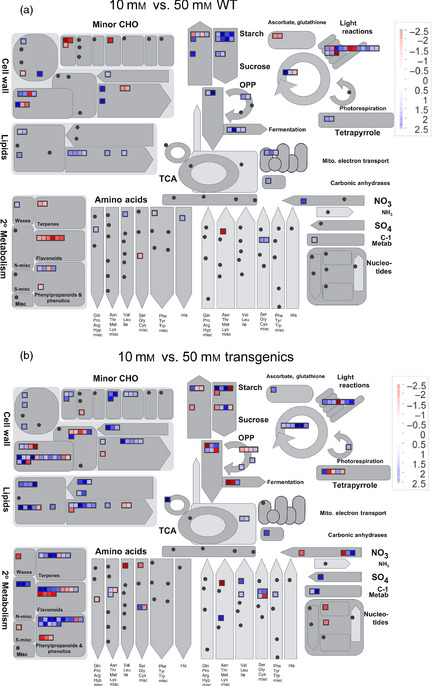
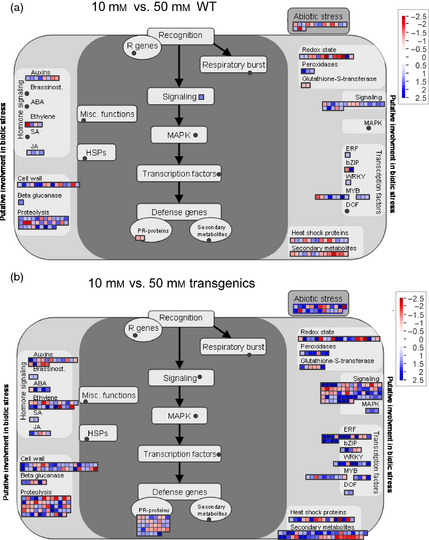
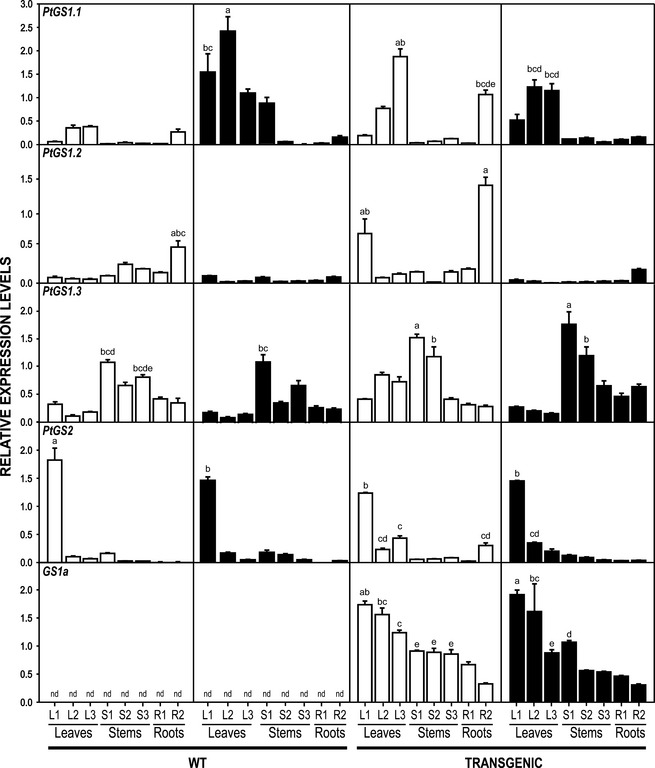
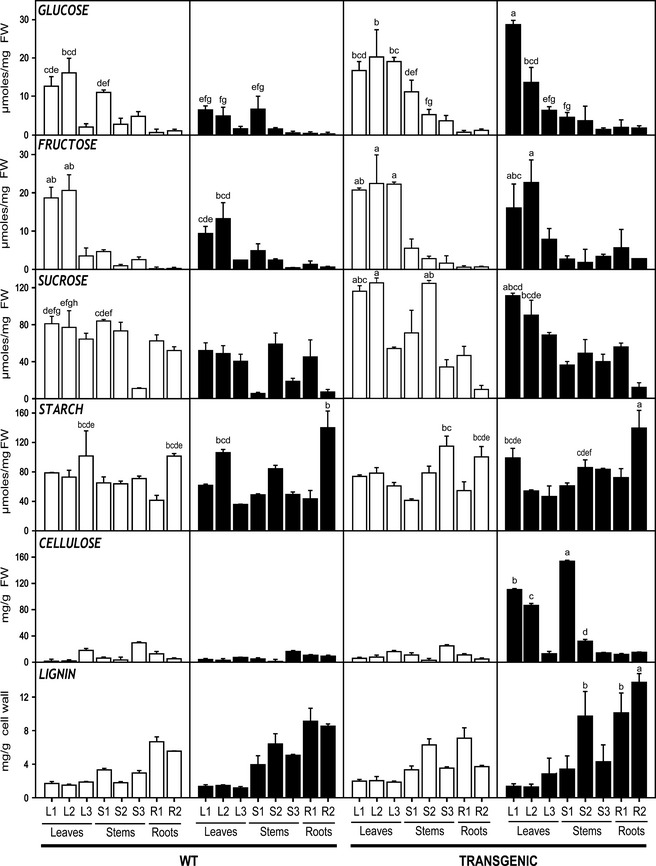
The utilization of high amounts of nitrate fertilizers for crop yield leads to nitrate pollution of ground and surface waters. In this study, we report the assimilation and utilization of nitrate luxuriant levels, 20 times more than the highest N fertilizer application in Europe, by transgenic poplars overexpressing a cytosolic glutamine synthetase (GS1). In comparison with the wild-type controls, transgenic plants grown under high N levels exhibited increased biomass (171.6%) and accumulated higher levels of proteins, chlorophylls and total sugars such as glucose, fructose and sucrose. These plants also exhibited greater nitrogen-use efficiency particularly in young leaves, suggesting that they are able to translocate most of the resources to the above-ground part of the plant to produce biomass. The transgenic poplar transcriptome was greatly affected in response to N availability with 1237 genes differentially regulated in high N, while only 632 genes were differentially expressed in untransformed plants. Many of these genes are essential in the adaptation and response against N excess and include those involved in photosynthesis, cell wall formation and phenylpropanoid biosynthesis. Cellulose production in the transgenic plants was fivefold higher than in control plants, indicating that transgenic poplars represent a potential feedstock for applications in bioenergy. In conclusion, our results show that GS transgenic poplars can be used not only for improving growth and biomass production but also as an important resource for potential phytoremediation of nitrate pollution.
Keywords: Populus; bioenergy; biomass; glutamine synthetase; nitrate pollution; transgenic trees.
© 2015 Society for Experimental Biology, Association of Applied Biologists and John Wiley & Sons Ltd.
Figures
References
-
- Barozai, M.Y. , Baloch, I.A. and Din, M. (2012) Identification of MicroRNAs and their targets in Helianthus . Mol. Biol. Rep. 39, 2523–2532. - PubMed
-
- Bernard, S.M. and Habash, D.Z. (2009) The importance of cytosolic glutamine synthetase in nitrogen assimilation and recycling. New Phytol. 182, 608–620. - PubMed
Publication types
MeSH terms
Substances
LinkOut - more resources
Full Text Sources
Molecular Biology Databases
