


Probing disorders of the nervous system using reprogramming approaches
- PMID: 25925386
- PMCID: PMC4474524
- DOI: 10.15252/embj.201591267
Probing disorders of the nervous system using reprogramming approaches
Abstract
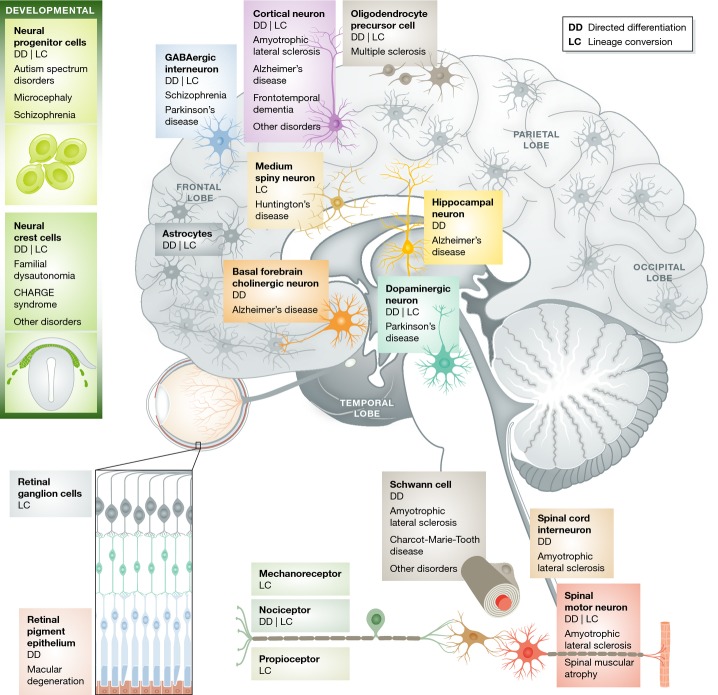
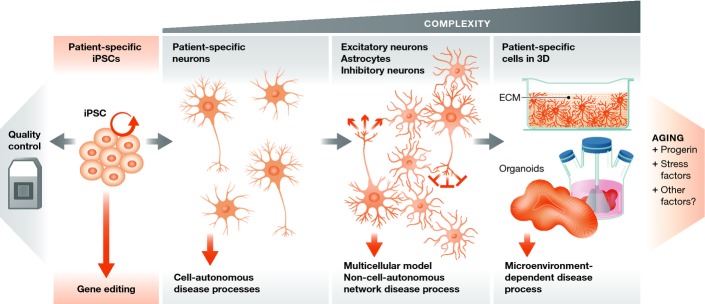
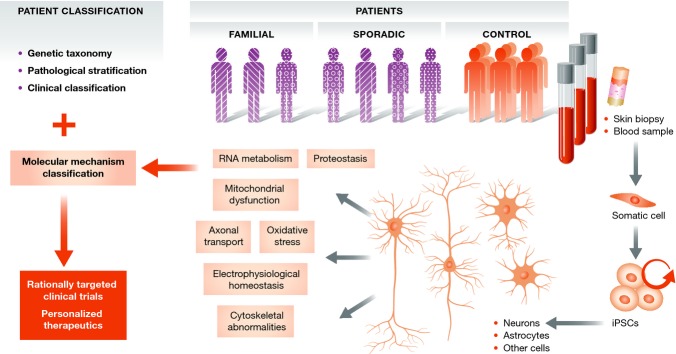
The groundbreaking technologies of induced pluripotency and lineage conversion have generated a genuine opportunity to address fundamental aspects of the diseases that affect the nervous system. These approaches have granted us unrestricted access to the brain and spinal cord of patients and have allowed for the study of disease in the context of human cells, expressing physiological levels of proteins and under each patient's unique genetic constellation. Along with this unprecedented opportunity have come significant challenges, particularly in relation to patient variability, experimental design and data interpretation. Nevertheless, significant progress has been achieved over the past few years both in our ability to create the various neural subtypes that comprise the nervous system and in our efforts to develop cellular models of disease that recapitulate clinical findings identified in patients. In this Review, we present tables listing the various human neural cell types that can be generated and the neurological disease modeling studies that have been reported, describe the current state of the field, highlight important breakthroughs and discuss the next steps and future challenges.
Keywords: directed differentiation; disease modeling; neurologic disorder; neuronal development.
© 2015 The Authors. Published under the terms of the CC BY NC ND 4.0 license.
Figures
References
-
- Abbott NJ, Ronnback L, Hansson E. Astrocyte-endothelial interactions at the blood-brain barrier. Nat Rev Neurosci. 2006;7:41–53. - PubMed
-
- Almeida S, Gascon E, Tran H, Chou HJ, Gendron TF, Degroot S, Tapper AR, Sellier C, Charlet-Berguerand N, Karydas A, Seeley WW, Boxer AL, Petrucelli L, Miller BL, Gao FB. Modeling key pathological features of frontotemporal dementia with C9ORF72 repeat expansion in iPSC-derived human neurons. Acta Neuropathol. 2013;126:385–399. - PMC - PubMed
Publication types
MeSH terms
Grants and funding
LinkOut - more resources
Full Text Sources
Other Literature Sources
Medical
Miscellaneous
