. 2015 Aug;232(16):3045-55.
doi: 10.1007/s00213-015-3944-8. Epub 2015 May 1.

In vivo potency and efficacy of the novel cathinone α-pyrrolidinopentiophenone and 3,4-methylenedioxypyrovalerone: self-administration and locomotor stimulation in male rats

Affiliations

In vivo potency and efficacy of the novel cathinone α-pyrrolidinopentiophenone and 3,4-methylenedioxypyrovalerone: self-administration and locomotor stimulation in male rats

Shawn M Aarde et al. Psychopharmacology (Berl). 2015 Aug.

Abstract

Rationale: Numerous substituted cathinone drugs have appeared in recreational use. This variety is often a response to legal actions; the scheduling of 3,4-methylenedioxypyrovalerone (MDPV; "bath salts") in the USA was followed by the appearance of the closely related drug α-pyrrolidinopentiophenone (alpha-PVP; "flakka").

Objectives: This study aimed to directly compare the efficacy and potency of alpha-PVP with that of MDPV.

Methods: Groups of male Wistar rats were trained in the intravenous self-administration (IVSA) alpha-PVP or MDPV under a fixed-ratio 1 schedule of reinforcement. An additional group was examined for locomotor and body temperature responses to noncontingent administration of MDVP or alpha-PVP (1.0, 5.6, and 10.0 mg/kg, i.p.).

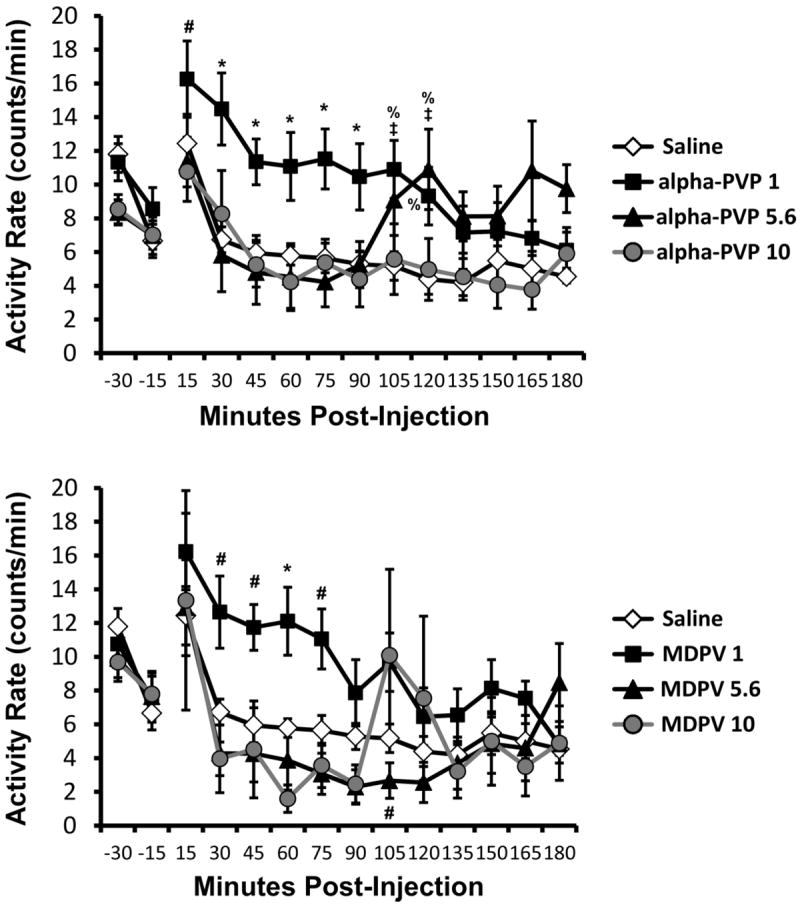
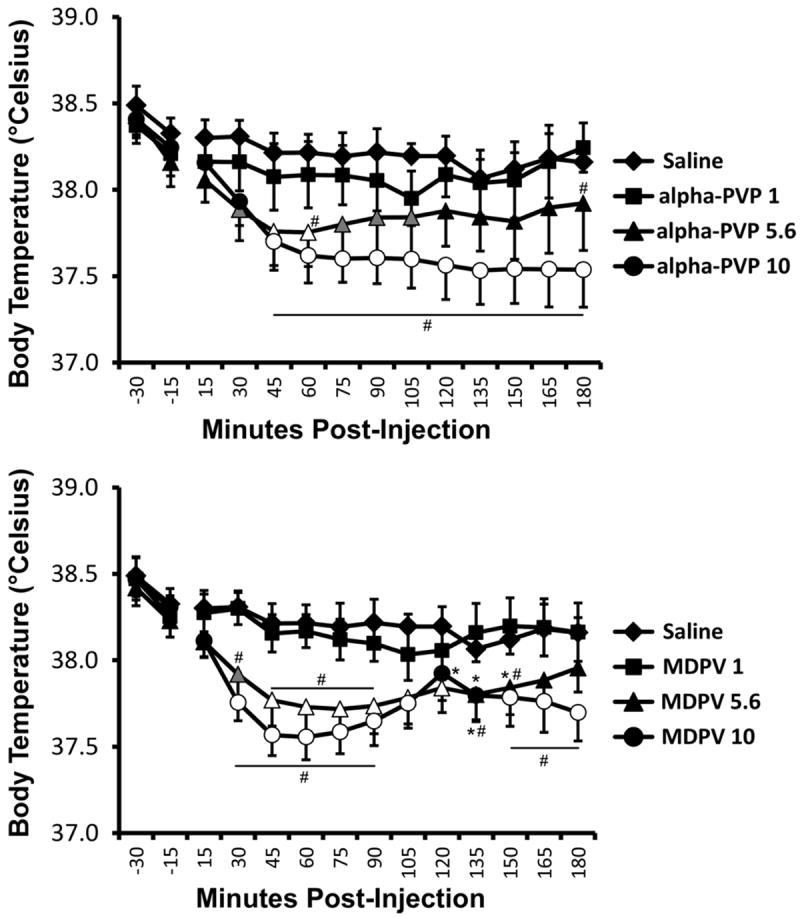
Results: Acquisition of alpha-PVP (0.1 mg/kg/infusion) IVSA resulted in low, yet consistent drug intake and excellent discrimination for the drug-paired lever. Dose substitution (0.05-0.25 mg/kg/infusion) under a fixed-ratio 1 schedule confirmed potency was similar to MDPV in prior studies. In direct comparison to MDPV (0.05 mg/kg/infusion), rats trained on alpha-PVP (0.05 mg/kg/infusion) responded for more infusions but demonstrated similar drug-lever discrimination by the end of acquisition. However, the dose-response (0.018-0.56 mg/kg/infusion) functions of these drugs under a progressive-ratio schedule of reinforcement reflected identical efficacy and potency. Peak locomotor responses to MDPV or alpha-PVP were observed after the 1.0 mg/kg, i.p. dose and lasted ∼2 h. Modest body temperature decreases were of similar magnitude (∼0.75 °C) for each compound.

Conclusions: The potency and efficacy of MDPV and alpha-PVP were very similar across multiple assays, predicting that the abuse liability of alpha-PVP will be significant and similar to that of MDPV.


Conflict of interest statement

Financial Disclosures

The authors report no financial conflicts that are relevant to the conduct of this study.

Figures
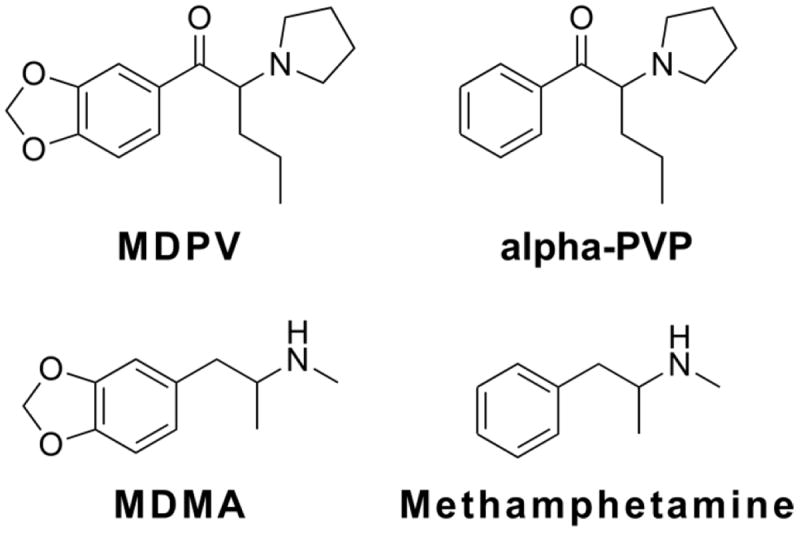
Figure 1
Figure 1
Chemical structures of cathinone stimulants α-pyrrolidinopentiophenone (alpha-PVP) and 3,4-methylenedioxypyrovalerone (MDPV) are compared with the amphetamines methamphetamine and 3,4-methylenedioxymethamphetamine (MDMA).
Figure 2
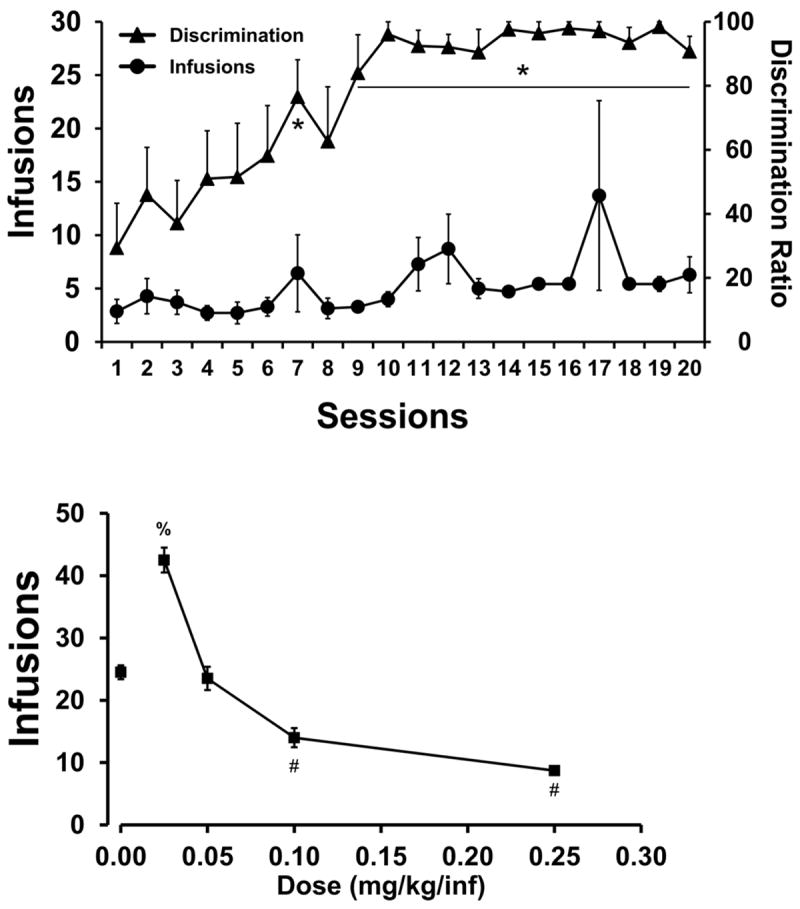
Figure 2. Acquisition of alpha-PVP (0.1 mg/kg/inf) self-administration
Mean (±SEM) infusions and drug-lever discrimination ratios during acquisition (upper panel; N=9) and infusions obtained during dose-substitution (lower panel; Vehicle, 0.025, 0.05, 0.1, 0.25 mg/kg/inf; N=5) under a fixed-ratio 1 response requirement. Significant differences in lever discrimination from the first and third acquisition session are indicated by * in the upper panel. In the lower panel, significant differences from vehicle, 0.025 and 0.05 are indicated by # and a significant difference from vehicle and 0.05 mg/kg/inf is indicated by %.
Figure 3
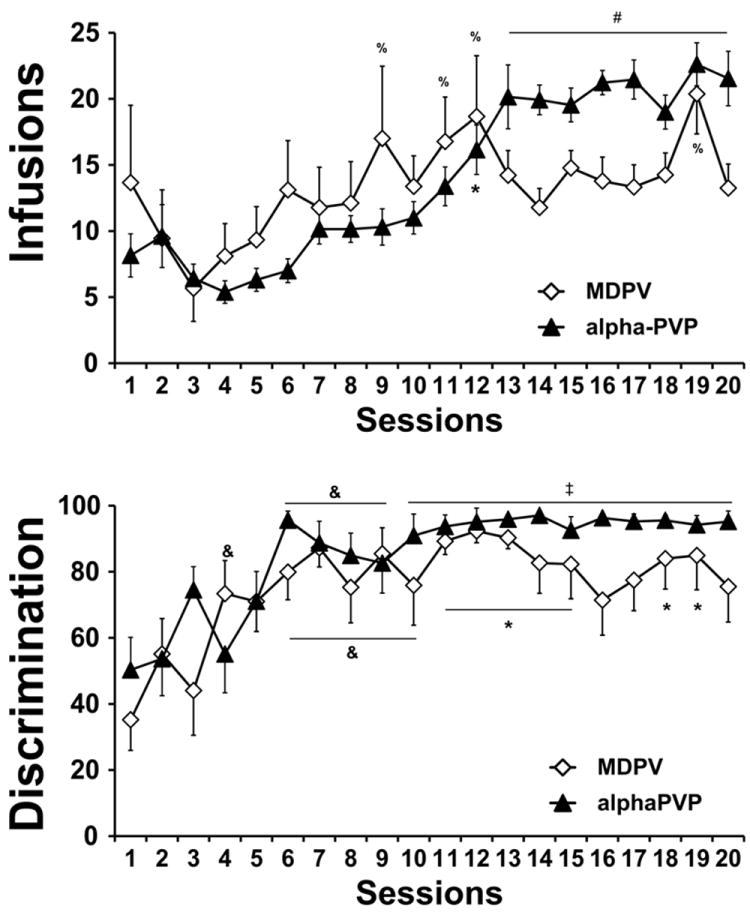
Figure 3. Comparing the acquisition of alpha-PVP (0.05 mg/kg/inf) and MDPV (0.05 mg/kg/inf) self-administration
Mean (±SEM) infusions obtained per session (upper panel) and drug-paired lever discrimination ratios (lower panel) across sessions of acquisition of alpha-PVP (N=15) and MDPV (N=9) self-administration for those individuals who met acquisition criteria. Significant differences from the first 6 sessions is indicated by #; from the 1st, 2nd and 4th sessions by ‡; versus the 1st and 3rd sessions by *; compared with the 1st session by & and from the 3rd session by %. See Results for additional significant differences.
Figure 4
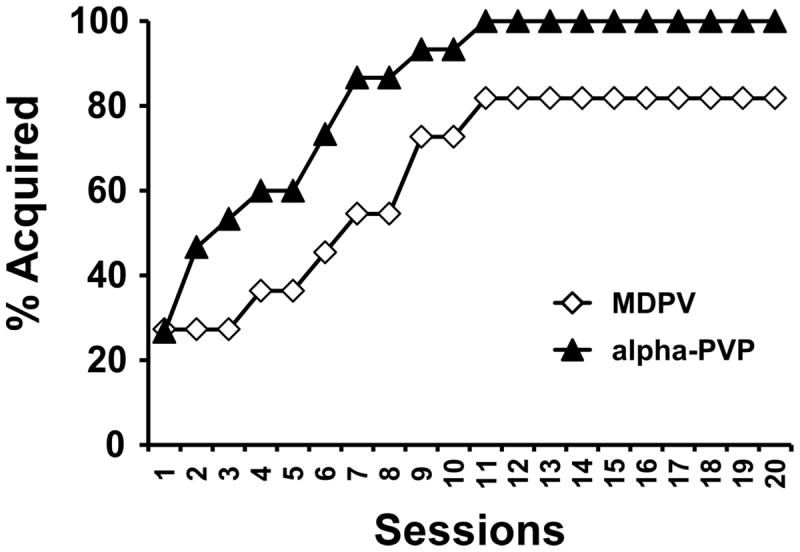
Figure 4. Percent of Subjects Acquiring self-administration
The cumulative percentage of rats that reached acquisition criteria are depicted as a function of session and the drug available (MDPV, N=11; alpha-PVP, N = 15) over the 20-session acquisition period. Rats were defined as having acquired self-administration on the first of three sequential sessions for which >= 6 infusions were acquired.
Figure 5
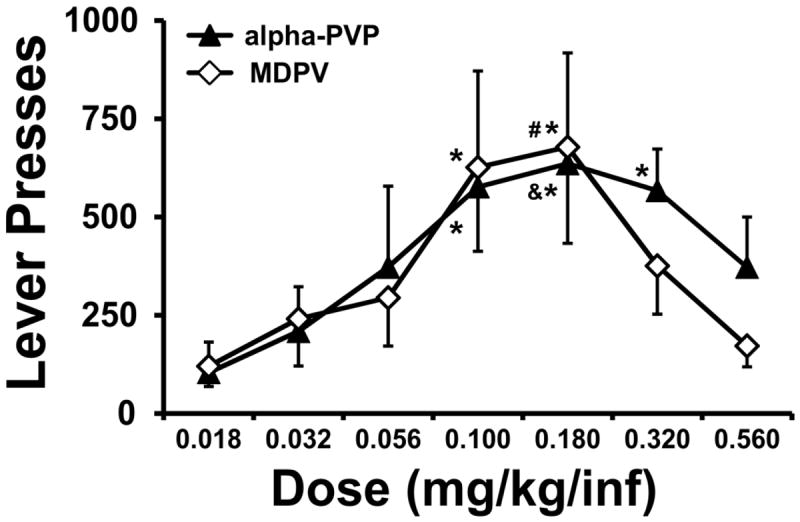
Figure 5. Progressive Ratio Dose Substitution
Mean (±SEM) drug-associated lever presses during the self-administration of alpha-PVP (N=12) or MDPV (N=8) under a progressive-ratio schedule of reinforcement. Significant differences from the 0.018 mg/kg/inf dose condition are signified by *, from the 0.032 dose by & and differences from the 0.56 dose by #.
Figure 6
Figure 6. Locomotor Activity
Mean (N=8; ±SEM) activity rate after alpha-PVP (upper panel) or MDPV (lower panel) was administered i.p. The vehicle condition is the same in both panels as all drug doses were randomized with a single vehicle condition. Significant differences from vehicle alone are indicated by %; from vehicle and the other two active doses by *; from the other two active doses by #; and from the 10 mg/kg dose is indicated by ‡
Figure 7
Figure 7. Thermoregulation
Mean (N=8; ±SEM) body temperature after alpha-PVP (upper panel) or MDPV (lower panel) was administered i.p. The vehicle condition is the same in both panels as all drug doses were randomized with a single vehicle condition. Shaded figures indicate a significant difference from vehicle at the respective timepoint. Open figures indicate a significant difference from vehicle at the respective timepoint and the baseline within treatment condition (15 min prior to injection). Significant differences from baseline (only) are indicated with * and differences from the 1.0 mg/kg dose (within compound) with #.

References

    1. Aarde SM, Angrish D, Barlow DJ, Wright MJ, Jr, Vandewater SA, Creehan KM, Houseknecht KL, Dickerson TJ, Taffe MA. Mephedrone (4-methylmethcathinone) supports intravenous self-administration in Sprague-Dawley and Wistar rats. Addict Biol. 2013a;18:786–99. - PMC - PubMed
    1. Aarde SM, Huang PK, Creehan KM, Dickerson TJ, Taffe MA. The novel recreational drug 3,4-methylenedioxypyrovalerone (MDPV) is a potent psychomotor stimulant: self-administration and locomotor activity in rats. Neuropharmacology. 2013f;71:130–40. - PMC - PubMed
    1. Aarde SM, Huang PK, Dickerson TJ, Taffe MA. Binge-like acquisition of 3,4-methylenedioxypyrovalerone (MDPV) self-administration and wheel activity in rats. Psychopharmacology (Berl) 2014 - PMC - PubMed
    1. Baumann MH, Ayestas MA, Jr, Partilla JS, Sink JR, Shulgin AT, Daley PF, Brandt SD, Rothman RB, Ruoho AE, Cozzi NV. The designer methcathinone analogs, mephedrone and methylone, are substrates for monoamine transporters in brain tissue. Neuropsychopharmacology. 2012;37:1192–203. - PMC - PubMed
    1. Baumann MH, Partilla JS, Lehner KR, Thorndike EB, Hoffman AF, Holy M, Rothman RB, Goldberg SR, Lupica CR, Sitte HH, Brandt SD, Tella SR, Cozzi NV, Schindler CW. Powerful cocaine-like actions of 3,4-Methylenedioxypyrovalerone (MDPV), a principal constituent of psychoactive ‘bath salts’ products. Neuropsychopharmacology. 2013;38:552–62. - PMC - PubMed

Publication types