


The white matter structural network underlying human tool use and tool understanding
- PMID: 25926458
- PMCID: PMC6605181
- DOI: 10.1523/JNEUROSCI.3709-14.2015
The white matter structural network underlying human tool use and tool understanding
Abstract
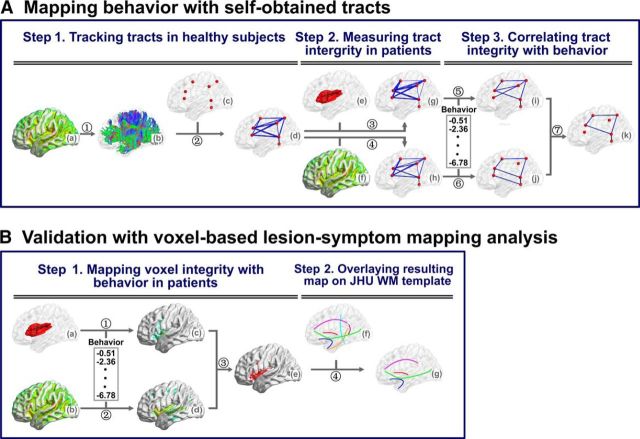
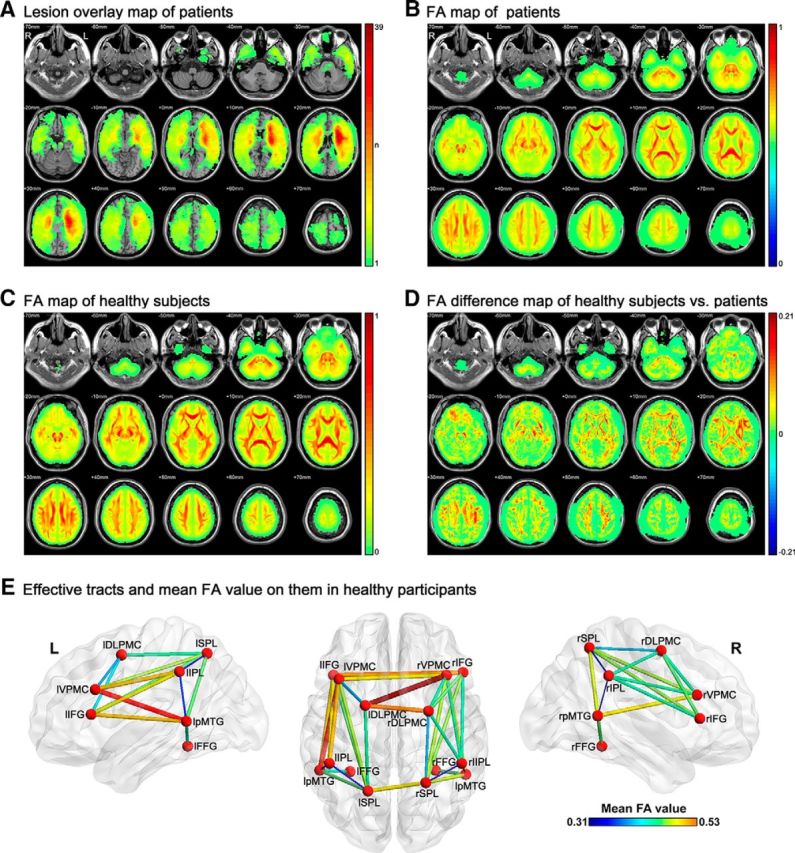
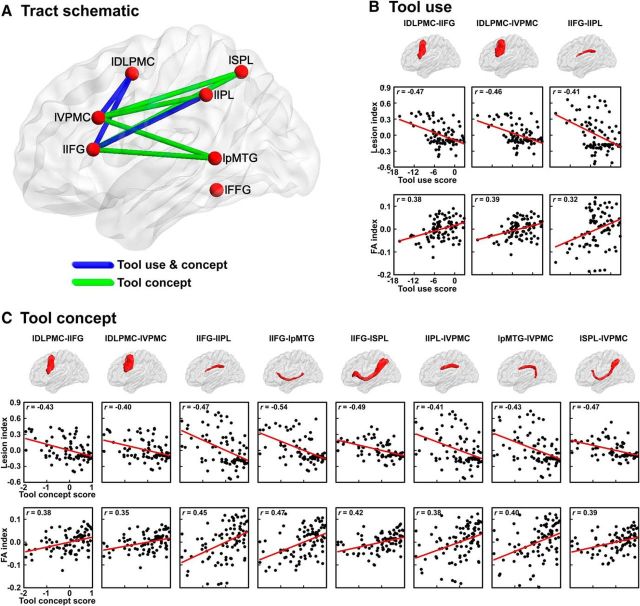
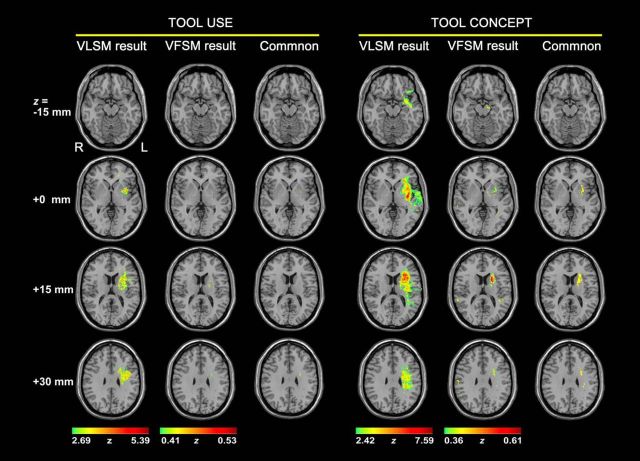
The ability to recognize, create, and use complex tools is a milestone in human evolution. Widely distributed brain regions in parietal, frontal, and temporal cortices have been implicated in using and understanding tools, but the roles of their anatomical connections in supporting tool use and tool conceptual behaviors are unclear. Using deterministic fiber tracking in healthy participants, we first examined how 14 cortical regions that are consistently activated by tool processing are connected by white matter (WM) tracts. The relationship between the integrity of each of the 33 obtained tracts and tool processing deficits across 86 brain-damaged patients was investigated. WM tract integrity was measured with both lesion percentage (structural imaging) and mean fractional anisotropy (FA) values (diffusion imaging). Behavioral abilities were assessed by a tool use task, a range of conceptual tasks, and control tasks. We found that three left hemisphere tracts connecting frontoparietal and intrafrontal areas overlapping with left superior longitudinal fasciculus are crucial for tool use such that larger lesion and lower mean FA values on these tracts were associated with more severe tool use deficits. These tracts and five additional left hemisphere tracts connecting frontal and temporal/parietal regions, mainly overlapping with left superior longitudinal fasciculus, inferior frontooccipital fasciculus, uncinate fasciculus, and anterior thalamic radiation, are crucial for tool concept processing. Largely consistent results were also obtained using voxel-based symptom mapping analyses. Our results revealed the WM structural networks that support the use and conceptual understanding of tools, providing evidence for the anatomical skeleton of the tool knowledge network.
Keywords: brain-damaged patient; diffusion tensor imaging; structural network; tool concept; tool use; voxel-based lesion-symptom mapping.
Copyright © 2015 the authors 0270-6474/15/356822-14$15.00/0.
Figures
Comment in
-
The Contribution of Semantic Features to the White Matter Pathways of Tool Processing.J Neurosci. 2015 Sep 16;35(37):12609-11. doi: 10.1523/JNEUROSCI.2453-15.2015. J Neurosci. 2015. PMID: 26377451 Free PMC article. No abstract available.
References
-
- Bates E, Wilson SM, Saygin AP, Dick F, Sereno MI, Knight RT, Dronkers NF. Voxel-based lesion-symptom mapping. Nat Neurosci. 2003;6:448–450. - PubMed
Publication types
MeSH terms
LinkOut - more resources
Full Text Sources
