. 2015 Jul;89(14):7187-201.
doi: 10.1128/JVI.00544-15. Epub 2015 Apr 29.

Human Endogenous Retrovirus Type K (HERV-K) Particles Package and Transmit HERV-K-Related Sequences

Affiliations

Human Endogenous Retrovirus Type K (HERV-K) Particles Package and Transmit HERV-K-Related Sequences

Rafael Contreras-Galindo et al. J Virol. 2015 Jul.

Abstract

Human endogenous retroviruses (HERV) make up 8% of the human genome. While the youngest of these retroviruses, HERV-K(HML-2), termed HK2, is able to code for all viral proteins and produce virus-like particles, it is not known if these virus particles package and transmit HK2-related sequences. Here, we analyzed the capacity of HK2 for packaging and transmitting HK2 sequences. We created an HK2 probe, termed Bogota, which can be packaged into HK2 viruses, and transfected it into cells that make HK2 particles. Supernatants of the transfected cells, which contained HK2 viral particles, then were added to target cells, and the transmissibility of the HK2 Bogota reporter was tracked by G418 resistance. Our studies revealed that contemporary HK2 virions produced by some teratocarcinoma and breast cancer cell lines, as well as by peripheral blood lymphocytes from lymphoma patients, can package HK2 Bogota probes, and these viruses transmitted these probes to other cells. After transmission, HK2 Bogota transcripts undergo reverse transcription, a step impaired by antiretroviral agents or by introduction of mutations into the probe sequences required for reverse transcription. HK2 viruses were more efficiently transmitted in the presence of HK2 Rec or HIV-1 Tat and Vif. Transmitted Bogota probes formed episomes but did not integrate into the cellular genome. Resistance to integration might explain the relatively low number of HK2 insertions that were acquired during the last 25 million years of evolution. Whether transient transmission of modern HK2 sequences, which encode two putative oncoproteins, can lead to disease remains to be studied.

Importance: Retroviruses invaded the genome of human ancestors over the course of millions of years, yet these viruses generally have been inactivated during evolution, with only remnants of these infectious sequences remaining in the human genome. One of these viruses, termed HK2, still is capable of producing virus particles, although these particles have been regarded as being noninfectious. Using a genetic probe derived from HK2, we have discovered that HK2 viruses produced in modern humans can package HK2 sequences and transmit them to various other cells. Furthermore, the genetic sequences packaged in HK2 undergo reverse transcription. The transmitted probe circularized in the cell and failed to integrate into the cellular genome. These findings suggest that modern HK2 viruses can package viral RNA and transmit it to other cells. Contrary to previous views, we provide evidence of an extracellular viral phase of modern HK2 viruses. We have no evidence of sustained, spreading infection.


Figures

FIG 1
FIG 1
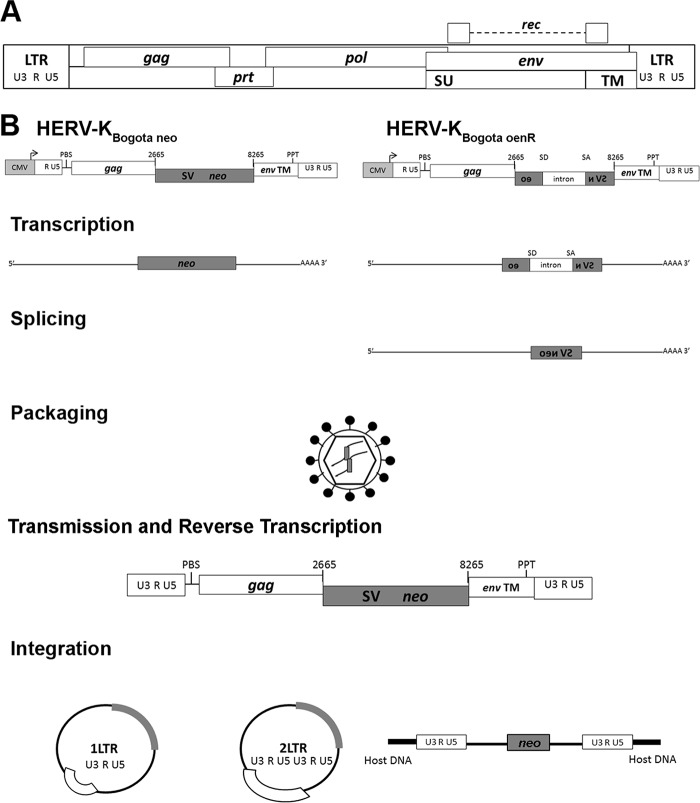
HK2 packaging and transmission assay. (A) Organization of HK2 proviruses. ORFs coded by the gag, prt, pol, and env genes, and the accessory rec gene, are indicated by closed rectangles. The 5′ and 3′ LTRs (light gray boxes) at each side of the provirus and the surface (SU) and transmembrane (TM) domains of the encoded Env protein are shown. (B) An overview of the packaging and transmission assay of HERV-KBogota reporters. The constructs HERV-KBogota neo and HERV-KBogota oenR were derived from the K113 provirus by replacing the retroviral genes with a neomycin (neo) resistance indicator gene to tag the retroviral transcripts. An SV40 promoter and a 3′ polyadenylation signal (A′) regulate the expression of neo. Although Bogota transcripts do not code for retroviral proteins, the transcripts retain sequences necessary for reverse transcription (the primer binding site [PBS], the polypurine tract [PPT], and the U3, R, and U5 parts of the LTRs). As the LTR of HK2 is not functional in every cell line, a CMV promoter replaced the U3 portion of the 5′ LTR. Bogota retroviral transcripts contain the packaging signal of HK2; thus, they can be packaged into HK2 viral particles. Upon cell transmission, these transcripts confer G418 resistance only when they are reverse transcribed and then integrated into chromosomal DNA or form episomes (1LTR and 2LTR). HERV-KBogota oenR (right) contains an antisense copy of the neo gene disrupted by intron 2 of the γ-globin gene in the sense direction. The splice donor (SD) and splice acceptor (SA) sites of the intron are indicated. Transcripts originating from the HERV-KBogota oenR promoter can splice out the intron but contain only an antisense copy of the neo gene. G418-resistant colonies should arise only when, upon packaging and transmission, these transcripts are reverse transcribed, producing a sense copy of the neo resistance gene, which could be integrated into the genome or into episomal forms, and expressed from their own promoter.
FIG 2
FIG 2
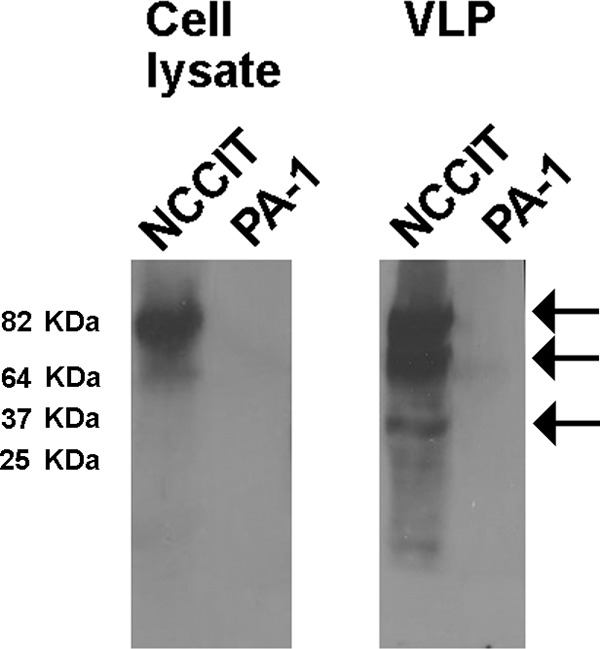
Western blot analysis of HK2 Env protein found in the cell-associated lysate and cell-free VLPs released from NCCIT cells. Cell lysates and VLPs contained in the supernatants of human NCCIT and PA-1 teratocarcinoma cells were assessed for the presence of the HK2 Env protein using the anti-HK2 Env antibody HERM1811-5 (Austral Biologicals, San Ramon, CA) as previously described (9). Two bands of 90 and 80 kb were detected in the cell lysate of NCCIT but not PA-1 cells. These bands are consistent with the unprocessed precursor Env protein, with or without the signal peptide. These bands also were detected in cell-free VLPs of NCCIT cells together with a band of ∼37 kb that corresponds to the TM subunit cleaved after Env processing (100).
FIG 3
FIG 3
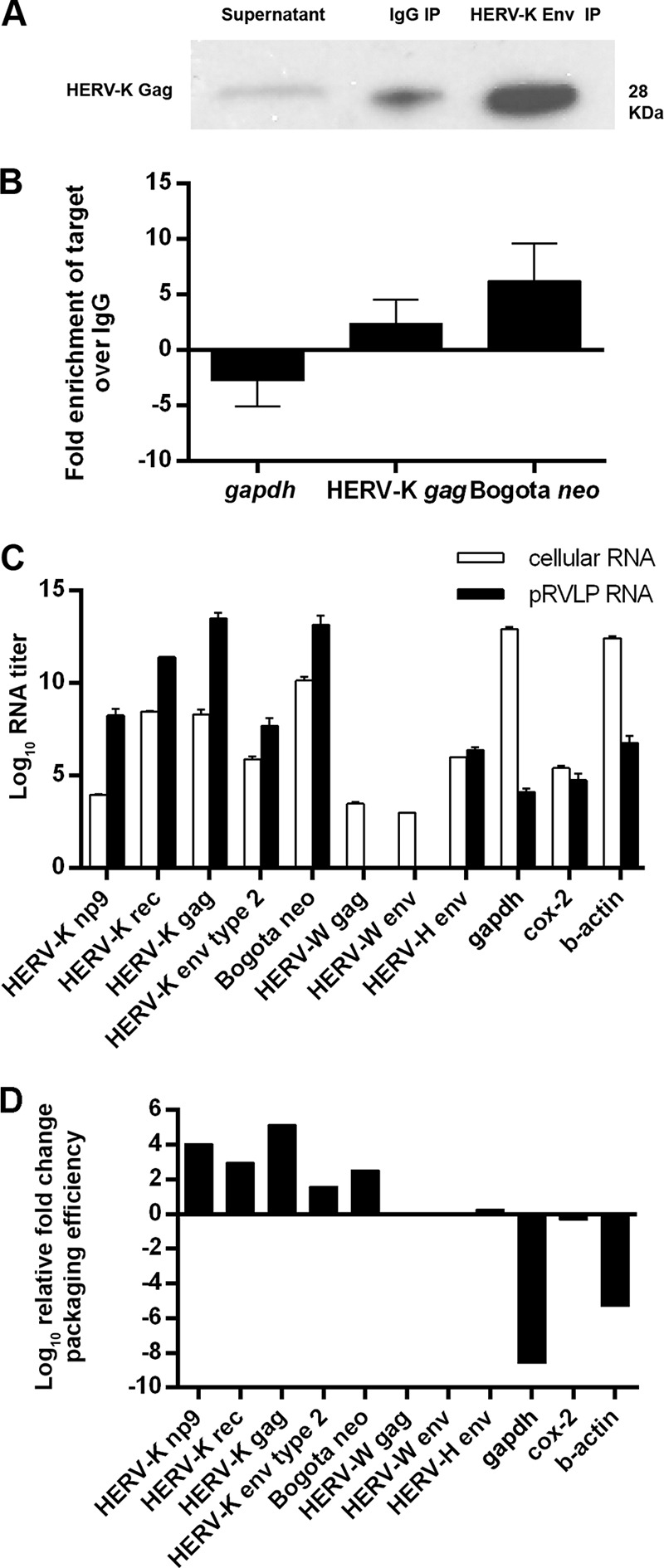
Packaging of Bogota transcripts in HK2 viral particles. (A and B) Immunoprecipitation of HERV-K virions containing Bogota transcripts. NCCIT cells were transfected with HERV-KBogota neo, and viral particles were collected 48 h after. Viral particles were pelleted by ultracentrifugation prior to immunoprecipitation with either an anti-HERV-K Env antibody or a control anti-mouse IgG2a. (A) Cleared supernatant and the immunoprecipitated samples were analyzed for HERV-K capsid enrichment by Western blotting with an anti-HERV-K Gag antibody. The untreated supernatant is about 5-fold diluted compared to the volumes obtained in the concentrated and immunoprecipitated samples; therefore, equal amounts of the supernatants could not be added in the gel due to well-volume constraints. The low background level detected with the anti-IgG2a immunoprecipitation may be nonspecific. (B) RNA from immunoprecipitated particles was quantitated for HERV-K gag, Bogota neo, or nonviral gapdh by qRT-PCR. The average fold enrichment for each target in particles precipitated with anti-HERV-K Env compared to those precipitated by control anti-mouse IgG2a is shown. (C) RNA expression levels of HERV-K (np9, rec, gag, and env type 2), Bogota neo, HERV-W (gag and env), HERV-H env, gapdh, cox-2, and β-actin were analyzed by qRT-PCR in Bogota-transfected NCCIT cells (white bars) and pelleted retrovirus-like particles (pRVLPs; black bars). The log10 RNA titers show the average quantitations ± standard deviations (SD) from at least three independent experiments expressed in arbitrary units. (D) Packaging efficiency of Bogota transcripts in NCCIT-produced viral particles. The relative fold change of packaging efficiency was calculated by dividing expression levels of target RNA copies in NCCIT pRVLPs by their expression levels in total cellular RNA. Values are presented as the means ± SD from at least three independent experiments. A value of 0 is given for HERV-W gag and env due to the absence of these transcripts from NCCIT pRVLPs.
FIG 4
FIG 4
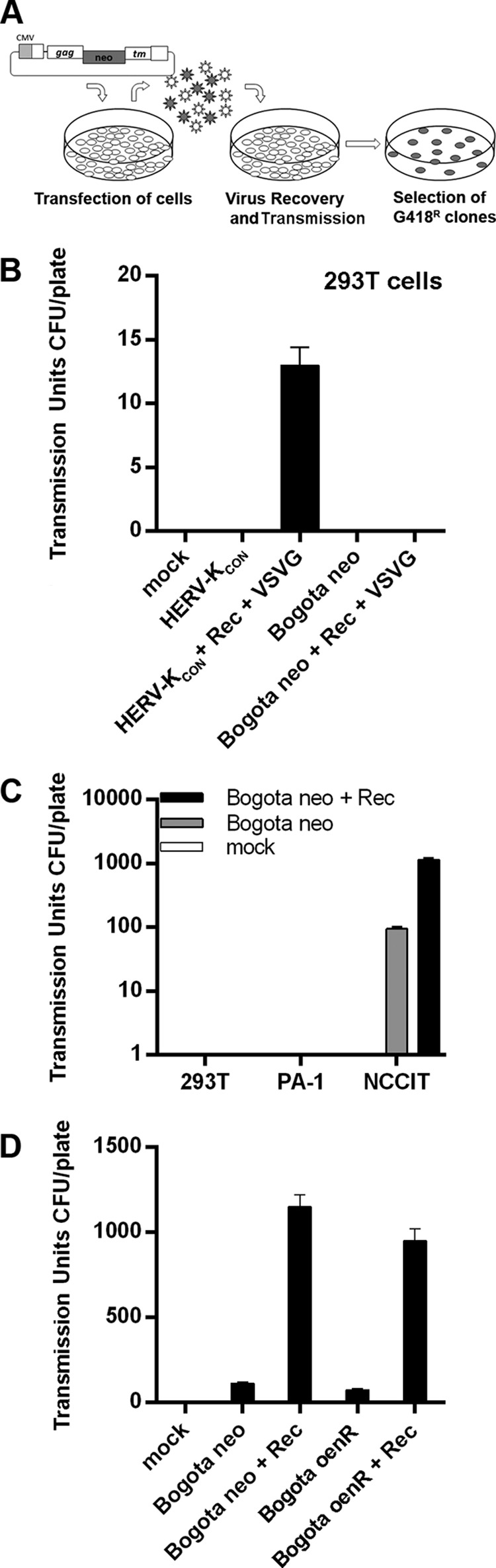
Transmission of HK2 viral particles. (A) Methodology of the transmissibility assay. Cells were transfected with Bogota constructs or the indicated plasmid mixtures. Supernatants were collected 48 h posttransfection, and the particles were incubated with target 293T cells. Cells exposed to HK2 VLPs were selected for G418 resistance and the apparent transmissibility units calculated by CFU per plate. (B) The infectivity of the resurrected HERV-KCON, produced by the CHKCP plasmid, following transfection into 293T cells was used as a positive control. HERV-KCON (VSV-G)-pseudotyped virions were produced in 293T cells in the presence or absence of Rec. HERV-KCON-infected cells were selected with puromycin. A similar transmissibility assay using HERV-KBogota neo did not reveal production of transmissible HK2 particles in 293T cells, which was predicted, as 293T cells do not make HK2 particles. (C) Transmissible units of HK2 particles containing Bogota transcripts produced by 293T and the germ cell tumor cell lines PA-1 and NCCIT, in the presence or absence of Rec. The target cells were 293T cells. (D) Transmissible units of NCCIT-producing HK2 particles containing Bogota transcripts with neo markers (the neo gene is displayed in sense orientation or antisense orientation and disrupted with an intron [see the text, particularly Materials and Methods, for further explanation]) in the presence or absence of Rec. The target cells were 293T cells. Values represent the means ± SD from at least three independent experiments.
FIG 5
FIG 5
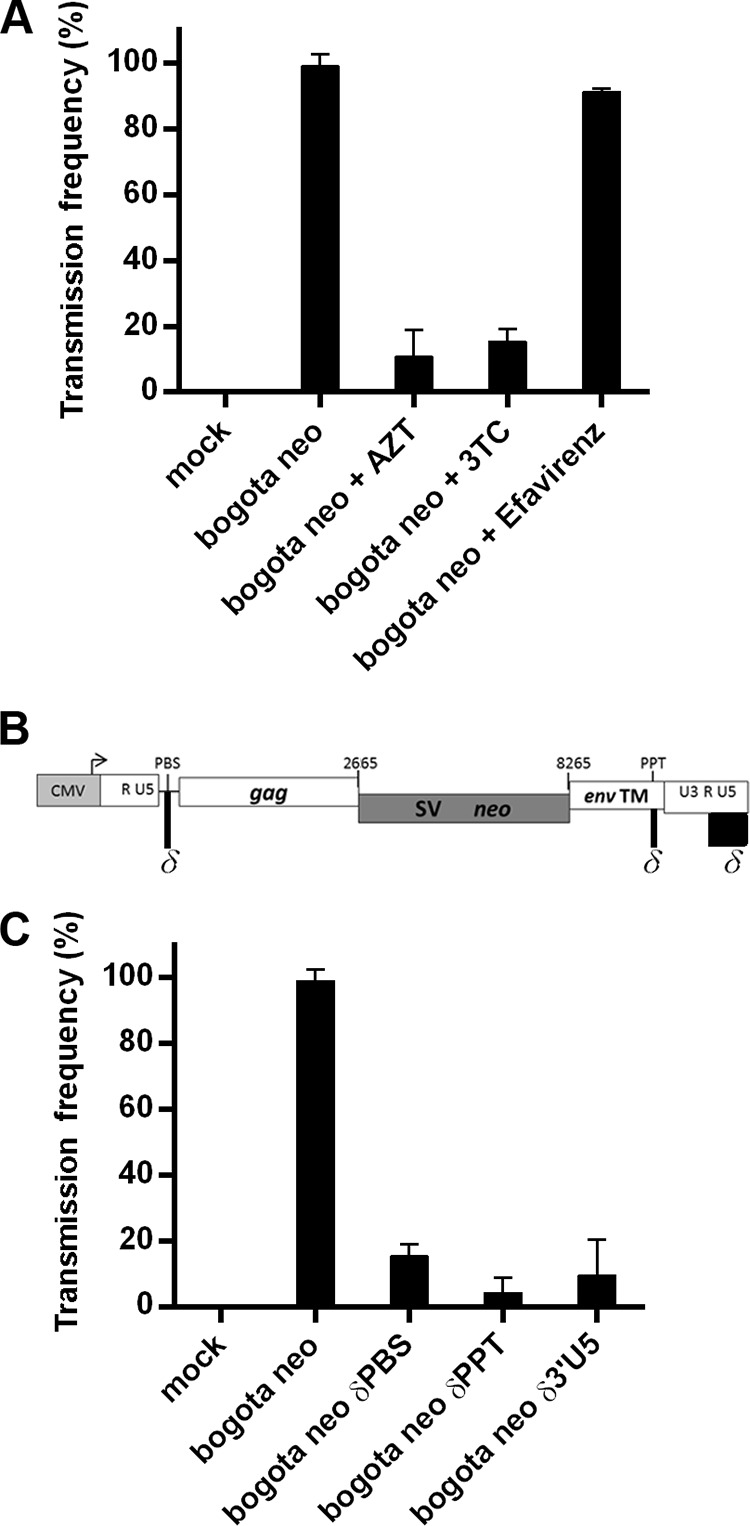
Transmission of HK2 particles into 293T target cells requires reverse transcription. (A) Inhibition of transmission of HK2 particles containing Bogota transcripts by treatment of the target cells with nucleoside reverse transcriptase inhibitors (NRTIs). The frequency of transmission of HK2 particles containing Bogota transcripts in the presence or absence of 50 μM AZT, 3TC, or efavirenz. (B) Genomic position of sequences required for reverse transcription modified in Bogota mutant constructs. The primer binding site (PBS), necessary to initiate reverse transcription, the polypurine tract (PPT), which resists digestion by the RNase H activity of the reverse transcriptase (RT) enzyme and primes plus-strand DNA synthesis, and the last 220 bp of the 3′ LTR containing a portion of R and U5, required for template switching during reverse transcription, were deleted by site-directed mutagenesis to test the effect of these sequences during reverse transcription of Bogota transcripts. (C) Transmission of HK2 particles containing Bogota transcripts and reverse transcription-associated mutant transcripts. Frequency of infection of HK2 particles containing Bogota or mutant δPBS, δPPT, or δ3′RU5 transcripts. Values represent the means ± SD from at least three independent experiments.
FIG 6
FIG 6
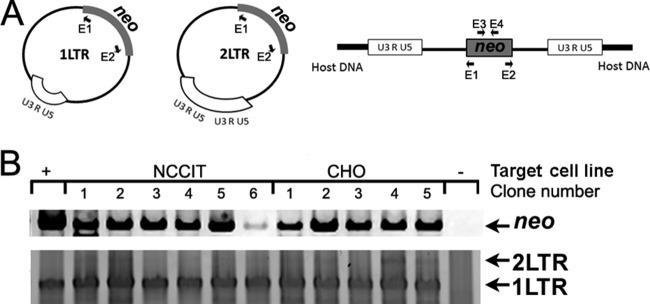
Bogota reverse-transcribed DNA sequences are found in episomal forms in target cells. (A) Schematic representation of the possible integration outcomes of Bogota reverse-transcribed cDNAs. After reverse transcription, Bogota cDNA may integrate into chromosomal DNA or form episomes (1LTR or 2LTR forms). Bogota integration forms can be detected with primers E1 and E2 by inverse PCR (Table 1). Primers E3 and E4 can detect Bogota neo DNA, which can be present in any of the integration forms. (B) Detection of Bogota DNA and Bogota episomal forms in recipient cells. DNA was extracted from target cells with Bogota-transmitted neomycin resistance. DNA of the neo resistance gene, as well as Bogota 1LTRs and 2LTRs, were detected by PCR and inverse PCR, respectively, using the primers described above. Target cells included the human NCCIT cell line and the hamster CHO cell line. DNA from Bogota neo was detected in all of the neomycin-resistant clones but not in untreated, neomycin-susceptible cells. The episomal 1LTR Bogota form was detected in all target cells, yet the 2LTR form was detected only in NCCIT clones 1 and 2 and the CHO clones 4 and 5. Sequencing confirmed the presence of episomal forms. The HERV-KBogota neo plasmid served as a positive control for neo DNA, and a clone containing a 1LTR sequence obtained in one of the experiments performed in this investigation served as a positive control for 1LTR amplification.
FIG 7
FIG 7
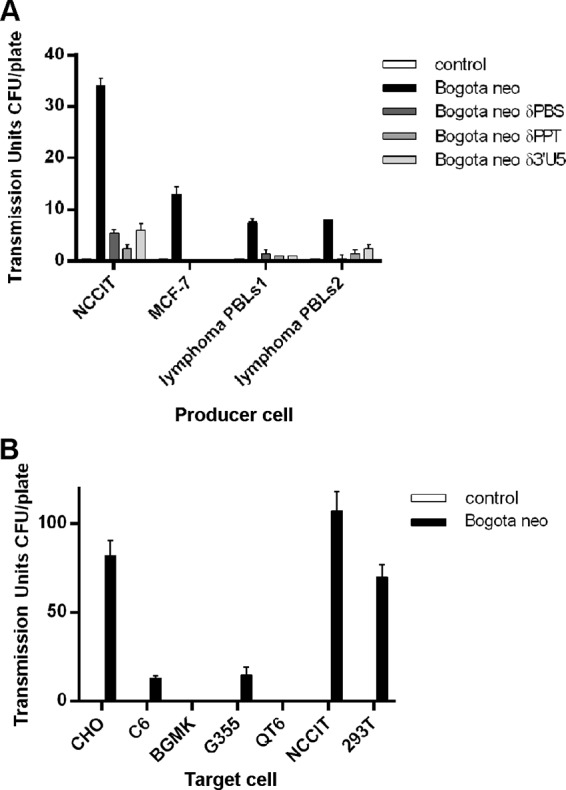
Transmissibility of HK2 particles produced from cancer cells and virus tropism. (A) Transmission of HK2 particles produced from cancer cell lines and lymphocytes from lymphoma patients to target 293T cells. The frequency of transmissibility of HK2 particles containing Bogota and reverse transcription-associated δPBS, δPPT, or δ3′RU5 mutant transcripts produced in NCCIT cells, the breast cancer MCF-7 cell line, and the peripheral blood lymphocytes (PBLs) of lymphoma patients (PBLs1 corresponds to a patient with large B-cell lymphoma, and PBLs2 corresponds to a patient with follicular lymphoma) is shown. (B) Tropism of HK2 particles produced in NCCIT cells containing Bogota transcripts. HK2 particles containing Bogota transcripts were incubated with hamster CHO, rat C6, buffalo green monkey BGMK, feline G355, quail QT6, and human NCCIT and 293T cell lines and selected for G418. Transmissible units per plate represent the means ± SD from at least three independent experiments.
FIG 8
FIG 8
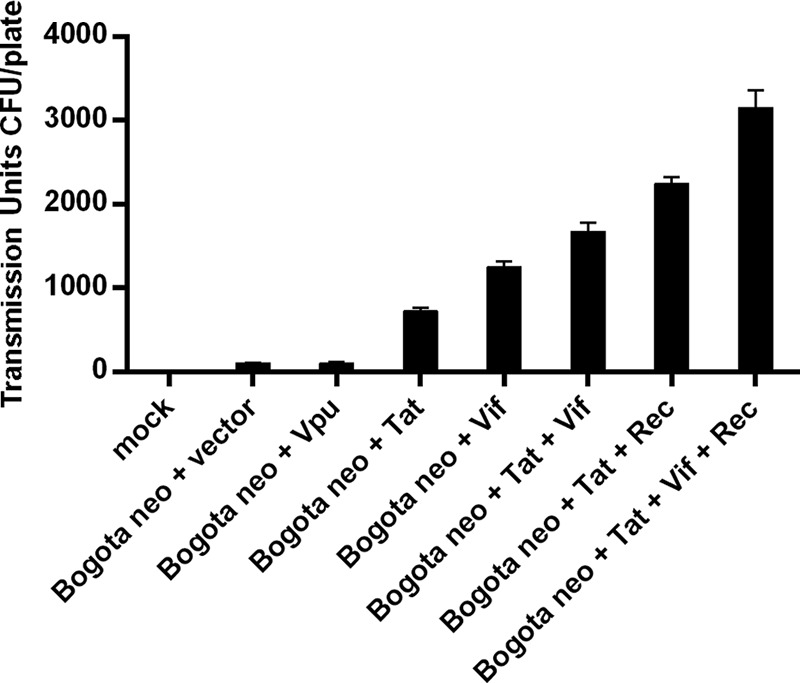
Expression of HIV-1 accessory proteins increases the production of transmissible HK2 particles. NCCIT cells were transfected with the indicator Bogota construct and plasmids expressing the HIV-1 Vpu, Tat, and Vif proteins. HK2 particles produced in treated cells were collected and assessed for transmissibility to 293T target cells by using the Bogota neomycin selection assay. The graph shows the transmissible units of HK2 particles containing Bogota transcripts stimulated by overexpression of HIV-1 proteins in the presence or absence of Rec. Expression of HIV-1 Tat or Vif, but not Vpu, increases the production of transmissible HK2 particles. Furthermore, an additive effect in the transmissible units of HK2 particles is seen when HIV-1 Tat and Vif, together with HK2 Rec, are expressed in NCCIT cells. Values represent the means ± SD from at least three independent experiments.

References

    1. Jern P, Coffin JM. 2008. Effects of retroviruses on host genome function. Annu Rev Genet 42:709–732. doi: 10.1146/annurev.genet.42.110807.091501. - DOI - PubMed
    1. Nelson PN, Carnegie PR, Martin J, Davari Ejtehadi H, Hooley P, Roden D, Rowland-Jones S, Warren P, Astley J, Murray PG. 2003. Demystified. Human endogenous retroviruses. Mol Pathol 56:11–18. doi: 10.1136/mp.56.1.11. - DOI - PMC - PubMed
    1. Subramanian RP, Wildschutte JH, Russo C, Coffin JM. 2011. Identification, characterization, and comparative genomic distribution of the HK2 group of human endogenous retroviruses. Retrovirology 8:90. doi: 10.1186/1742-4690-8-90. - DOI - PMC - PubMed
    1. Barbulescu M, Turner G, Seaman MI, Deinard AS, Kidd KK, Lenz J. 1999. Many human endogenous retrovirus K (HERV-K) proviruses are unique to humans. Curr Biol 9:861–868. doi: 10.1016/S0960-9822(99)80390-X. - DOI - PubMed
    1. Okahara G, Matsubara S, Oda T, Sugimoto J, Jinno Y, Kanaya F. 2004. Expression analyses of human endogenous retroviruses (HERVs): tissue-specific and developmental stage-dependent expression of HERVs. Genomics 84:982–990. doi: 10.1016/j.ygeno.2004.09.004. - DOI - PubMed

Publication types

LinkOut - more resources