


Varicella immunity in Iran: an age-stratified systematic review and meta-analysis
- PMID: 25926953
- PMCID: PMC4411421
Varicella immunity in Iran: an age-stratified systematic review and meta-analysis
Abstract
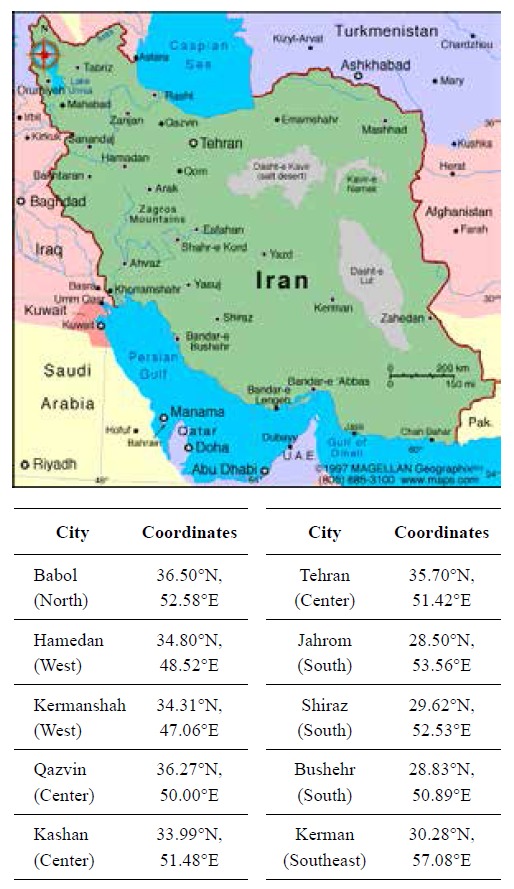
Objectives: To generate synthesized information on the epidemiology of VZV infection, as well as an estimation of prevalence of age-specific antibody in Iranian less than 40.
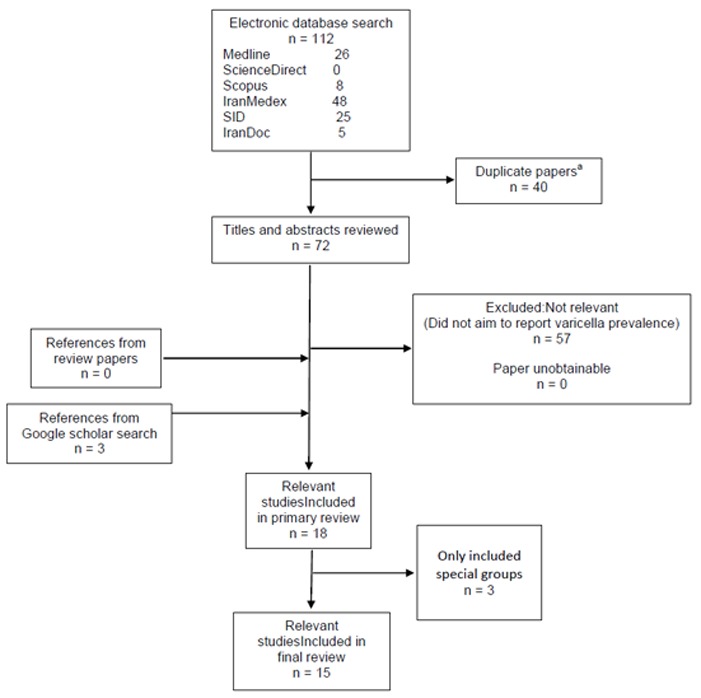
Material and methods: After exclusion of irrelevant and overlapping reports, 15 papers were included (from nine major cities). Studies were pooled according to the heterogeneity test results. Random effect model methods were used for meta-analysis where significant heterogeneity was observed (age 1-16years).For other age groups, fixed model were used.
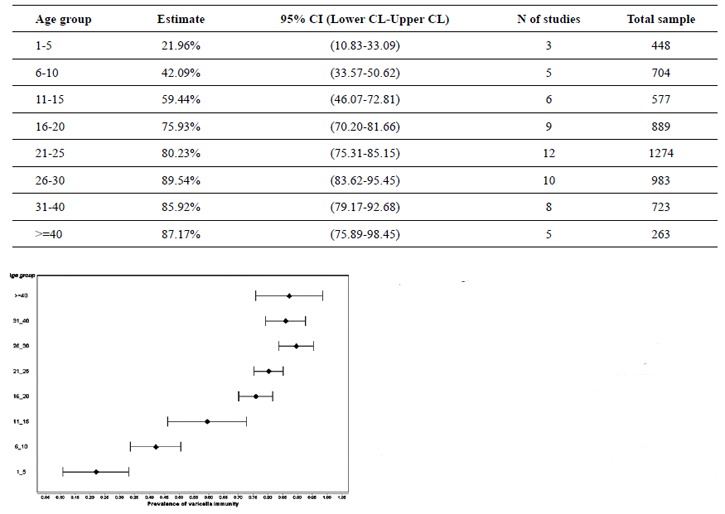
Results: Significant heterogeneity was observed in prevalence rates of all childhood age-groups. The seropositivity prevalence increased steeply from the age of 1-5 to 6-10 [from 21.9% (95% CI; 10.8-33.1) to 42.1 %(95% CI; 33.6-50.6)]. At the age of 11 15, 59.4% (95% CI; 46.1-72.8) of children showed to be infected. The rate of seropositivity was more than 87% in individuals of 40 and older.
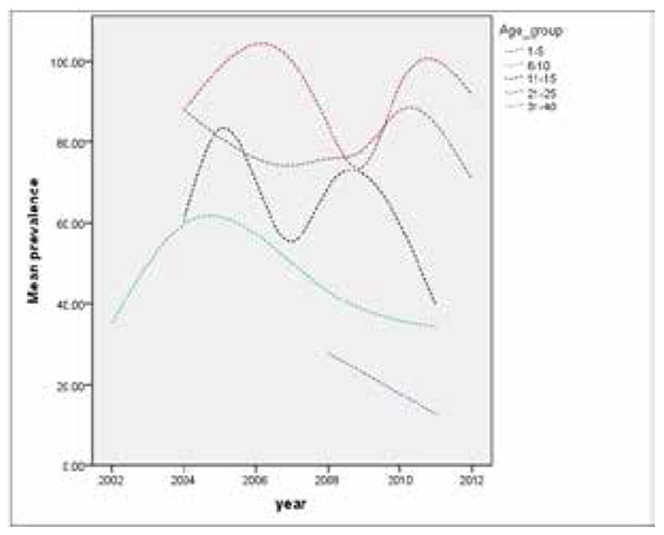
Conclusion: The varicella seroeprevalence in Iran is in accordance with average tropical and temperate areas. Comparison of conducted studies during 2003 to 2011 didn't show any alteration in VZV seroprovalence in Iran.
Keywords: Iran; Varicella; meta-analysis; seroepidemiologic study.
Figures
References
-
- Whitley RJ. Mandell, Douglas, and Bennett’s principles and practice of infectious diseases. 7. Philadelphia, PA: Elsevier Churchill Livingstone; 2010. Varicella-Zoster Virus; pp. 1963–1969.
-
- Miller E, Marshall R, Vurdien J. Epidemiology, outcome and control of varicella-zoster infection. Rev Med Microbiol. 1993;4:222–230.
-
- Gil A, Oyaguez I, Carrasco P, Gonzalez A. Epidemiology of primary varicella hospitalisations in Spain. Vaccine. 2002;20:295–298. - PubMed
-
- Sauerbrei A, Wutzler P. Herpes simplex and varicella zoster virus infections during pregnancy: current concepts of prevention, diagnosis and therapy. Part 2: varicella-zoster virus infections. Med Microbiol Immunol. 2007;196:95–102. - PubMed
-
- Harger JH, Ernest JM, Thurnau GR, Moawad A, Momirova V, Landon MB, et al. Risk factors and outcome of varicella-zoster virus pneumonia in pregnant women. J Infect Disease. 2002;185:422–427. - PubMed
LinkOut - more resources
Full Text Sources