


Rodent models for Alzheimer's disease drug discovery
- PMID: 25927677
- PMCID: PMC4592281
- DOI: 10.1517/17460441.2015.1041913
Rodent models for Alzheimer's disease drug discovery
Abstract
Introduction: Alzheimer's disease (AD) is a neurodegenerative disorder characterized by memory loss and personality changes, leading to dementia. Histopathological hallmarks are represented by aggregates of beta-amyloid peptide (Aβ) in senile plaques and deposition of hyperphosphorylated tau protein in neurofibrillary tangles in the brain. Rare forms of early onset familial Alzheimer's disease are due to gene mutations. This has prompted researchers to develop genetically modified animals that could recapitulate the main features of the disease. The use of these models is complemented by non-genetically modified animals.
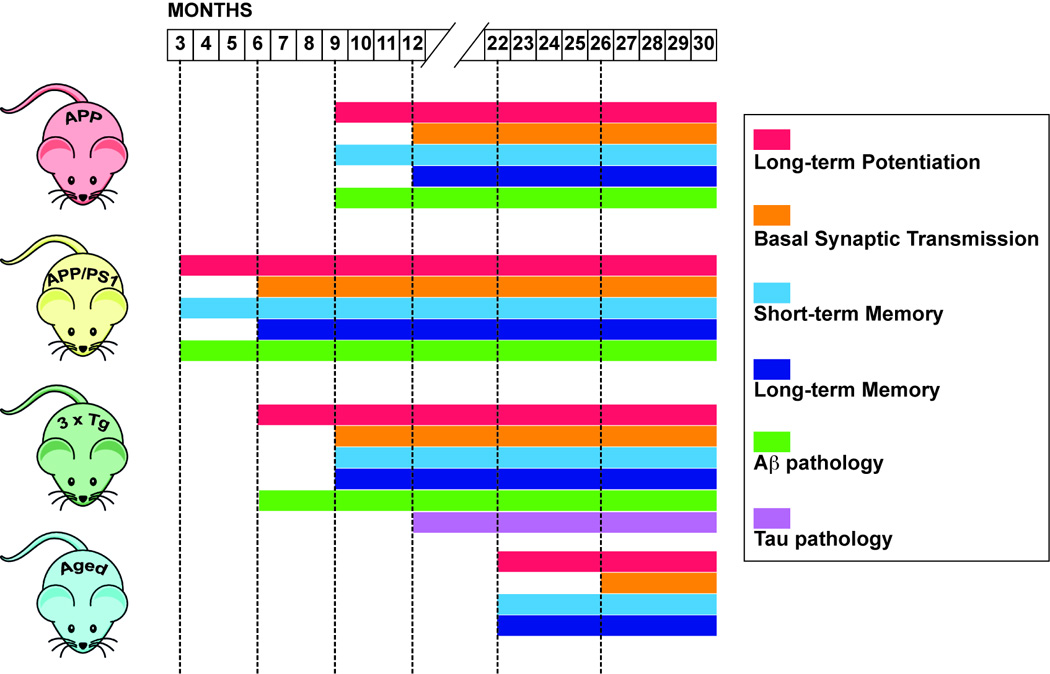
Areas covered: This review summarizes the characteristics of the most used transgenic (Tg) and non-Tg models of AD. The authors have focused on models mainly used in their laboratories including amyloid precursor protein (APP) Tg2576, APP/presenilin 1, 3xAD, single h-Tau, non-Tg mice treated with acute injections of Aβ or tau, and models of physiological aging.
Expert opinion: Animal models of disease might be very useful for studying the pathophysiology of the disease and for testing new therapeutics in preclinical studies but they do not reproduce the entire clinical features of human AD. When selecting a model, researchers should consider the various factors that might influence the phenotype. They should also consider the timing of testing/treating animals since the age at which each model develops certain aspects of the AD pathology varies.
Keywords: Alzheimer’s disease; aging; behavior; memory; synaptic plasticity; transgenic models.
Conflict of interest statement
The authors have no other relevant affiliations or financial involvement with any organization or entity with a financial interest in or financial conflict with the subject matter or materials discussed in the manuscript apart from those disclosed.
Figures
References
-
- Alzheimer A. Über einen eigenartigen schweren Erkrankungsprozeß der Hirnrinde. Neurologisches Centralblatt. 1906;23:1129–1136.
-
- Maurer K, Volk S, Gerbaldo H. Auguste D and Alzheimer's disease. Lancet. 1997;349:1546–1549. - PubMed
-
- Kraepelin E. Psychiatrie: Ein Lehrbuch für Studierende und Ärzte. Leipzig: Barth. 1910:593–632.
-
- Rocca WA, Amaducci LA, Schoenberg BS. Epidemiology of clinically diagnosed Alzheimer's disease. Ann Neurol. 1986;19:415–424. - PubMed
-
- St George-Hyslop PH. Molecular genetics of Alzheimer's disease. Biol Psychiatry. 2000;47:183–199. - PubMed
Publication types
MeSH terms
Grants and funding
LinkOut - more resources
Full Text Sources
Other Literature Sources
Medical
Miscellaneous
