


Swine is a possible source of hepatitis E virus infection by comparative study of hepatitis A and E seroprevalence in Thailand
- PMID: 25927925
- PMCID: PMC4415934
- DOI: 10.1371/journal.pone.0126184
Swine is a possible source of hepatitis E virus infection by comparative study of hepatitis A and E seroprevalence in Thailand
Abstract
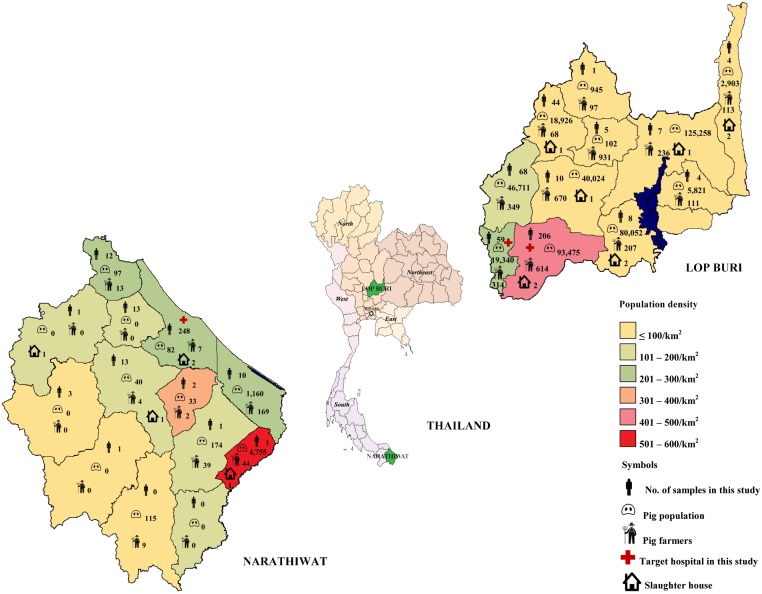
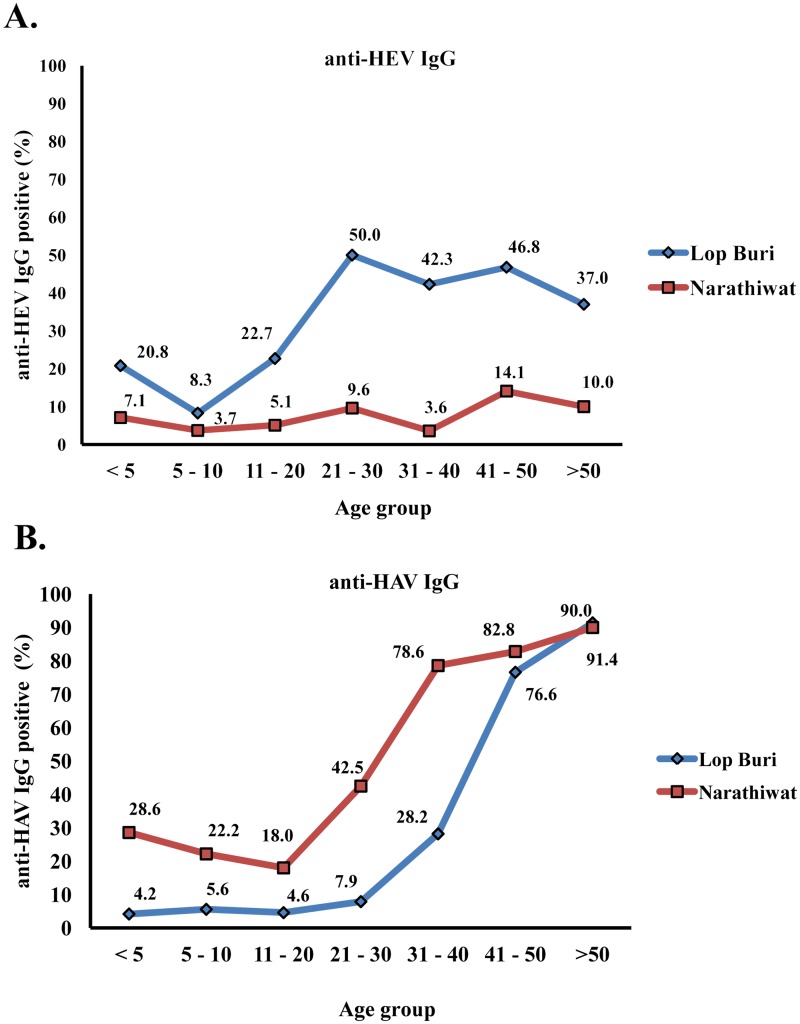
Hepatitis A virus (HAV) and hepatitis E virus (HEV) infection in developing countries are associated with contaminated food or water. Although Thailand is non-endemic for HEV, sporadic infections may occur from zoonotic transmission. Individuals between 7 months to 69 years (mean age = 32.8) from predominantly Islamic Narathiwat (n = 305) and swine farm-dense Lop Buri (n = 416) provinces were screened for anti-HEV and anti-HAV antibodies by commercial enzyme-linked immunosorbent assay and automated chemiluminescent microparticle immunoassay, respectively. Seroprevalence and relative antibody titers were analyzed according to age groups. HAV IgG antibody positive rates in Lop Buri and Narathiwat residents were 39.9% and 58%, respectively (p < 0.001). Greater than 90% of individuals >50 years old in both provinces possessed anti-HAV IgG. In contrast, seroprevalence for anti-HEV IgG was much higher in Lop Buri (37.3%) than in Narathiwat (8.9%) (p < 0.001). Highest anti-HEV IgG prevalence was found among 21-30 year-olds (50%) in Lop Buri and 41-50 year-olds (14.1%) in Narathiwat. In summary, fewer individuals possessed anti-HEV IgG in Narathiwat where most residents abstained from pork and fewer swine farms are present. Therefore, an increased anti-HEV IgG seroprevalence was associated with the density of swine farm and possibly pork consumption. Adults were more likely than children to have antibodies to both HEV and HAV.
Conflict of interest statement
Figures
References
-
- WHO. Hepatitis A. Fact Sheet No. 328. 2014 June [cited 27 November 2014]. In WHO website [Internet]. Switzerland: WHO 2015 -. [about 5 screens]. Available: http://www.who.int/mediacentre/factsheets/fs328/en/.
Publication types
MeSH terms
Substances
LinkOut - more resources
Full Text Sources
Other Literature Sources
Medical
