


Increasing trends of herpes zoster in Australia
- PMID: 25928713
- PMCID: PMC4416021
- DOI: 10.1371/journal.pone.0125025
Increasing trends of herpes zoster in Australia
Erratum in
-
Correction: increasing trends of herpes zoster in Australia.PLoS One. 2015 Jun 3;10(6):e0129872. doi: 10.1371/journal.pone.0129872. eCollection 2015. PLoS One. 2015. PMID: 26038831 Free PMC article. No abstract available.
Abstract
Background: Increasing trends in incidence of herpes zoster (HZ) have been reported in Australia and internationally. This may reflect the impact of childhood VZV vaccination programs introduced universally in Australia in late 2005. The objective of this study was to evaluate changes in incidence of HZ and PHN in Australia over time, and associated healthcare resource utilisation.
Methods: Australian data on general practice (GP) encounters for HZ, specific antiviral prescribing data from the pharmaceutical benefits scheme, emergency department presentations from the states of NSW and Victoria and national hospitalisation data for HZ were analysed for time trends using regression models. Two time periods (2000-2006 and 2006-2013) were compared which correspond broadly with the pre- and post- universal VZV vaccination period.
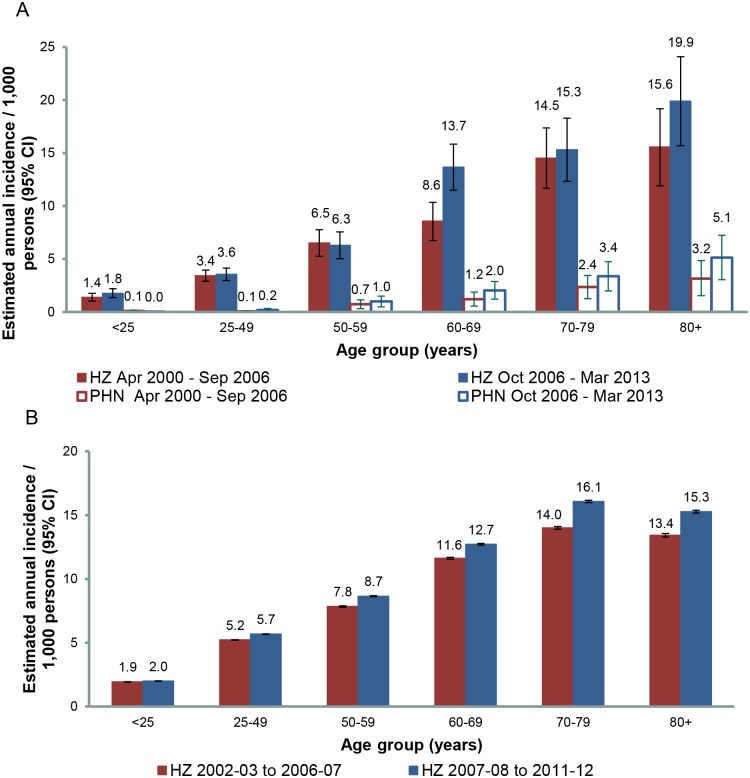
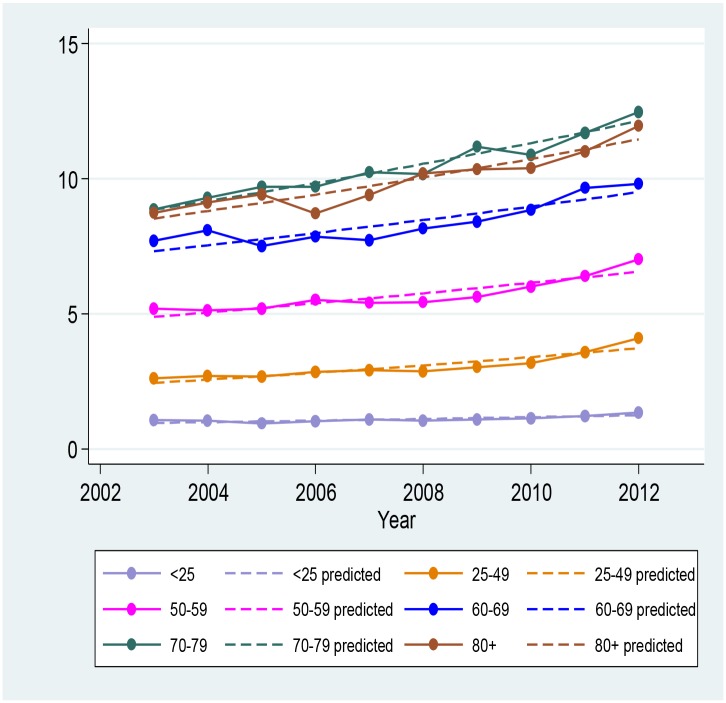
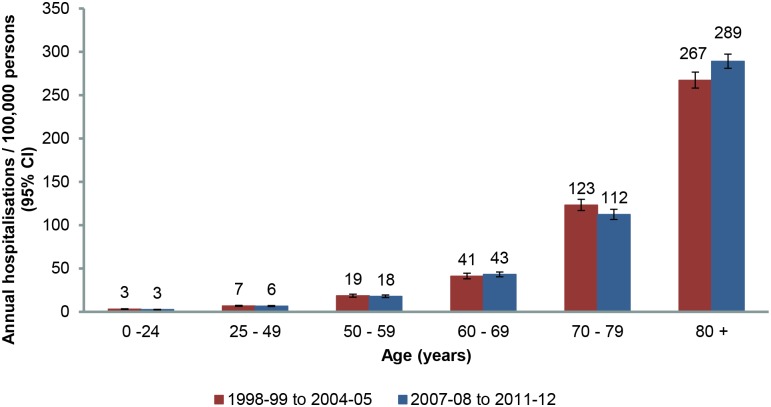
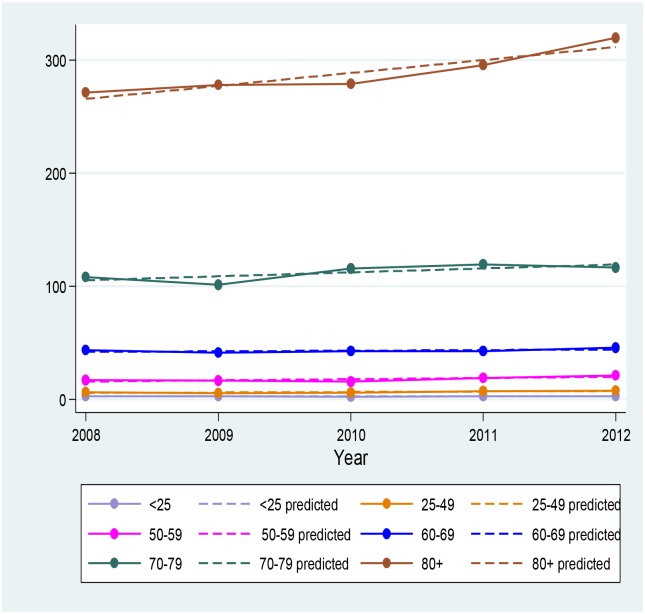
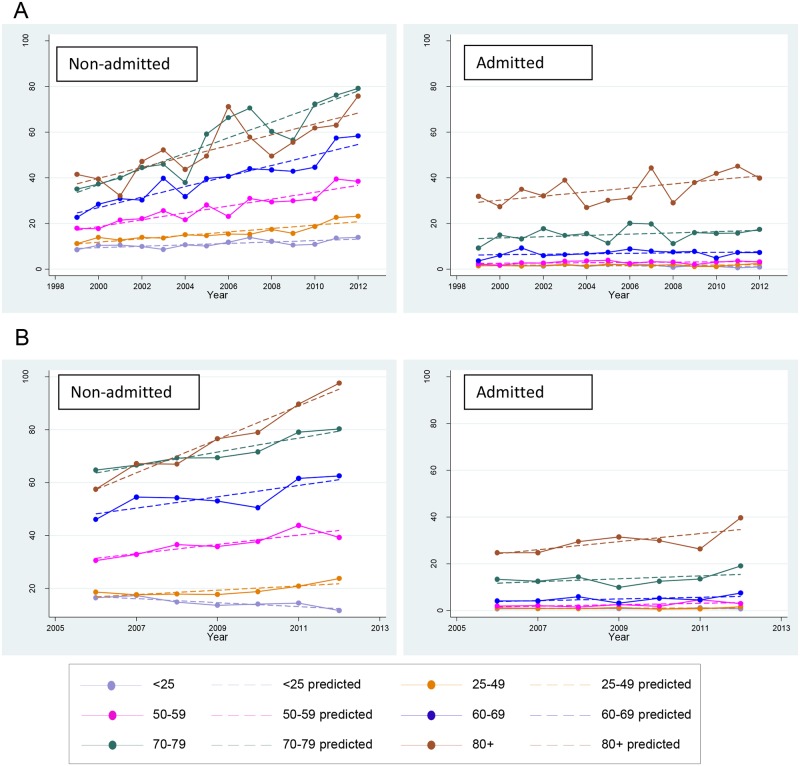
Results: All data sources showed increasing rates of HZ with age and over time. The GP database showed a significant annual increase in encounters for HZ of 2.5 per 100,000 between 1998 and 2013, and the rates of prescriptions for HZ increased by 4.2% per year between 2002 and 2012. In the 60+ population HZ incidence was estimated to increase from 11.9 to 15.4 per 1,000 persons using GP data or from 12.8 to 14.2 per 1,000 persons using prescription data (p<0.05, between the two periods). Hospitalisation data did not show the same increasing trend over time, except for the age group ≥80 years. Most emergency visits for HZ were not admitted, and showed significant increases over time.
Discussion: The burden of HZ in Australia is substantial, and continues to increase over time. This increase is seen both pre- and post-universal VZV vaccination in 2005, and is most prominent in the older population. The substantial burden of HZ, along with ageing of the Australian population and the importance of healthy ageing, warrants consideration of HZ vaccination for the elderly.
Conflict of interest statement
Figures
References
-
- Cunningham AL, Breuer J, Dwyer DE, Gronow DW, Helme RD, Litt JC, et al. (2008) The prevention and management of herpes zoster. Medical Journal of Australia 188: 171–176. - PubMed
-
- Schmader KE (2002) Epidemiology and impact on quality of life of postherpetic neuralgia and painful diabetic neuropathy. The Clinical journal of pain 18: 350–354. - PubMed
-
- Harpaz R, Ortega-Sanchez I, Seward J (2008) Advisory Committee on Immunization Practices (ACIP) Centers for Disease Control and Prevention (CDC). Prevention of herpes zoster: Recommendations of the advisory committee on immunization practices (ACIP). MMWR Recomm Rep 57: 30. - PubMed
Publication types
MeSH terms
Substances
LinkOut - more resources
Full Text Sources
Other Literature Sources
Medical
