


A pilot randomized controlled trial of a stepped care intervention package for depression in primary care in Nigeria
- PMID: 25929840
- PMCID: PMC4424568
- DOI: 10.1186/s12888-015-0483-0
A pilot randomized controlled trial of a stepped care intervention package for depression in primary care in Nigeria
Abstract
Background: Depression is common in primary care and is often unrecognized and untreated. Studies are needed to demonstrate the feasibility of implementing evidence-based depression care provided by primary health care workers (PHCWs) in sub-Saharan Africa. We carried out a pilot two-parallel arm cluster randomized controlled trial of a package of care for depression in primary care.
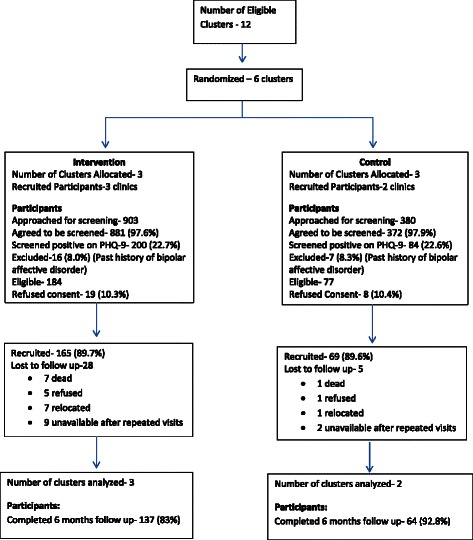
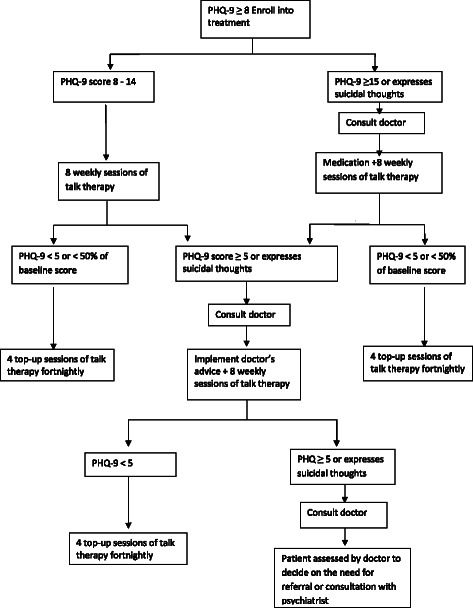
Methods: Six primary health care centers (PHCC) in two Local Government Areas of Oyo State, South West Nigeria were randomized into 3 intervention and 3 control clinics. Three PHCWs were selected for training from each of the participating clinics. The PHCWs from the intervention clinics were trained to deliver a manualized multicomponent stepped care intervention package for depression consisting of psychoeducation, activity scheduling, problem solving treatment and medication for severe depression. Providers from the control clinics delivered care as usual, enhanced by a refresher training on depression diagnosis and management. Outcome measures Patient's Health Questionnaire (PHQ-9), WHO quality of Life instrument (WHOQOL-Bref) and the WHO disability assessment schedule (WHODAS) were administered in the participants' home at baseline, 3 and 6 months.
Results: About 98% of the consecutive attendees to the clinics agreed to have the screening interview. Of those screened, 284 (22.7%) were positive (PHQ-9 score ≥ 8) and 234 gave consent for inclusion in the study: 165 from intervention and 69 from control clinics. The rates of eligible and consenting participants were similar in the control and intervention arms. In all 85.9% (92.8% in intervention and 83% in control) of the participants were successfully administered outcome assessments at 6 months. The PHCWs had little difficulty in delivering the intervention package. At 6 months follow up, depression symptoms had improved in 73.0% from the intervention arm compared to 51.6% control. Compared to the mean scores at baseline, there was improvement in the mean scores on all outcome measures in both arms at six months.
Conclusion: The results provide support for the feasibility of conducting a fully-powered randomized study in this setting and suggest that the instruments used may have the potential to detect differences between the arms.
Trial registration number: ISRCTN46754188 (ISRTCN registry at isrtcn.com); registered 23 September 2013, details of the pilot study added 12/02/2015.
Figures
References
-
- Gureje O, Obikoya B, Ikuesan BA. Prevalence of specific psychiatric disorders in an urban primary care setting. East Afr Med J. 1992;69(5):282–287. - PubMed
Publication types
MeSH terms
Associated data
Grants and funding
LinkOut - more resources
Full Text Sources
Other Literature Sources
Medical
