


Renal formulas pretreated with medications alters the nutrient profile
- PMID: 25930981
- PMCID: PMC4572699
- DOI: 10.1007/s00467-015-3115-5
Renal formulas pretreated with medications alters the nutrient profile
Abstract
Background: Pretreating renal formulas with medications to lower the potassium and phosphorus content is common in clinical practice; however, the effect of this treatment on other nutrients is relatively unstudied. We examine whether nutrient composition is affected by pretreating renal formulas with sodium polystyrene sulfonate (SPS) suspension and sevelamer carbonate.
Methods: Fixed medication doses and treatment times were utilized to determine changes in the nutrient composition of Suplena® and Similac® PM 60/40. The effect of simultaneously adding both medications (co-administration) to the formula on the nutrient composition of Suplena® was also evaluated.
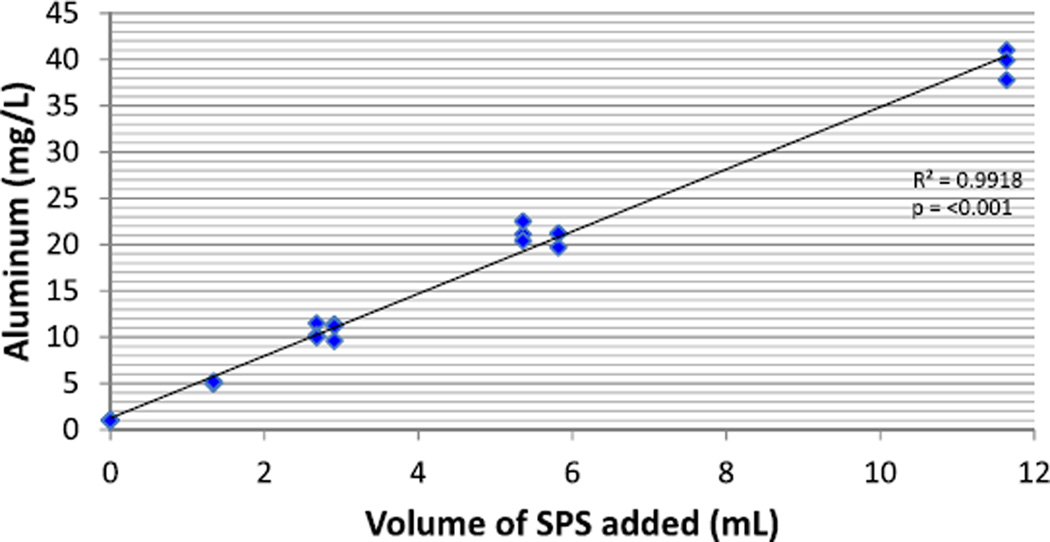
Results: Pretreatment of Suplena® with SPS reduced the concentrations of calcium (11-38 %), copper (3-11 %), manganese (3-16 %), phosphorus (0-7 %), potassium (6-34 %), and zinc (5-20 %) and increased those of iron (9-34 %), sodium (89-260 %), and sulfur (19-45 %) and the pH (0.20-0.50 units). Pretreatment of Similac® PM 60/40 with SPS reduced the concentrations of calcium (8-29 %), copper (5-19 %), magnesium (3-26 %), and potassium (33-63 %) and increased those of iron (13-87 %) and sodium (86-247 %) and the pH (0.40-0.81 units). Pretreatment of both formulas with the SPS suspension led to significant increases in the aluminum concentration in both formulas (507-3957 %). No differences in potassium concentration were observed between treatment times. Unexpectedly, the levels of neither phosphorus nor potassium were effectively reduced in Suplena® pretreated with sevelamer carbonate alone or when co-administered with SPS.
Conclusions: Pretreating formula with medications alters nutrients other than the intended target(s). Future studies should be aimed at predicting the loss of these nutrients or identifying alternative methods for managing serum potassium and phosphorus levels in formula-fed infants. The safety of pretreating formula with SPS suspension should also be examined.
Conflict of interest statement
Figures
References
-
- National Institutes of Health, National Institute of Diabetes and Digestive and Kidney Diseases. U.S. Renal Data System. USRDS 2014 Annual Data Report: Atlas of Chronic Kidney Disease and End-Stage Renal Disease in the United States. Bethesda: National Institutes of Health, National Institute of Diabetes and Digestive and Kidney Diseases; 2014.
-
- Wong H, Mylrea K, Feber J, Drukker A, Filler G. Prevalence of complications in children with chronic kidney disease according to KDOQI. Kidney Int. 2006;70:585–590. - PubMed
-
- Rivard AL, Raup SM, Beilman GJ. Sodium polystyrene sulfonate used to reduce the potassium content of a high-protein enteral formula: a quantitative analysis. J Parenter Enteral Nutr. 2004;28:76–78. - PubMed
-
- Bunchman TE, Wood EG, Schenck MH, Weaver KA, Klein BL, Lynch RE. Pretreatment of formula with sodium polystyrene sulfonate to reduce dietary potassium intake. Pediatr Nephrol. 1991;5:29–32. - PubMed
-
- Starbuck WC. Reduction of potassium and calcium in milk by sodium sulfonated polystyrene resins. Kidney Int. 1972;2:175–177. - PubMed
Publication types
MeSH terms
Substances
Grants and funding
LinkOut - more resources
Full Text Sources
Other Literature Sources
Medical
