


Aging stem cells. A Werner syndrome stem cell model unveils heterochromatin alterations as a driver of human aging
- PMID: 25931448
- PMCID: PMC4494668
- DOI: 10.1126/science.aaa1356
Aging stem cells. A Werner syndrome stem cell model unveils heterochromatin alterations as a driver of human aging
Erratum in
-
Erratum for the Report "A Werner syndrome stem cell model unveils heterochromatin alterations as a driver of human aging" by W. Zhang et al.Science. 2025 Mar 21;387(6740):eadx3819. doi: 10.1126/science.adx3819. Epub 2025 Mar 20. Science. 2025. PMID: 40112078 No abstract available.
Abstract
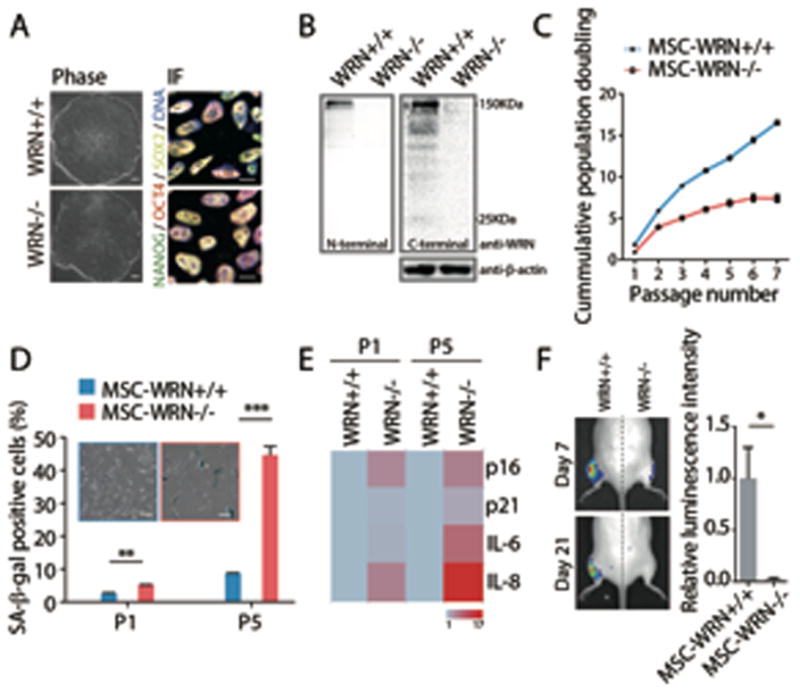
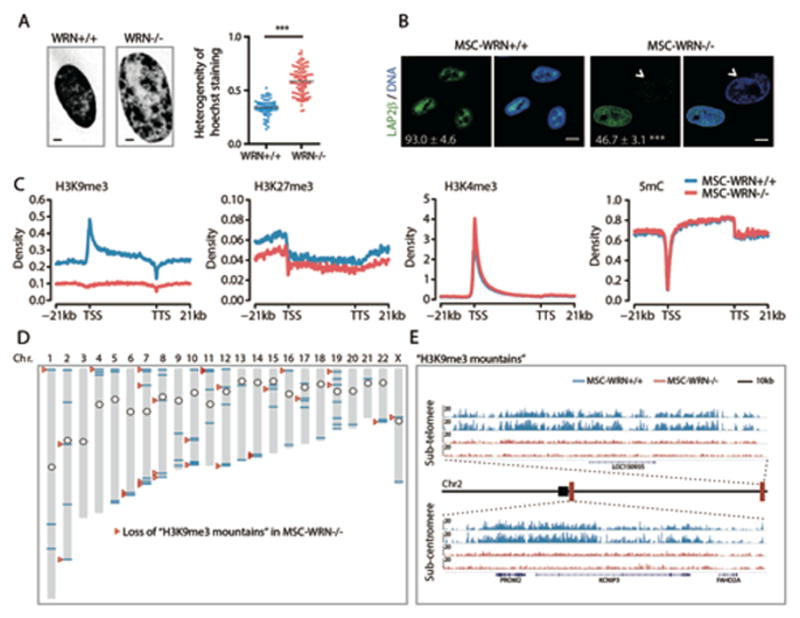
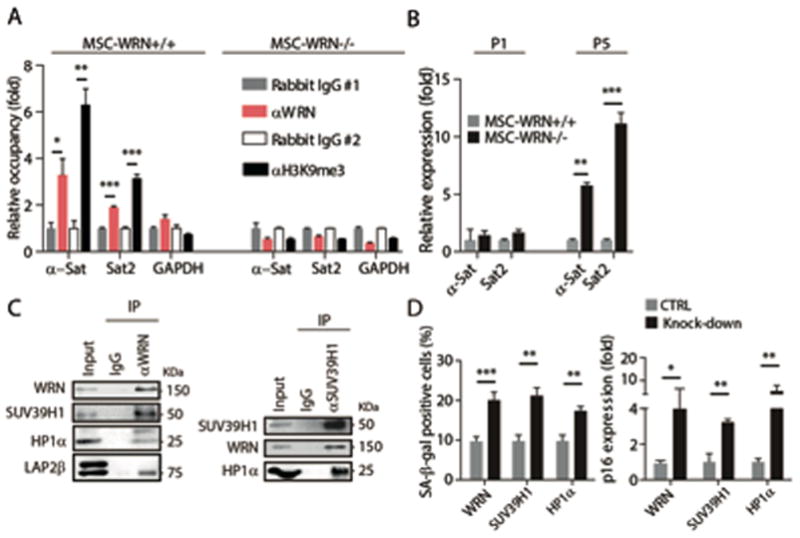
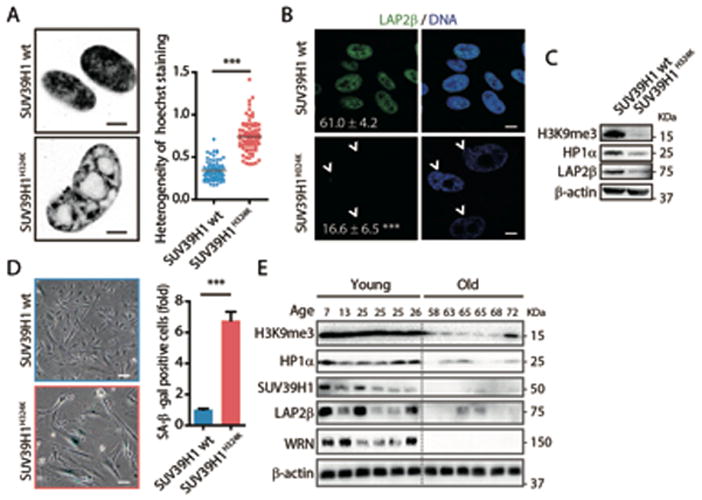
Werner syndrome (WS) is a premature aging disorder caused by WRN protein deficiency. Here, we report on the generation of a human WS model in human embryonic stem cells (ESCs). Differentiation of WRN-null ESCs to mesenchymal stem cells (MSCs) recapitulates features of premature cellular aging, a global loss of H3K9me3, and changes in heterochromatin architecture. We show that WRN associates with heterochromatin proteins SUV39H1 and HP1α and nuclear lamina-heterochromatin anchoring protein LAP2β. Targeted knock-in of catalytically inactive SUV39H1 in wild-type MSCs recapitulates accelerated cellular senescence, resembling WRN-deficient MSCs. Moreover, decrease in WRN and heterochromatin marks are detected in MSCs from older individuals. Our observations uncover a role for WRN in maintaining heterochromatin stability and highlight heterochromatin disorganization as a potential determinant of human aging.
Copyright © 2015, American Association for the Advancement of Science.
Figures
Comment in
-
Ageing: Heterochromatin disorganization associated with premature ageing.Nat Rev Genet. 2015 Jun;16(6):318. doi: 10.1038/nrg3958. Nat Rev Genet. 2015. PMID: 25982170 No abstract available.
-
Medicine. Progeria accelerates adult stem cell aging.Science. 2015 Jun 5;348(6239):1093-4. doi: 10.1126/science.aac4214. Science. 2015. PMID: 26045423 No abstract available.
References
-
- Kudlow BA, Kennedy BK, Monnat RJ., Jr Nat Rev Mol Cell Biol. 2007;8:394–404. - PubMed
Publication types
MeSH terms
Substances
Grants and funding
LinkOut - more resources
Full Text Sources
Other Literature Sources
Medical
Molecular Biology Databases
