


Negative pressure wound therapy for seroma prevention and surgical incision treatment in spinal fracture care
- PMID: 25932993
- PMCID: PMC7949832
- DOI: 10.1111/iwj.12436
Negative pressure wound therapy for seroma prevention and surgical incision treatment in spinal fracture care
Abstract
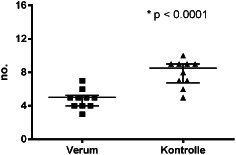
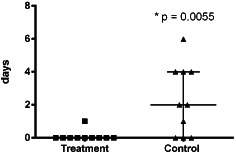
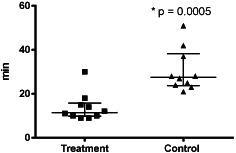
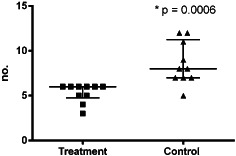
To evaluate the clinical use and economic aspects of negative pressure wound therapy (NPWT) after dorsal stabilisation of spinal fractures. This study is a prospective randomised evaluation of NPWT in patients with large surgical wounds after surgical stabilisation of spinal fractures by internal fixation. Patients were randomised to either standard wound dressing treatment (group A) or NPWT (group B). The wound area was examined by ultrasound to measure seroma volumes in both groups on the 5th and 10th day after surgery. Furthermore, data on economic aspects such as nursing time for wound care and material used for wound dressing were evaluated. A total of 20 patients (10 in each group) were enrolled. Throughout the whole study, mean seroma volume was significantly higher in group A than that in group B (day 5: 1·9 ml versus 0 ml; P = 0·0007; day 10: 1·6 ml versus 0·5 ml; P <0·024). Furthermore, patients of group A required more wound care time (group A: 31 ± 10 minutes; group B 13·8 ± 6 minutes; P = 0·0005) and more number of compresses (total number; group A 35 ± 15; group B 11 ± 3; P = 0·0376). NPWT reduced the development of postoperative seroma, reduced nursing time and reduced material required for wound care.
Keywords: NPWT; Spinal fracture; Wound complication; Wound healing.
© 2015 The Authors. International Wound Journal published by Medicalhelplines.com Inc and John Wiley & Sons Ltd.
Figures

References
-
- Kanakaris NK, Thanasas C, Keramaris N, Kontakis G, Granick MS, Giannoudis PV. The efficacy of negative pressure wound therapy in the management of lower extremity trauma: review of clinical evidence. Injury 2007;38(Suppl 5):S9–18. - PubMed
-
- Krug E, Berg L, Lee C, Hudson D, Birke‐Sorensen H, Depoorter M, Dunn R, Jeffery S, Duteille F, Bruhin A, Caravaggi C, Chariker M, Dowsett C, Ferreira F, Martínez JM, Grudzien G, Ichioka S, Ingemansson R, Malmsjo M, Rome P, Vig S, Runkel N, Martin R, Smith J. Evidence‐based recommendations for the use of Negative Pressure Wound Therapy in traumatic wounds and reconstructive surgery: steps towards an international consensus International Expert Panel on Negative Pressure Wound Therapy [NPWT‐EP]. Injury 2011;42(Suppl 1):S1–12. DOI: 10.1016/S0020-1383(11)00041-6. - DOI - PubMed
-
- Stannard JP, Robinson JT, Anderson ER, McGwin G Jr, Volgas DA, Alonso JE. Negative pressure wound therapy to treat hematomas and surgical incisions following high‐energy trauma. J Trauma 2006;60:1301–6. - PubMed
Publication types
MeSH terms
LinkOut - more resources
Full Text Sources
