


Achievement of individualized treatment targets in patients with comorbid type-2 diabetes and hypertension: 6 months results of the DIALOGUE registry
- PMID: 25934177
- PMCID: PMC4426603
- DOI: 10.1186/s12902-015-0020-7
Achievement of individualized treatment targets in patients with comorbid type-2 diabetes and hypertension: 6 months results of the DIALOGUE registry
Abstract
Background: Patients with type-2 diabetes mellitus (T2DM) and hypertension have increased risk of cardiovascular disease (CVD). We studied individualized treatment targets and their achievement in clinical practice.
Methods: DIALOGUE is a prospective, multi-center registry in patients with both T2DM and hypertension.
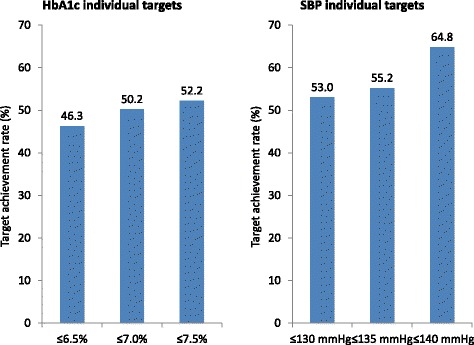
Results: Patients (n = 6,586) had a baseline fasting glucose (8.5 ± 2.8 mmol/l), postprandial glucose (10.9 ± 3.4 mmol/l), and HbA1c (7.8 ± 2.1%) levels indicated poor glycemic control. Baseline systolic and diastolic BP were 140.3 ± 15.7 and 82.6 ± 9.5, respectively. Patients were categorized by HbA1c treatment goals: ≤6.5% (strict), >6.5 to ≤7.0% (medium), and >7.0 to ≤7.5% (loose). When considering systolic BP (SBP) targets (≤130 mmHg [strict], >130 to ≤135 mmHg [medium], and >135 to ≤140 mmHg [loose]), patients with strict SBP treatment goals displayed similar characteristics to those with strict HbA1c targets. Although approximately 70% of patients received both strict HbA1c and SBP targeting, overall treatment goals remained unmet in all HbA1c target groups at the 6-month follow-up. SBP targets were not reached in the strict and medium groups, but were achieved in the loose treatment group. Specific predictors for choosing loose SBP or HbA1c treatment goals were identified, including SBP/HbA1c levels and various comorbidities.
Conclusions: Individualized glucose and BP targets were selected by treating physicians based on patient characteristics and overall comorbidity. While treatment goals were not consistently met using various antidiabetic and antihypertensive therapies, our analyses indicated that the strictly targeted patient populations maintained lower overall HbA1c and SBP levels at 6 months.
Figures



References
-
- Inzucchi SE, Bergenstal RM, Buse JB, Diamant M, Ferrannini E, Nauck M, European Association for the Study of D et al. Management of hyperglycemia in type 2 diabetes: a patient-centered approach: position statement of the American Diabetes Association (ADA) and the European Association for the Study of Diabetes (EASD) Diabetes Care. 2012;35(6):1364–79. doi: 10.2337/dc12-0413. - DOI - PMC - PubMed
-
- Hanefeld M, Koehler C, Gallo S, Benke I, Ott P. Impact of the individual components of the metabolic syndrome and their different combinations on the prevalence of atherosclerotic vascular disease in type 2 diabetes: the Diabetes in Germany (DIG) study. Cardiovasc Diabetol. 2007;6:13. doi: 10.1186/1475-2840-6-13. - DOI - PMC - PubMed
-
- Koehler C, Ott P, Benke I, Hanefeld M, Group DIGS. Comparison of the prevalence of the metabolic syndrome by WHO, AHA/NHLBI, and IDF definitions in a German population with type 2 diabetes: the Diabetes in Germany (DIG) Study. Horm Metab Res. 2007;39(9):632–5. doi: 10.1055/s-2007-985816. - DOI - PubMed
Publication types
MeSH terms
LinkOut - more resources
Full Text Sources
Other Literature Sources
Medical
Miscellaneous
