


Rare complication characterized by late-onset transient neurological symptoms without hyperperfusion after carotid artery stenting: A report of three cases
- PMID: 25934779
- PMCID: PMC4757199
- DOI: 10.15274/inr-2014-10099
Rare complication characterized by late-onset transient neurological symptoms without hyperperfusion after carotid artery stenting: A report of three cases
Abstract
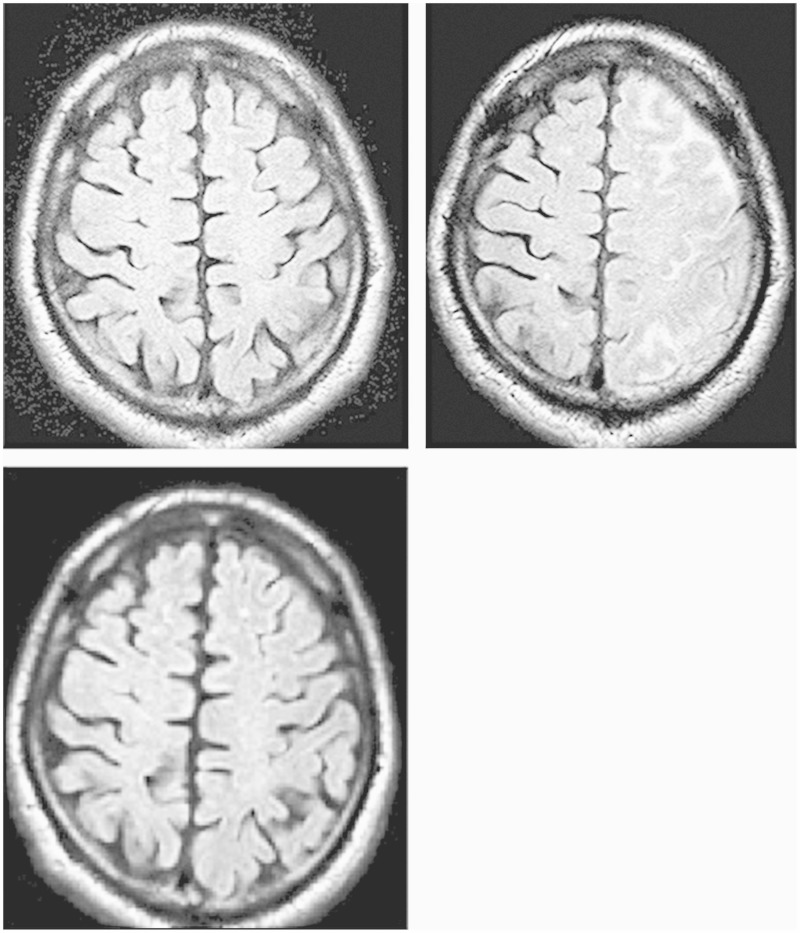
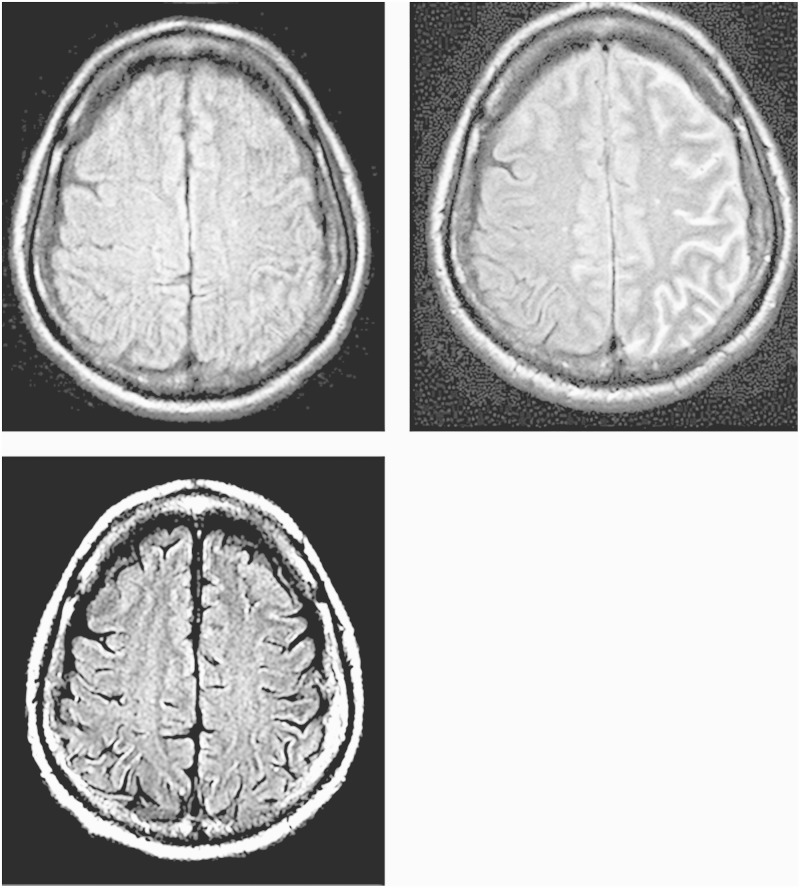
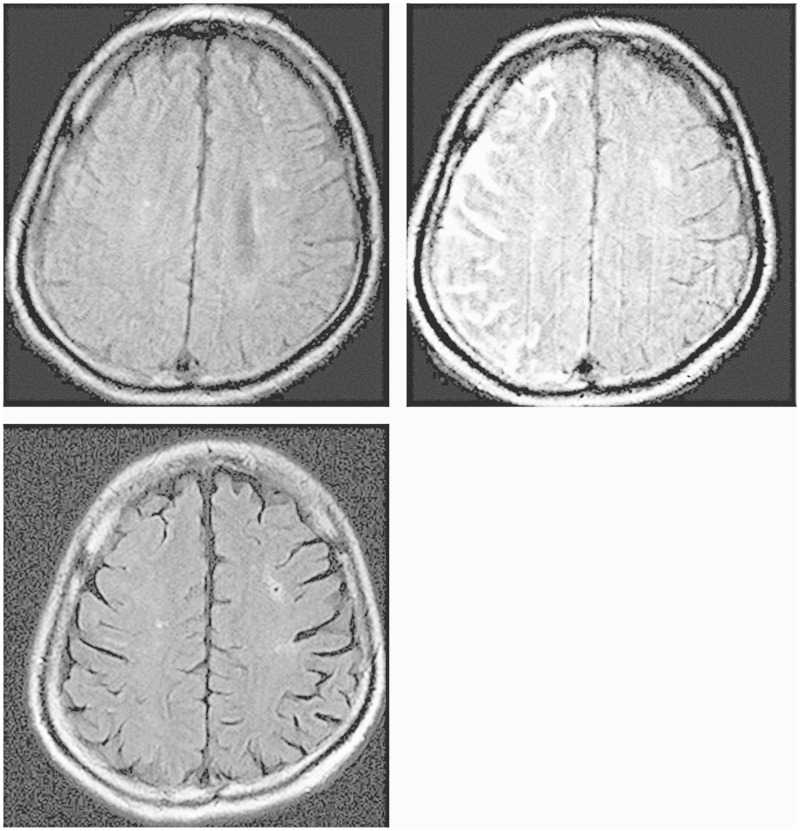
We experienced a rare complication after carotid artery stenting (CAS) characterized by transient neurological symptoms with no evidence of distal emboli or hyperperfusion. Using neuroimaging, we investigated the pathogenesis of the complication that occurred after CAS in three patients who developed neurological symptoms over a period of ten hours after CAS and improved within two days. None of the three patients showed signs of fresh infarctions on diffusion-weighted imaging or hyperperfusion on single-photon emission computed tomography. However, high signal intensity was observed in the leptomeningeal zone of the cerebral hemisphere on the stent side in all three patients and in the leptomeningeal zone of the contralateral anterior cerebral artery territory in one patient. These areas were assessed using fluid-attenuated inversion recovery (FLAIR) magnetic resonance imaging without gadolinium administration. The high signal intensity in the leptomeningeal zone disappeared as the symptoms improved. Based on the transient nature of the neurological disorders and the normalization of FLAIR imaging findings in these patients, the pathogenesis of this complication might have been vasogenic edema due to vasoparalysis of the local vessels caused by the hemodynamic changes occurring after CAS.
Keywords: Blood-brain barrier; FLAIR MRI; carotid artery stenting; reversible vasoparalysis.
© The Author(s) 2015 Reprints and permissions:]br]sagepub.co.uk/journalsPermissions.nav.
Figures
References
-
- Yuan C, Mitsumori LM, Ferguson MS, et al. In vivo accuracy of multispectral magnetic resonance imaging for identifying lipid-ridge necrotic cores and intraplaque hemorrhage in advanced human carotid plaques. Circulation 2001; 104: 2051–2056doi: 10.1161/hc4201.097839. - PubMed
-
- Matsumoto S, Nakahara I, Higashi T, et al. Near-infrared spectroscopy in carotid artery stenting predicts cerebral hypertension syndrome. Neurology 2009; 72: 1512–1518doi: 10.1212/WNL.0b013e3181a2e846. - PubMed
-
- Bates ER, Babb JD, et al. American College of Cardiology Foundation, American Society of Interventional & Therapeutic Neuroradiology, Society for Cardiovascular Angiography, Interventions, Society for Vascular Medicine and Biology, Society of Interventional Radiology. ACCF/SCAI/SVMB/SIR/ASTIN 2007 clinical expert consensus document on carotid stenting: a report of the American College of Cardiology Foundation Task Force on Clinical Expert Consensus Documents. J Am Coll Cardiol 2007; 49: 126–170doi: 10.1016/j.jacc.2006.10.021. - PubMed
-
- Wilkinson ID, Griffiths PD, Hoggard N, et al. Unilateral leptomeningeal enhancement after carotid stent insertion detected by magnetic resonance imaging. Stroke 2000; 31: 848–851doi: 10.1161/01.STR.31.4.848. - PubMed
-
- Karapanayiotides T, Meuli R, Devuyst G, et al. Postcarotid endoarterectomy hyperperfusion or reperfusion syndrome. Stroke 2009; 25: 21–26. - PubMed
Publication types
MeSH terms
LinkOut - more resources
Full Text Sources
Medical
