Review
. 2015 Jun 1;25(11):2261-8.
doi: 10.1016/j.bmcl.2015.04.019. Epub 2015 Apr 16.

Non-electrophilic modulators of the canonical Keap1/Nrf2 pathway

Affiliations
Review

Non-electrophilic modulators of the canonical Keap1/Nrf2 pathway

B G Richardson et al. Bioorg Med Chem Lett. .

Abstract

Nrf2 is the major transcription factor that regulates many of the cytoprotective enzymes involved in the adaptive stress response. Modulation of Nrf2 could be therapeutically useful in a number of disease states. Activation can occur through either an electrophilic or non-electrophilic mechanism. To date, most of the research has focused on electrophilic Nrf2 activators, but there is increasing interest in non-electrophilic modulators of Nrf2. This Digest examines the current selection of small molecules that modulate Nrf2 through non-electrophilic mechanisms, and it highlights new opportunities for this important therapeutic target.

Keywords: Adaptive stress response; Cul3; Keap1; Nrf2; Nrf2 activator; Nrf2 repressor; Nrf2/Keap1 interaction; Protein–protein interaction.


Figures

Figure 1
Figure 1
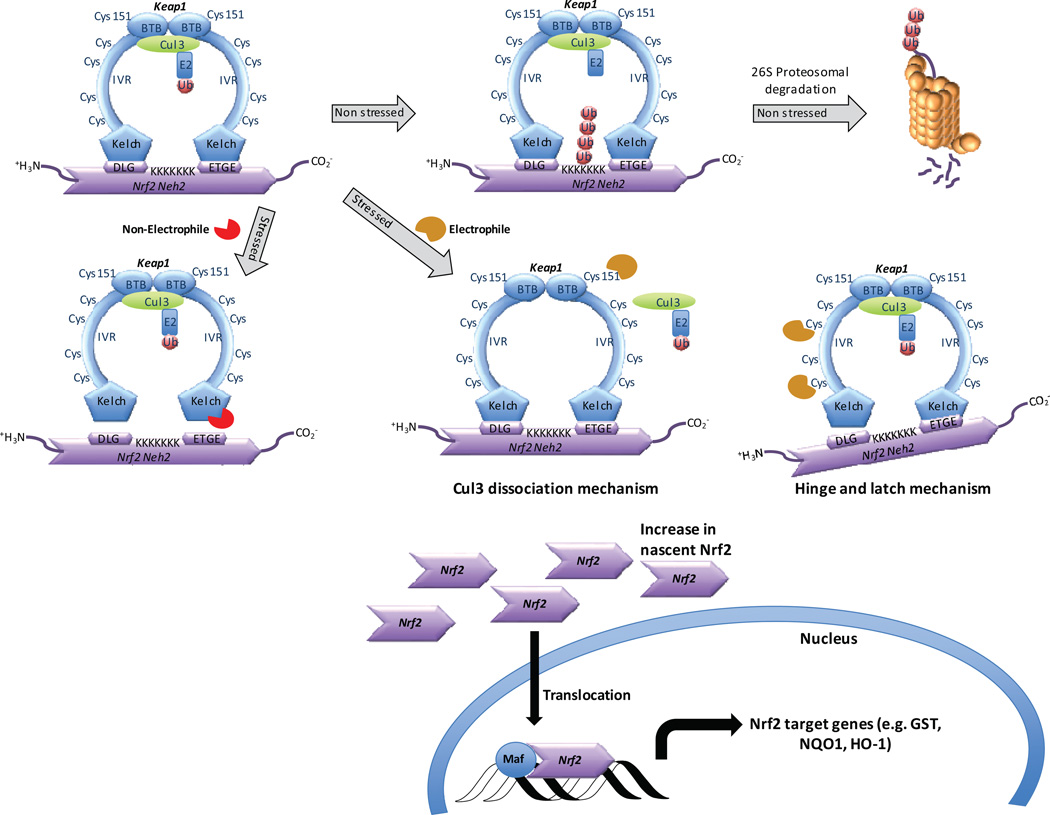
Schematic representation of modulation of the transcription factor Nrf2 by substrate adaptor protein Keap1. Under non-stressed conditions, Nrf2 is bound to Keap1 and ubiquitinated by Cul3, eventually leading to degradation through the 26S proteasome pathway. Activation of Nrf2 may occur through either a non-electrophilic mechanism that inhibits the Nrf2/Keap1 pathway, or by an electrophilic mechanism whereby cysteines of Keap1 react with electrophiles. Two models that may explain electrophilic activation of Nrf2 are shown (Cul3 dissociation or hinge-and-latch). In both non-electrophilic and electrophilic mechanisms, nascent Nrf2 production leads to translocation of Nrf2 to the nucleus, where it binds with small Maf proteins and leads to transcription of Nrf2 target genes.
Figure 2
Figure 2
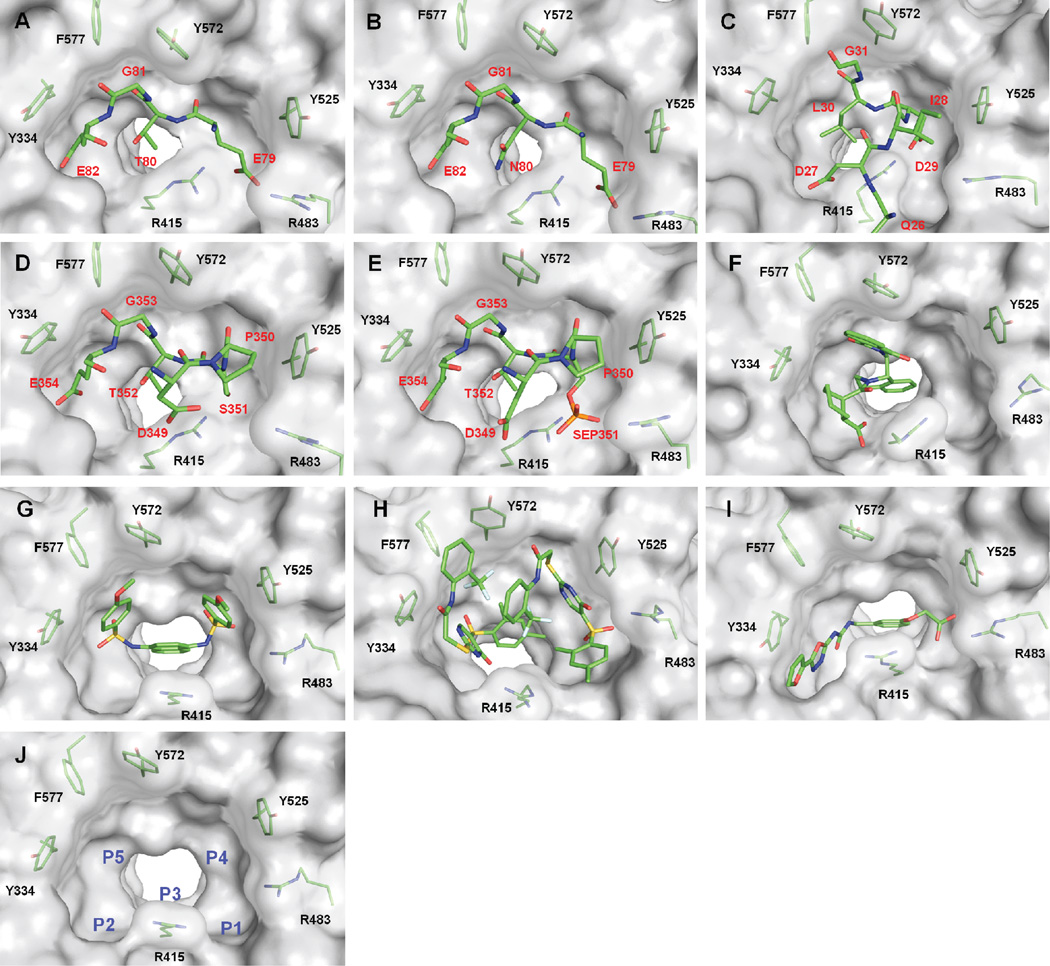
Crystal structures of A) the E79TGE82 motif of Nrf2 complexed with Keap1 (PDB ID 2FLU)a; B) the E79NGE82 motif of ProTα (PDB ID 2Z32)a; C) the DLG motif of Nrf2 (PDB ID 3WN7)a; D) the KIR region of p62 (3ADE)a; E) the phosphorylated KIR region of p62 (PDB ID 3WDZ)a; F) tetrahydroisoquinoline 4 (PDB ID 4L7B); G) naphthalene 7 (PDB ID 4IQK); H) thiopyrimidine 6 (PDB ID 4IN4); I) urea 10 (PDB ID 3VNH); J) binding pocket of the Kelch domain of Keap1 with the naphthalene ligand 7 removed, demonstrating the five subpockets P1-P5 of the Kelch domain (PDB ID 4IQK). aThe remainder of the residues have been removed for clarity.
Chart 1
Chart 1
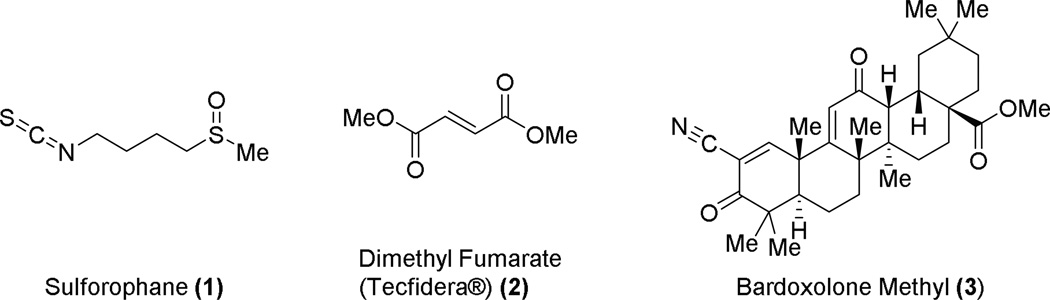
Representative electrophilic Nrf2 activators.
Chart 2
Chart 2
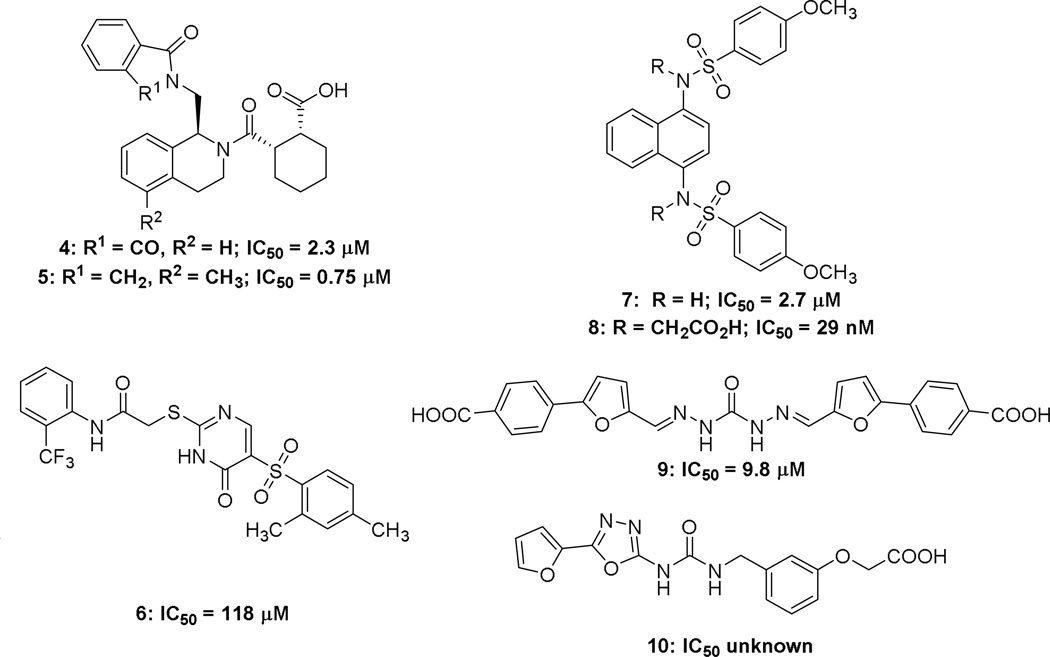
Structures of small molecule inhibitors of Keap1/Nrf2 complex.
Chart 3
Chart 3
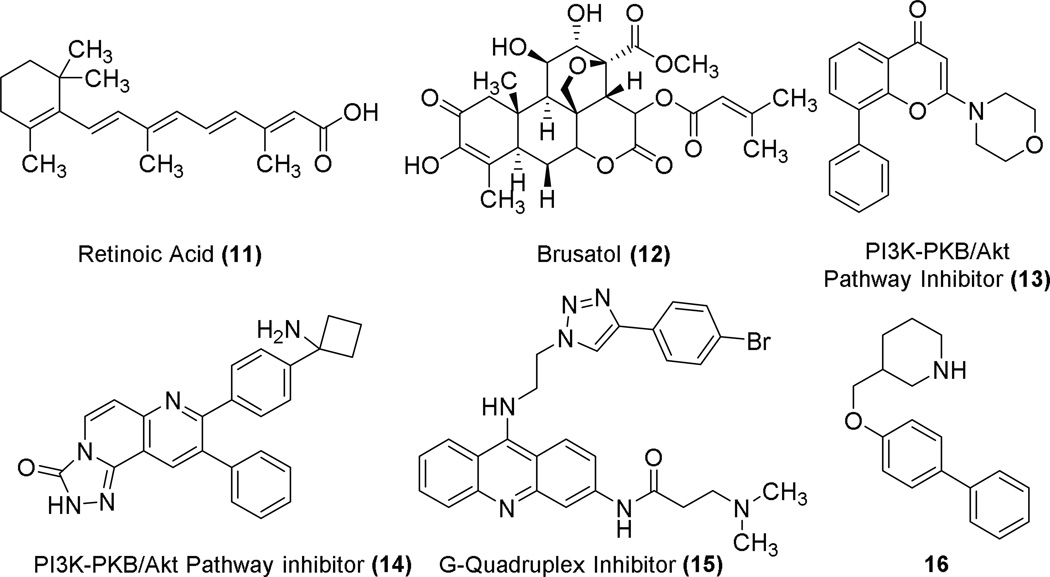
Chemical structures of Nrf2 pathway repressors.

References

    1. Kwak MK, Wakabayashi N, Greenlaw JL, Yamamoto M, Kensler TW. Mol. Cell. Biol. 2003;23:8786. - PMC - PubMed
    1. Wang H, Liu K, Geng M, Gao P, Wu X, Hai Y, Li Y, Li Y, Luo L, Hayes JD, Wang XJ, Tang X. Cancer Res. 2013;73:3097. - PubMed
    1. Katoh Y, Itoh K, Yoshida E, Miyagishi M, Fukamizu A, Yamamoto M. Genes Cells. 2001;6:857. - PubMed
    1. Ohtsubo T, Kamada S, Mikami T, Murakami H, Tsujimoto Y. Cell Death Differentiation. 1999;6:865. - PubMed
    1. Zhang J, Hosoya T, Maruyama A, Nishikawa K, Maher JM, Ohta T, Motohashi H, Fukamizu A, Shibahara S, Itoh K, Yamamoto M. Biochem. J. 2007;404:459. - PMC - PubMed

Publication types

MeSH terms

Substances