. 2015 May 20;86(4):936-946.
doi: 10.1016/j.neuron.2015.03.065. Epub 2015 Apr 30.

A New DREADD Facilitates the Multiplexed Chemogenetic Interrogation of Behavior

Affiliations

A New DREADD Facilitates the Multiplexed Chemogenetic Interrogation of Behavior

Eyal Vardy et al. Neuron. .

Abstract

DREADDs are chemogenetic tools widely used to remotely control cellular signaling, neuronal activity, and behavior. Here we used a structure-based approach to develop a new Gi-coupled DREADD using the kappa-opioid receptor as a template (KORD) that is activated by the pharmacologically inert ligand salvinorin B (SALB). Activation of virally expressed KORD in several neuronal contexts robustly attenuated neuronal activity and modified behaviors. Additionally, co-expression of the KORD and the Gq-coupled M3-DREADD within the same neuronal population facilitated the sequential and bidirectional remote control of behavior. The availability of DREADDs activated by different ligands provides enhanced opportunities for investigating diverse physiological systems using multiplexed chemogenetic actuators.


Figures

Figure 1
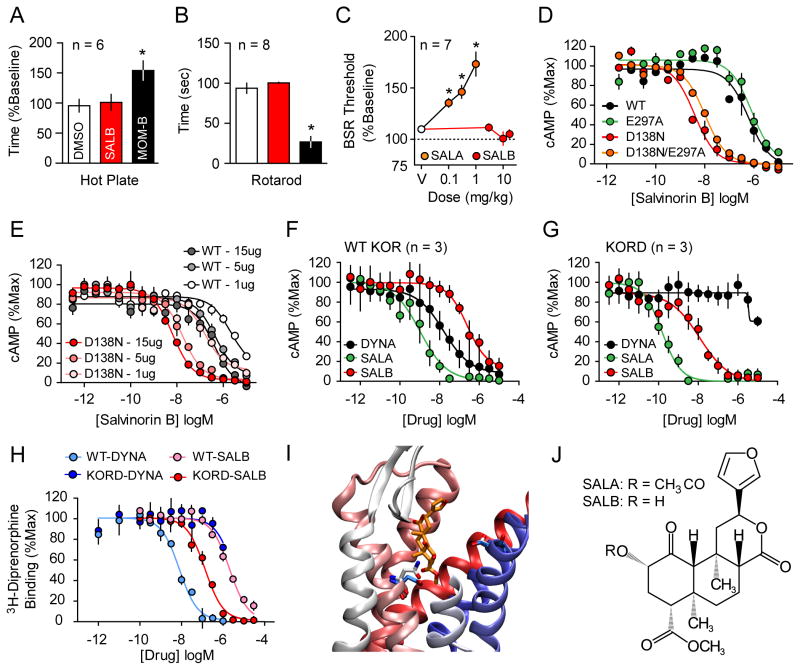
Figure 1. Rational design and in-vitro characterization of KORD
SALB was initially validated as a DREADD ligand by demonstrating its apparent pharmacologic inertness in vivo using behavioral tests by comparing with MOM-SALB via (A) hot plate test and (B) impairment of motor performance using the rotarod test. In both tests SALB effects (red) were compared to vehicle (white) and a stabilized variant of SALA (MOM-SALB - black). (C) The lack of production of a KOR-like anhedonic states was tested using ICSS and compared to the effects of SALA. (D) We characterized the KORD comparing the Gi-mediated response of different KOR mutants and demonstrate an increased potency of SALB at D138N containing mutants. (E) The effect of receptor expression levels on SALB potency of WT KOR (gray) and KORD (red). As can be seen, DNA concentration is directly related in both WT-KOR and KORD to agonist potency yielding a right shift in potency of 1–2 orders of magnitude. Average Gi response of WT-KOR (F) and KORD (G) to classic KOR ligands Dynorphin A (DYNA, black), SALA (green), and the inert compound SALB (red) is shown. (H) Competition binding isotherms of WT and KORD for DYNA (1-13) (pKi values: 8.50 ± 0.12 and 5.79 ± 0.06 respectively) and SALB (pKi values: 5.53 ± 0.08 and 6.98 ± 0.13 respectively). An examination of a model of KORD docked with SALB (I) suggests that the DREADD mutation (D138N) eliminates unfavorable interactions between D138 and SALB. In WT KOR, D138 is turned away from the ligand binding site (cyan) while N138 in KORD (white) is interacting directly with the ligand. E297 in both models models assumes the same conformation reflecting the fact that it has no effect on DREADD activity. Deacetylation at position 2 of SALA results in SALB (J). Asterisk indicates p < 0.05.
Figure 2
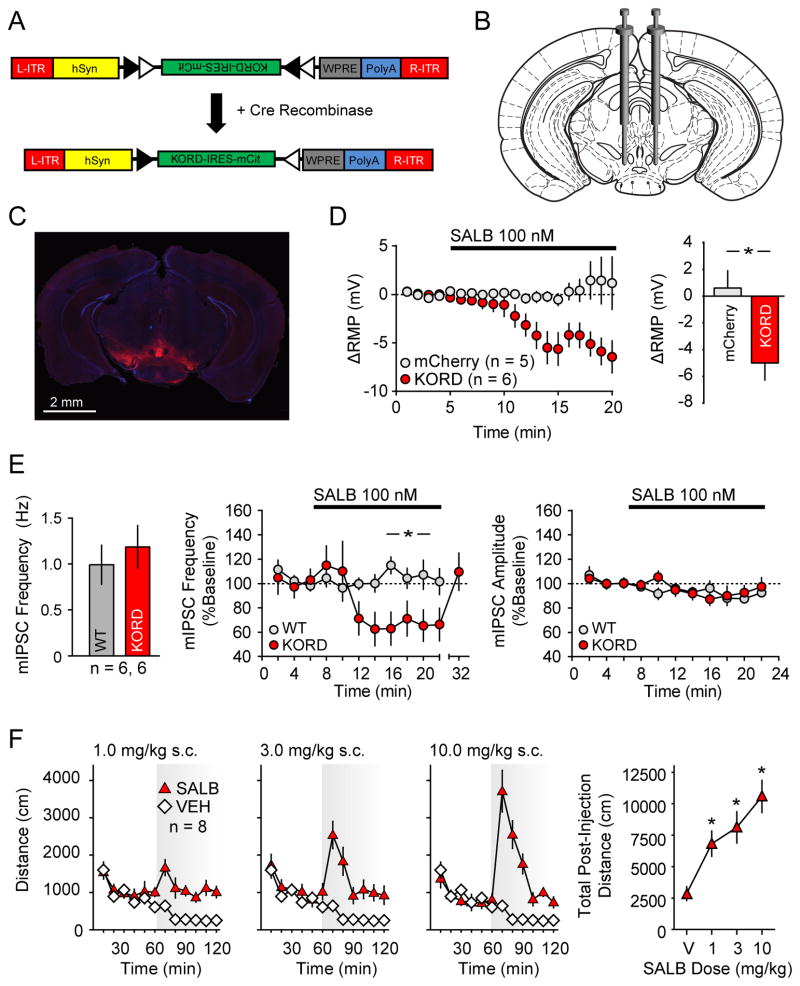
Figure 2. Validation of KORD in vivo in VTA/SNVGAT neurons
(A) Schematic showing the AAV8 (hSyn-DIO-hKORD-IRES-mCit-WPRE-PolyA-R-ITR) construct used and its recombination under the control of Cre-recombinase. (B) Location for viral infusion of Cre-expressing VTA/SNVGAT neurons. (C) Representative low-power field of VTA/SNVGAT neurons. (D) Shift from baseline resting membrane potential (RMP) in VTA/SNVGAT neurons transduced with KORD or mCherry (control) constructs. (E) Baseline mIPSC frequency in non KORD expressing neurons in KORD infected mice and control neurons from naïve mice controls and the effects of SALB on miniature IPSC frequency and amplitude in uninfected VTA/SNVGAT and naïve control VTA/SN neurons. (F) Locomotor responses for graded doses of SALB. Asterisk indicates p < 0.05.
Figure 3
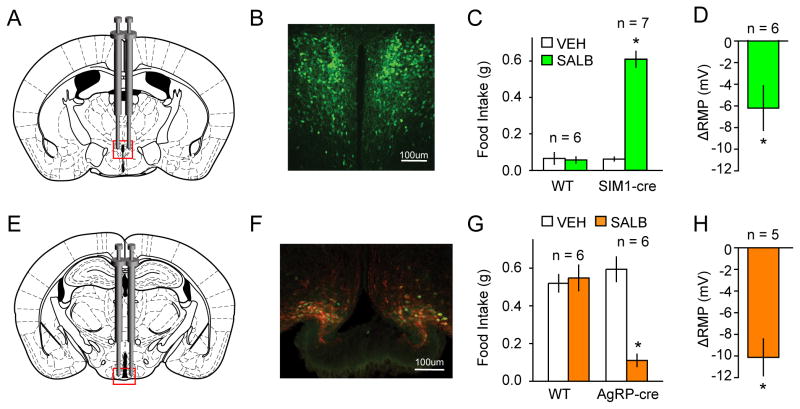
Figure 3. Validation of KORD in vivo in PVHSIM1 and ARCAgRP expressing neurons
(A) Location for viral infusion of PVHSIM1 Cre-expressing neurons. (B) Representative immunofluorescent photomicrographs demonstrating expression of mCitrine expression in virally-transduced neurons. (C) Effects of SALB on food intake in AAV-hSyn-DIO-KORD-injected SIM1-Cre and WT mice. (D) Shift from baseline resting membrane potential (RMP) in KORD-transduced neurons in the PVHSIM1. (E–F) Location of viral infusion and expression of mCitrine (green) and HA-hKORD (red) in ARCAgRP neurons. (G) Suppression of food intake by SALB. Asterisk indicates p < 0.05. (H) Shift from baseline resting membrane potential (RMP) in KORD-transduced neurons in the ARCAgRP.
Figure 4
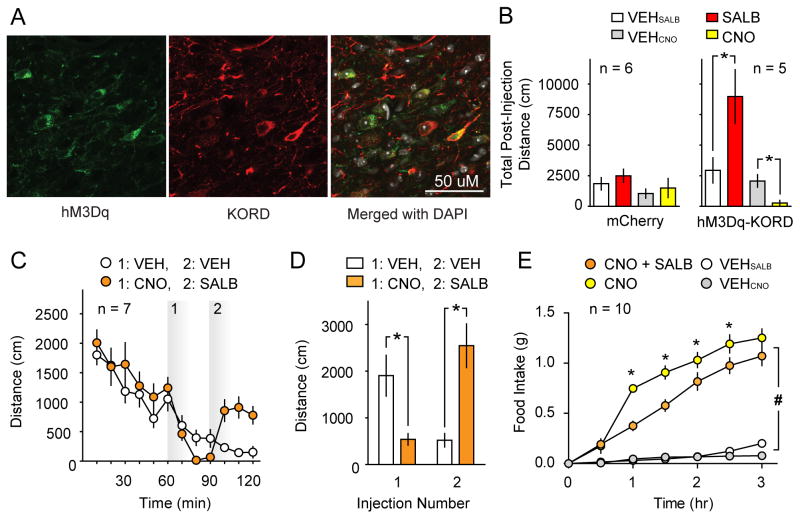
Figure 4. Multiplexed bidirectional chemogenetic control of behavior
(A) Representative immunofluorescent confocal micrographs wherein hM3Dq and KORD were co-expressed in VTA/SNVGAT neurons with co-localization data summarized in (Fig S3). (B) Comparison of the effects of CNO and SALB on spontaneous locomotor activity of dual DREADD expressing mice (right panel; Mice expressing both hM3Dq and KORD in VTA/SNVGAT neurons) or control mice (mCherry, left panel). CNO inhibits spontaneous locomotor behavior and SALB augments locomotor behavior on different testing days (right panel). CNO and SALB did not affect behavior in mice that expressed mCherry in the same brain region. (C) Bidirectional manipulation of locomotor behavior: the locomotor activity of dual DREADD expressing mice was inhibited by CNO (CNO injection at 60 min). The locomotor depression was reversed by SALB injection (SALB injection 30 min after CNO injection) (D) Summary data of locomotor activity experiments using multiplexed DREADDs. (E) Demonstration that SALB inhibits food intake induced by CNO-mediated activation of hM3Dq when both are expressed in ARCAgRP neurons; these effects show transient effects of SALB versus the persistent effects of CNO. Asterisk indicates p < 0.05.

Comment in

References

    1. Agulhon C, Boyt KM, Xie AX, Friocourt F, Roth BL, McCarthy KD. Modulation of the autonomic nervous system and behaviour by acute glial cell Gq protein-coupled receptor activation in vivo. J Physiol. 2013;591:5599–5609. - PMC - PubMed
    1. Alexander GM, Rogan SC, Abbas AI, Armbruster BN, Pei Y, Allen JA, Nonneman RJ, Hartmann J, Moy SS, Nicolelis MA, et al. Remote control of neuronal activity in transgenic mice expressing evolved G protein-coupled receptors. Neuron. 2009;63:27–39. - PMC - PubMed
    1. Ansonoff MA, Zhang J, Czyzyk T, Rothman RB, Stewart J, Xu H, Zjwiony J, Siebert DJ, Yang F, Roth BL, Pintar JE. Antinociceptive and hypothermic effects of Salvinorin A are abolished in a novel strain of kappa-opioid receptor-1 knockout mice. J Pharmacol Exp Ther. 2006;318:641–648. - PubMed
    1. Aponte Y, Atasoy D, Sternson SM. AGRP neurons are sufficient to orchestrate feeding behavior rapidly and without training. Nat Neurosci. 2011;14:351–355. - PMC - PubMed
    1. Armbruster BN, Li X, Pausch MH, Herlitze S, Roth BL. Evolving the lock to fit the key to create a family of G protein-coupled receptors potently activated by an inert ligand. Proc Natl Acad Sci U S A. 2007;104:5163–5168. - PMC - PubMed

Publication types