. 2016 Jan:100:90-7.
doi: 10.1016/j.neuropharm.2015.04.012. Epub 2015 Apr 30.

Subchronic phencyclidine treatment in adult mice increases GABAergic transmission and LTP threshold in the hippocampus

Affiliations

Subchronic phencyclidine treatment in adult mice increases GABAergic transmission and LTP threshold in the hippocampus

Toshihiro Nomura et al. Neuropharmacology. 2016 Jan.

Abstract

Repeated administration of non-competitive N-methyl-d-aspartate (NMDA) receptor antagonists such as phencyclidine (PCP) to rodents causes long-lasting deficits in cognition and memory, and has effects on behaviors that have been suggested to be models of the cognitive impairment associated with schizophrenia (CIAS). Despite this being a widely studied animal model, little is known about the long lasting changes in synapses and circuits that underlie the altered behaviors. Here we examined synaptic transmission ex-vivo in the hippocampus of mice after a subchronic PCP (scPCP) administration regime. We found that after at least one week of drug free washout period when mice have impaired cognitive function, the threshold for long-term potentiation (LTP) of CA1 excitatory synapses was elevated. This elevated LTP threshold was directly related to increased inhibitory input to CA1 pyramidal cells through increased activity of GABAergic neurons. These results suggest repeated PCP administration causes a long-lasting metaplastic change in the inhibitory circuits in the hippocampus that results in impaired LTP, and could contribute to the deficits in hippocampal-dependent memory in PCP-treated mice. Changes in GABA signaling have been described in patients with schizophrenia, therefore our results support using scPCP as a model of CIAS. This article is part of the Special Issue entitled 'Synaptopathy--from Biology to Therapy'.

Keywords: GABA; Hippocampus; Inhibitory postsynaptic current; Long-term potentiation; Phencyclidine.


Figures

Figure 1
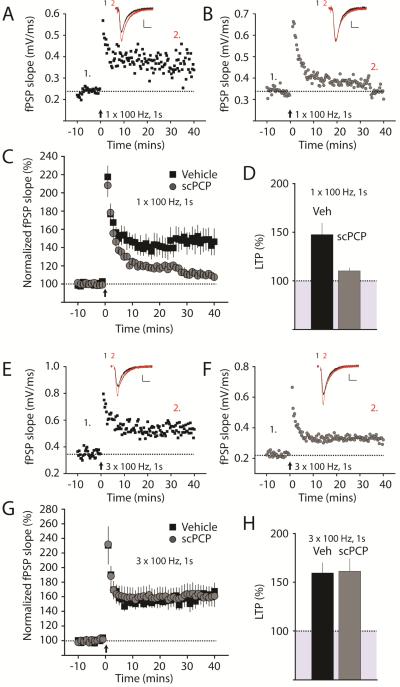
Figure 1. Impairment of LTP in the hippocampus of scPCP treated mice
(A) Representative experiment showing timecourse of CA1 LTP for a single recording from vehicle treated mice. LTP was induced at time = 0 with a single trains of 100Hz, 1s tetanic stimulation (arrow). fPSP traces before (1, black) and after (2, red) are shown in the inset above. (B) Timecourse and representative fPSPs recorded in slices from scPCP treated mice. The same induction paradigm failed to produce LTP of a similar magnitude in this recording. Calibration for A & B: 0.2mV, 10ms. (C) Grouped data showing timecourse of LTP from all recordings made from vehicle (black) or scPCP treated (grey) mice (D) Average LTP amplitude measured at 30-40 minutes post-induction. (E & F) LTP induced by longer induction trains (3 x 100Hz, 1s). Representative experiments showing timecourse of CA1 LTP for single recordings from vehicle treated or scPCP treated mice. LTP was induced at time = 0 with three trains of 100Hz, 1s stimulation (arrow). Using this longer stimulation paradigm we did not observe any difference in the magnitude of LTP in the scPCP treated mice. Calibration for E & F: 0.2mV, 10ms. (G & H) Averaged timecourse and magnitude of LTP from all recording from vehicle and scPCP treated mice.
Figure 2
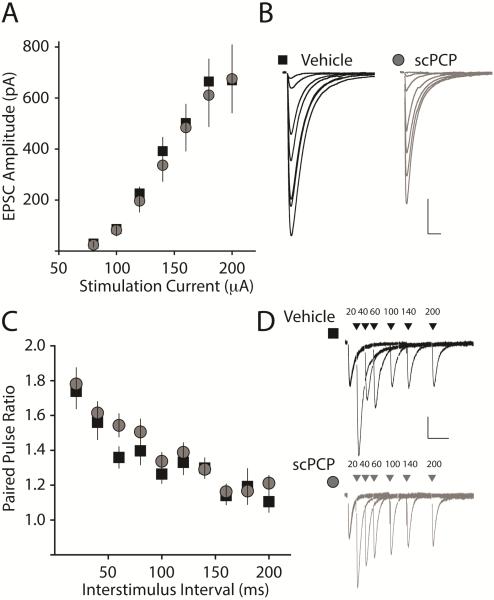
Figure 2. AMPAR mediated synaptic currents and short term plasticity is not altered after scPCP treatment
(A) Input-output (I-O) curve for AMPA receptor mediated EPSCs generated by increasing current used to stimulate Schaffer-collateral inputs to CA1 neurons. No difference was observed in the slope of the curves from vehicle or scPCP treated animals. (B) EPSC traces from single recording made from slices from vehicle treated (black) or scPCP treated (grey) animals. Calibration: 200pA, 20ms. (C) Paired pulse ratio (PPR) of AMPA receptor mediated EPSCs recorded at several interstimulus intervals. There was no difference in the PPR from recordings from vehicle (black squares) or scPCP (grey circles) treated animals. (D) Representative traces from a single experiment showing paired pulse facilitation at all the interstimulus intervals recorded in slices from vehicle or scPCP treated mice. Calibration: 50pA, 100ms.
Figure 3
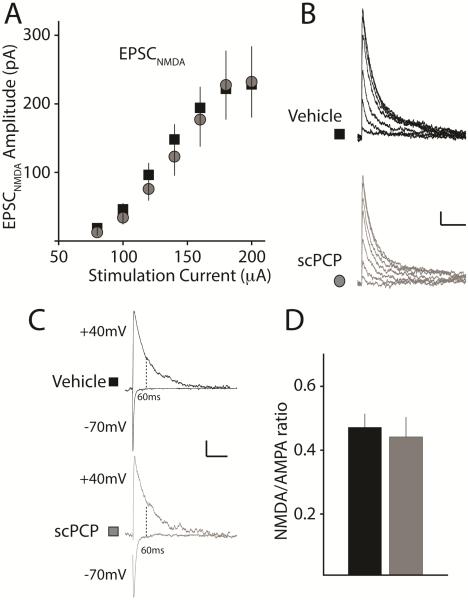
Figure 3. NMDAR mediated synaptic current in CA1 is not altered after scPCP treatment
(A) Input-output (I-O) curve for NMDA receptor mediated EPSCs (EPSCNMDA) recorded at several stimulation intensities isolated in the presence of antagonists of AMPA and GABAA receptors and recorded at +40mV. (B) Representative EPSCNMDA from vehicle (black) or scPCP (grey) treated animals. Calibration: 50pA, 200ms. (C&D) Representative traces and grouped data of NMDA to AMPA ratio recorded from CA1 pyramidal neurons. AMPA receptor mediated currents were measured as the amplitude of the inward current at -70mV and the NMDA receptor current was measured 60ms after the onset of the outward current at +40mV at which point the current is mediated by NMDA receptors (Harlow et al., 2010). Calibration: 50pA, 100ms.
Figure 4
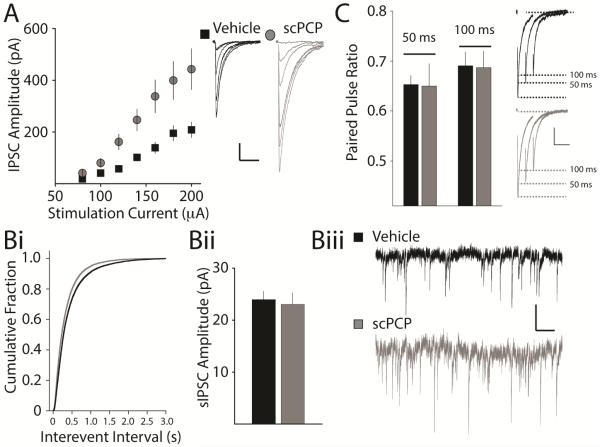
Figure 4. Enhanced inhibitory synaptic transmission onto CA1 neuron in the hippocampus of scPCP treated mice
(A) I-O curve for IPSCs recorded in CA1 neurons from vehicle and scPCP treated mice. There is a clear difference in the slope of the two curves indicating enhanced inhibitory input in recordings from scPCP treated mice. Right panel shows representative IPSC traces. Calibration: 50pA, 100ms (Bi) Cumulative probability histogram of intervent interval for sIPSCs recorded in CA1 pyramidal neurons. There is a significant increase in frequency after scPCP treatment. (Bii) Average sIPSC amplitude (Biii) Representative traces of sIPSCs from individual recordings from vehicle and scPCP treated mice. Calibration 10pA, 50ms (C) Paired pulse depression of IPSCs recorded at interstimulus intervals of 50ms and 100ms is not altered in scPCP treated mice. Right panel shows representative traces of recordings from vehicle and scPCP treated mice. Calibration: 200pA, 100ms.
Figure 5
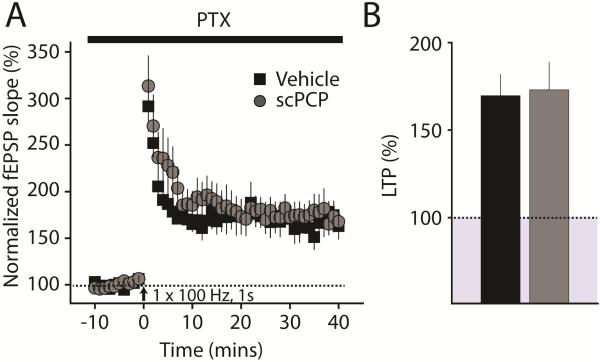
Figure 5. CA1 LTP can be normally induced by shorter trains in a disinhibited slice
(A) Timecourse of LTP induced by a single 1s train at 100Hz in a disinhibited slice. (B) Average amplitude of LTP in both groups. LTP in both vehicle and scPCP treated animals is of normal amplitude when GABAA receptors are blocked by picrotoxin (50μM PTX).

References

    1. Abdul-Monim Z, Neill JC, Reynolds GP. Sub-chronic psychotomimetic phencyclidine induces deficits in reversal learning and alterations in parvalbumin-immunoreactive expression in the rat. J Psychopharmacol. 2007;21:198–205. - PubMed
    1. Andersen JD, Pouzet B. Spatial memory deficits induced by perinatal treatment of rats with PCP and reversal effect of D-serine. Neuropsychopharmacology. 2004;29:1080–1090. - PubMed
    1. Behrens MM, Ali SS, Dugan LL. Interleukin-6 mediates the increase in NADPH-oxidase in the ketamine model of schizophrenia. J Neurosci. 2008;28:13957–13966. - PMC - PubMed
    1. Bird ED, Spokes EG, Barnes J, Mackay AV, Iversen LL, Shepherd M. Glutamic-acid decarboxylase in schizophrenia. Lancet. 1978;1:156. - PubMed
    1. Coyle JT, Basu A, Benneyworth M, Balu D, Konopaske G. Glutamatergic synaptic dysregulation in schizophrenia: therapeutic implications. Handb Exp Pharmacol. 2012:267–295. - PMC - PubMed

Publication types

MeSH terms