


Chemoprotective epigenetic mechanisms in a colorectal cancer model: Modulation by n-3 PUFA in combination with fermentable fiber
- PMID: 25938013
- PMCID: PMC4414264
- DOI: 10.1007/s40495-014-0005-7
Chemoprotective epigenetic mechanisms in a colorectal cancer model: Modulation by n-3 PUFA in combination with fermentable fiber
Abstract
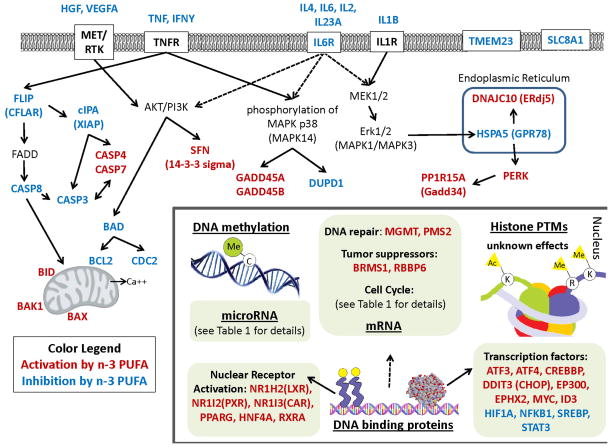
Colorectal cancer is the third major cause of cancer-related mortality in both men and women worldwide. The beneficial role of n-3 polyunsaturated fatty acids (PUFA) in preventing colon cancer is substantiated by experimental, epidemiological, and clinical data. From a mechanistic perspective, n-3 PUFA are pleiotropic and multifaceted with respect to their molecular mechanisms of action. For example, this class of dietary lipid uniquely modulates membrane and nuclear receptors, sensors/ion channels, and membrane structure/cytoskeletal function, thereby regulating signaling processes that influence patterns of gene expression and cell phenotype. In addition, n-3 PUFA can synergize with other potential chemoprotective agents known to reprogram the chromatin landscape, such as the fermentable fiber product, butyrate. Nutri-epigenomics is an emerging field of research that is focused on the interaction between nutrition and epigenetics. Epigenetics refers to a group of heterogeneous processes that regulate transcription without changing the DNA coding sequence, ranging from DNA methylation, to histone tail modifications and transcription factor activity. One implication of the nutri-epigenome is that it may be possible to reprogram epigenetic marks that are associated with increased disease risk by nutritional or lifestyle interventions. This review will focus on the nutri-epigenomic role of n-3 PUFA, particularly DHA, as well as the combinatorial effects of n-3 PUFA and fermentable fiber in relation to colon cancer.
Keywords: Fish oil; chemoprevention; colon cancer; docosahexaenoic acid; fermentable fiber; nutri-epigenomics.
Conflict of interest statement
Karen Triff, Eunjoo Kim and Robert S. Chapkin declare that they have no conflict of interest.
Figures
References
-
- Reddy BS, Burill C, Rigotty J. Effect of diets high in omega-3 and omega-6 fatty acids on initiation and postinitiation stages of colon carcinogenesis. Cancer Res. 1991;51:487–491. - PubMed
-
- Turk HF, Chapkin RS. Membrane lipid raft organization is uniquely modified by n-3 polyunsaturated fatty acids. Prostaglandins Leukot Essent Fatty Acids. 2013;88:43–47. Highlights recent work demonstrating that enrichment of n-3 PUFA in the plasma membrane alters the lateral organization of membrane signaling assemblies. - PMC - PubMed
-
- Pardini RS. Nutritional intervention with omega-3 fatty acids enhances tumor response to anti-neoplastic agents. Chem Biol Interact. 2006;162:89–105. - PubMed
Grants and funding
LinkOut - more resources
Full Text Sources
Other Literature Sources