Sitagliptin Reduces Inflammation and Chronic Immune Cell Activation in HIV+ Adults With Impaired Glucose Tolerance
- PMID: 25938633
- PMCID: PMC4490301
- DOI: 10.1210/jc.2015-1531
Sitagliptin Reduces Inflammation and Chronic Immune Cell Activation in HIV+ Adults With Impaired Glucose Tolerance
Abstract
Context: HIV infection is associated with a greater risk for fasting hyperinsulinemia, impaired glucose tolerance, and higher incidence rates for vascular disease, myocardial infarction, or stroke despite effective combination antiretroviral therapy (cART). The underlying mechanism(s) may involve chronic low-grade systemic inflammation and immune cell activation. Dipeptidyl peptidase-4 inhibitors (sitagliptin) improve glucose tolerance and may possess immunomodulatory effects because leukocyte CD26 cell surface receptors express dipeptidyl peptidase-4 activity.
Objective: Sitagliptin will reduce inflammatory and immune cell activation markers known to be elevated in cART-treated HIV-infected (HIV+) adults with impaired glucose tolerance.
Design: This was designed as a prospective, randomized, placebo-controlled, double-blind trial of sitagliptin in HIV+ adults.
Setting: The setting was an academic medical center.
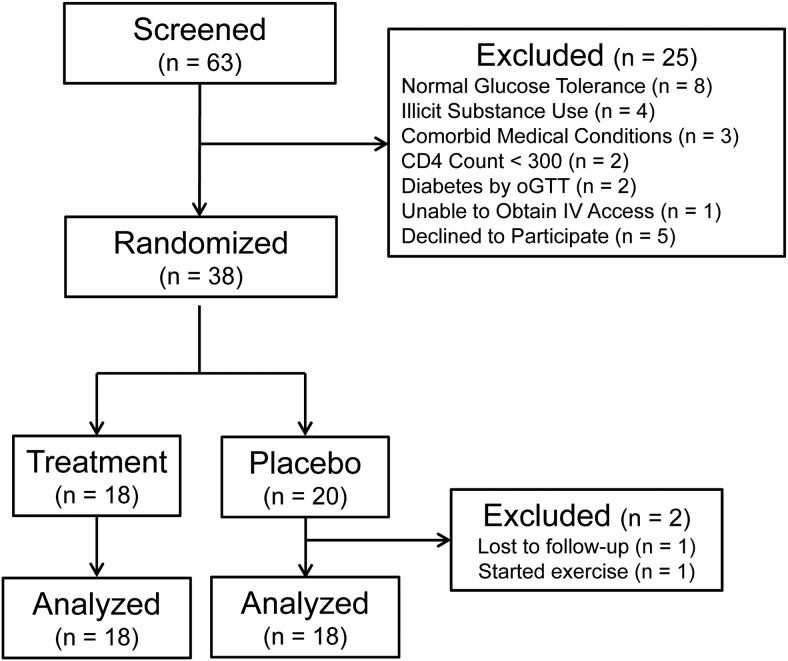
Patients: Patients were cART-treated HIV+ men and women (n = 36) with stable HIV disease and impaired glucose tolerance.
Interventions: Interventions included sitagliptin 100 mg/d or placebo for 8 weeks.
Main outcome measures: At baseline and week 8, plasma high-sensitivity C-reactive protein and C-X-C motif chemokine 10 concentrations (ELISA), oral glucose tolerance, and abdominal sc adipose mRNA expression for M1 macrophage markers (monocyte chemotactic protein-1, EGF-like module-containing, mucin-like hormone receptor 1).
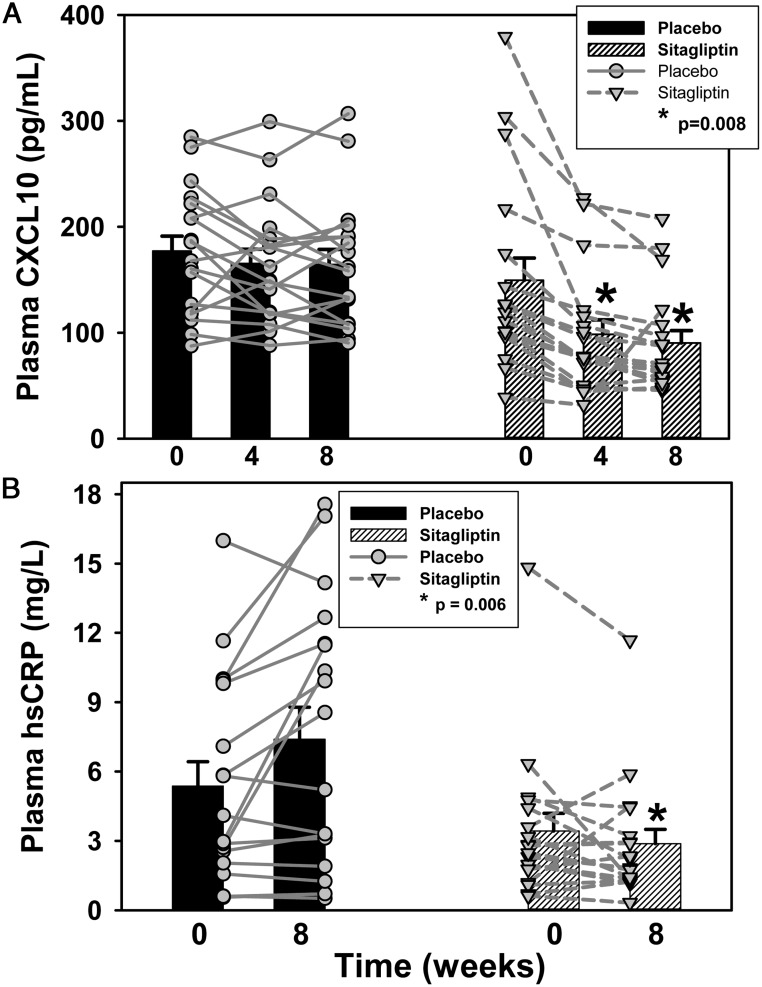
Results: Sitagliptin reduced glucose area under the curve (P = .002) and improved oral glucose insulin sensitivity index (P = .04) more than placebo. Sitagliptin reduced plasma high-sensitivity C-reactive protein and C-X-C motif chemokine 10 levels more than placebo (P < .009). Adipose tissue monocyte chemotactic protein-1 mRNA abundance declined significantly more (P = .01), and adipose EGF-like module-containing, mucin-like hormone receptor 1 mRNA expression tended to decline more (P = .19) in sitagliptin than placebo.
Conclusion: Sitagliptin had beneficial systemic and adipose anti-inflammatory effects in cART-treated HIV+ adults with impaired glucose tolerance. Large-scale, long-term studies should determine whether sitagliptin reduces cardiovascular risk and events in HIV+ adults.
Trial registration: ClinicalTrials.gov NCT01552694.
Figures
References
-
- Brown TT, Li X, Cole SR, et al. Cumulative exposure to nucleoside analogue reverse transcriptase inhibitors is associated with insulin resistance markers in the Multicenter AIDS Cohort Study. AIDS. 2005;19:1375–1383. - PubMed
-
- Kaplan RC, Kingsley LA, Sharrett AR, et al. Ten-year predicted coronary heart disease risk in HIV-infected men and women. Clin Infect Dis. 2007;45:1074–1081. - PubMed
-
- Sevastianova K, Sutinen J, Kannisto K, Hamsten A, Ristola M, Yki-Järvinen H. Adipose tissue inflammation and liver fat in patients with highly active antiretroviral therapy-associated lipodystrophy. Am J Physiol Endocrinol Metab. 2008;295:E85–E91. - PubMed
Publication types
MeSH terms
Substances
Associated data
Grants and funding
LinkOut - more resources
Full Text Sources
Other Literature Sources
Medical
Research Materials
Miscellaneous