. 2015 Jun;82(6):991-1003.
doi: 10.1111/tpj.12871.

Elucidating steroid alkaloid biosynthesis in Veratrum californicum: production of verazine in Sf9 cells

Affiliations

Elucidating steroid alkaloid biosynthesis in Veratrum californicum: production of verazine in Sf9 cells

Megan M Augustin et al. Plant J. 2015 Jun.

Abstract

Steroid alkaloids have been shown to elicit a wide range of pharmacological effects that include anticancer and antifungal activities. Understanding the biosynthesis of these molecules is essential to bioengineering for sustainable production. Herein, we investigate the biosynthetic pathway to cyclopamine, a steroid alkaloid that shows promising antineoplastic activities. Supply of cyclopamine is limited, as the current source is solely derived from wild collection of the plant Veratrum californicum. To elucidate the early stages of the pathway to cyclopamine, we interrogated a V. californicum RNA-seq dataset using the cyclopamine accumulation profile as a predefined model for gene expression with the pattern-matching algorithm Haystack. Refactoring candidate genes in Sf9 insect cells led to discovery of four enzymes that catalyze the first six steps in steroid alkaloid biosynthesis to produce verazine, a predicted precursor to cyclopamine. Three of the enzymes are cytochromes P450 while the fourth is a γ-aminobutyrate transaminase; together they produce verazine from cholesterol.

Keywords: California corn lily; Haystack; Veratrum californicum; cyclopamine; steroid alkaloids; verazine.


Figures

Figure 1
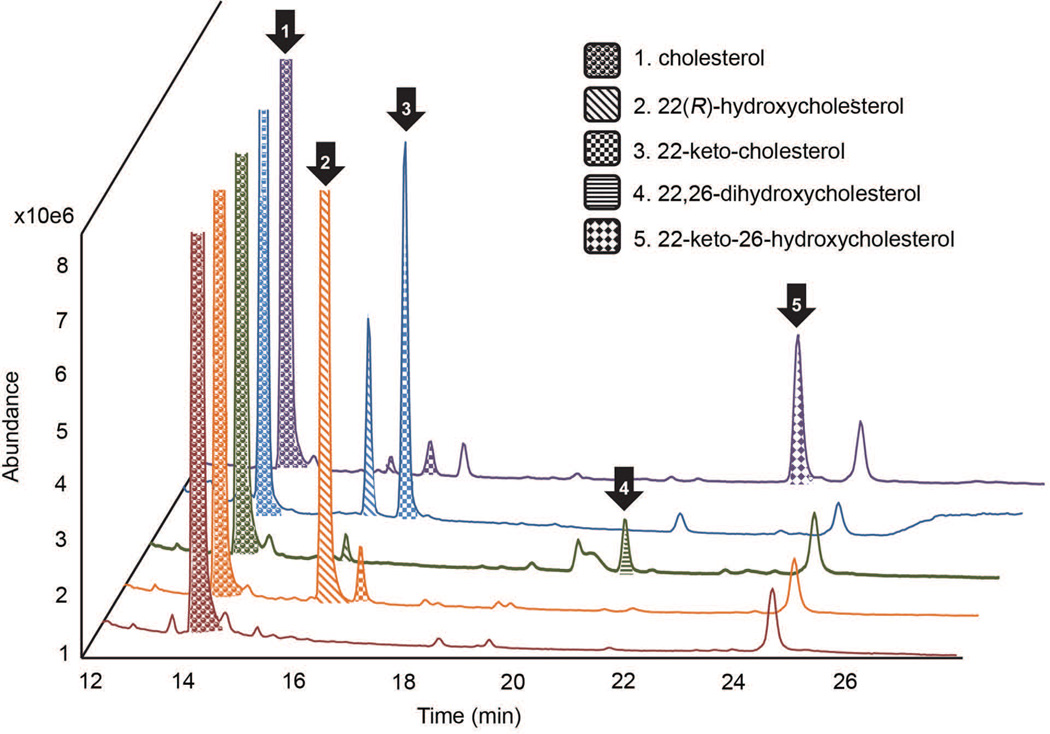
Figure 1. GC-MS Overlay of S. frugiperda Sf9 extracts expressing Veratrum californicum genes
S. frugiperda Sf9 cells infected with varying combinations of baculovirus containing genes from V. californicum were extracted and analyzed by gas chromatography mass spectrometry. Each colored chromatograph corresponds to the following: Red-CYP719A14 (control cytochrome P450) and CPR, Orange-CYP90B27 (cholesterol 22-hydroxylase) and CPR, Green-CYP90B27, CYP94N1 (22-hydroxycholesterol 26-hydroxylase/oxidase), and CPR, Blue-CYP90B27, CYP90G1 (22-hydroxy-26-aminocholesterol 22-oxidase), and CPR, Purple-CYP90B27, CYP94N1, CYP90G1, and CPR. Metabolites are numbered according to the legend and shaded for clarity. CPR refers to the cytochrome P450 reductase from Eschscholzia californica and control P450 refers to CYP719A14 cheilanthifoline synthase from Argemone mexicana.
Figure 2
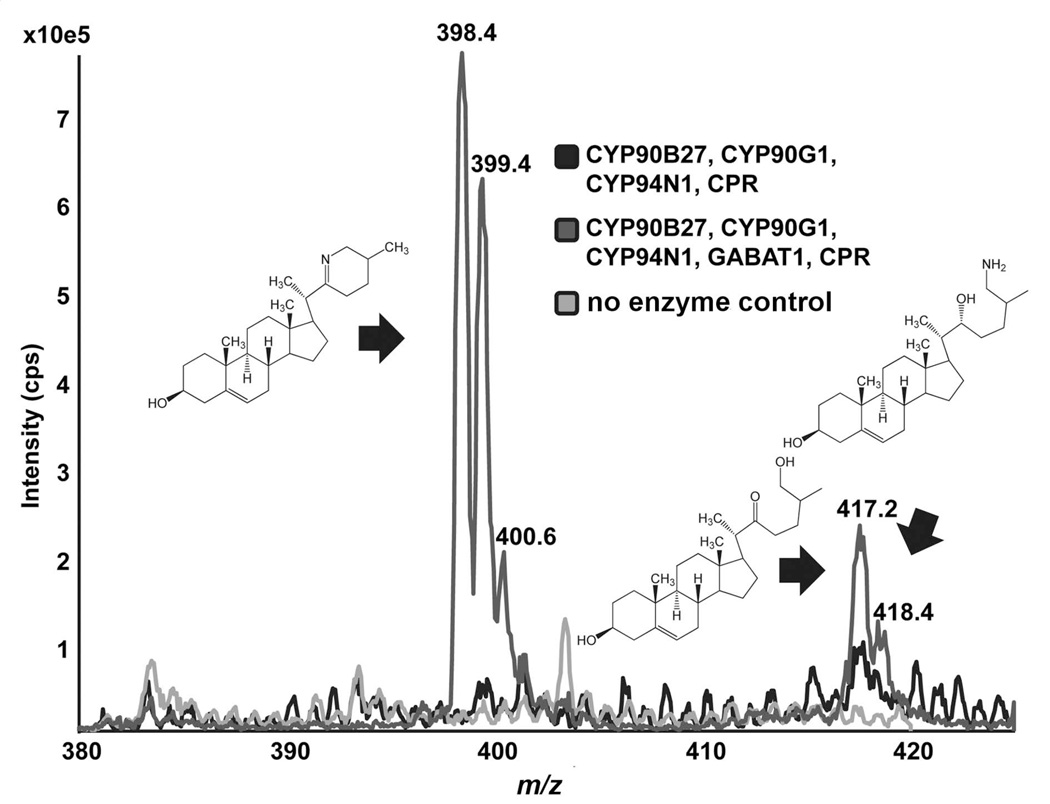
Figure 2. Production of verazine by heterologous expression of Veratrum californicum genes in S. frugiperda Sf9 cells
Select genes were introduced into S. frugiperda Sf9 cells using a baculovirus expression system. Metabolites were extracted and analyzed by LC-MS/MS in the full scan Enhanced MS mode detecting 380 – 425 m/z. Each chromatogram represents the combination of genes as follows: Black-CYP90B27 (cholesterol 22-hydroxylase), CYP94N1 (22-hydroxycholesterol 26-hydroxylase/oxidase), CYP90G1 (22-hydroxy-26-aminocholesterol 22-oxidase), and CPR; Dark Grey-CYP90B27, CYP94N1, CYP90G1, GABAT1 (22-hydroxycholesterol-26-al transaminase), and CPR; Light Grey-no enzyme control. CPR refers to the cytochrome P450 reductase from Eschscholzia californica, and GABAT1 refers to the γ-aminobutyric acid transaminase 1 from V. californicum. Peak at 398.4 is verazine, peak at 417.2 is 22-keto-26-hydroxycholesterol, and peak at 418 .4 is for 22-hydroxy-26-aminocholesterol.
Figure 3
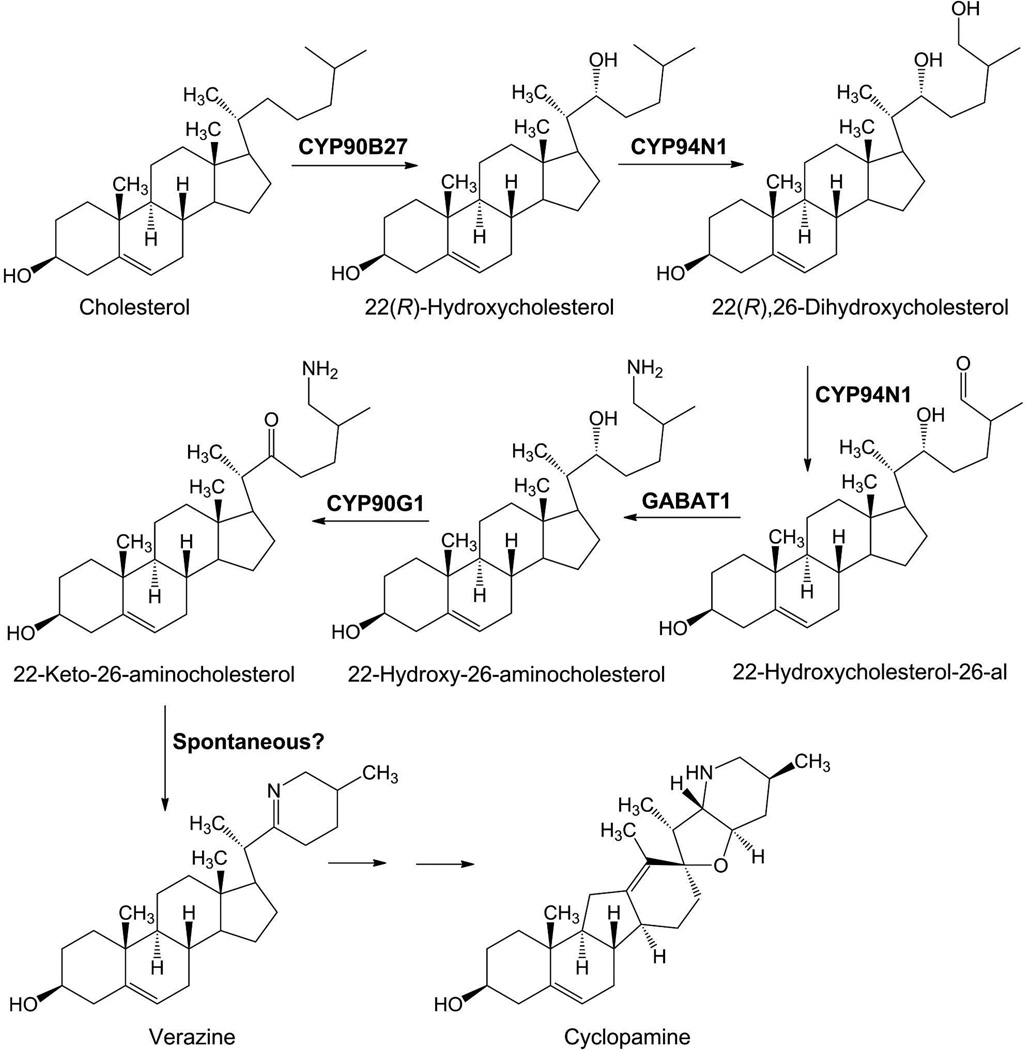
Figure 3. Proposed Veratrum californicum cyclopamine biosynthetic pathway leading from cholesterol
Cholesterol is first hydroxylated at position C-22 in the R-orientation by CYP90B27 (cholesterol 22-hydroxylase), followed by hydroxylation/oxidation at position C-26 by CYP94N1 (22-hydroxycholesterol 26-hydroxylase/oxidase). Next, a transamination reaction by GABAT1 (22-hydroxycholesterol-26-al transaminase) transfers an amino group from γ-aminobutyric acid to the C-26-aldehyde, forming 22-hydroxy-26-aminocholesterol. The C-22-hydroxy group is then oxidized to a ketone by CYP90G1 (22-hydroxy-26-aminocholesterol 22-oxidase) to form 22-keto-26-aminocholesterol, a reactive intermediate that cyclizes to verazine. GABAT1 refers to the γ-aminobutyric acid transaminase 1 from V. californicum.
Figure 4
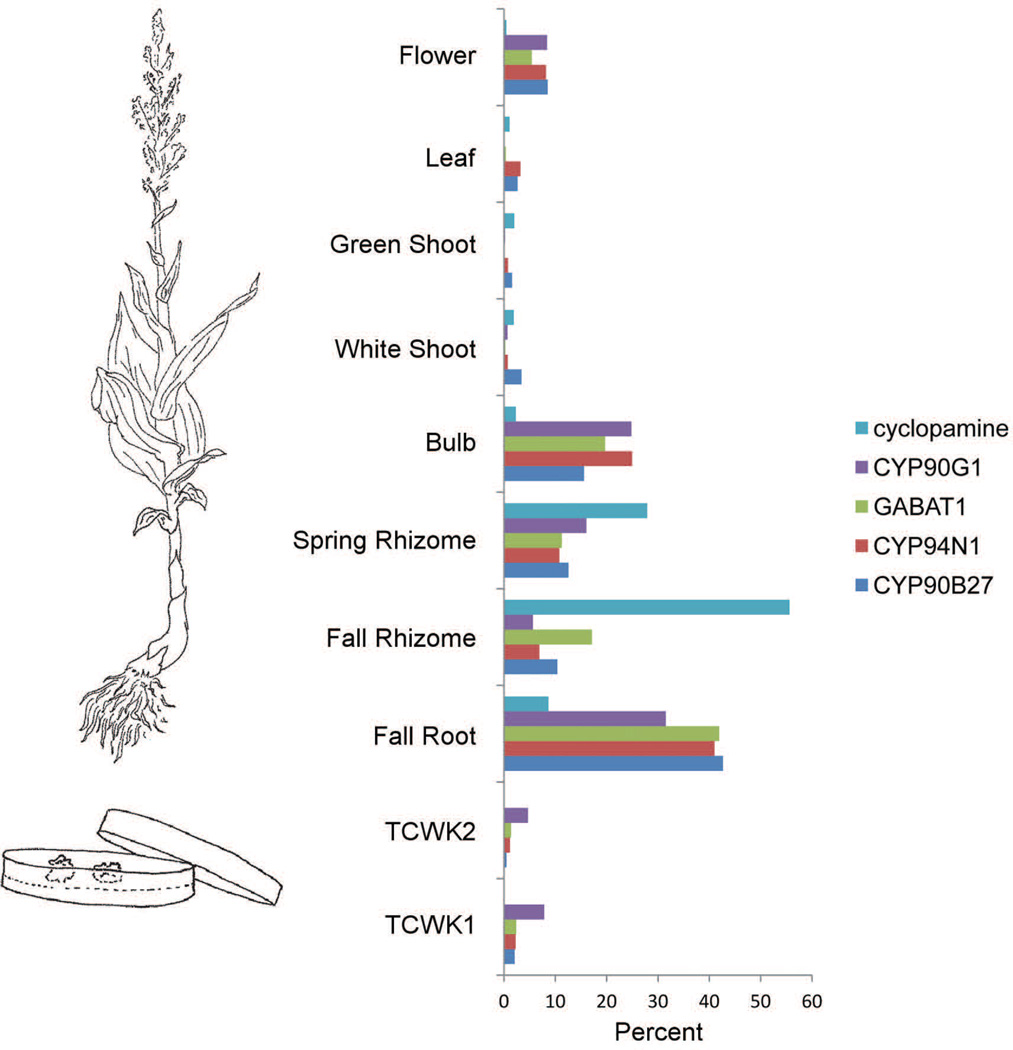
Figure 4. Cyclopamine accumulation vs gene expression of steroid alkaloid biosynthetic genes
Tissues from Veratrum californicum were extracted and analyzed by liquid chromatography mass spectrometry for cyclopamine quantitation. Transcript abundance was analyzed by alignment of individual reads to the assembled transcriptome for gene expression. Both gene expression and cyclopamine accumulation are shown as a percent of the total for comparison. The abbreviations TCWK1 and TCWK2 stand for tissue culture one- and two weeks after transfer to fresh media (respectively). CYP90G1 refers to 22-hydroxy-26-aminocholesterol 22-oxidase, GABAT1 refers to by 22-hydroxycholesterol-26-al transaminase (γ-aminobutyric acid transaminase 1 from V. californicum), CYP94N1 refers to 22-hydroxycholesterol 26-hydroxylase/oxidase, and CYP90B27 refers to cholesterol 22-hydroxylase.
Figure 5
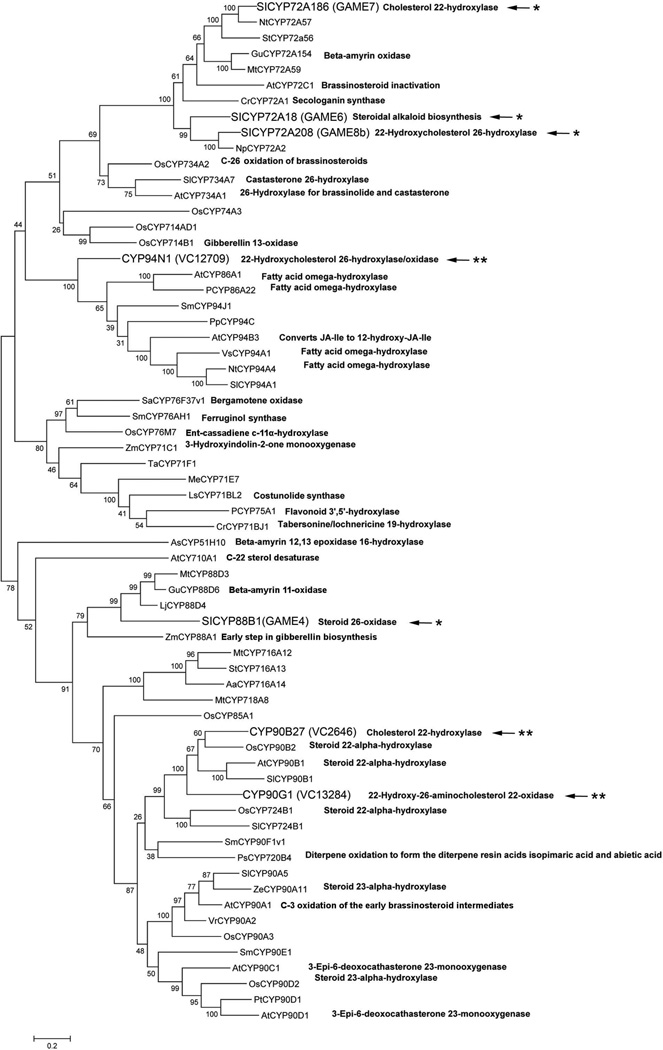
Figure 5. Phylogenetic tree of select plant cytochrome P450 enzymes
Nucleotide sequences obtained from Genbank, Uniprot, and the Sol Genomics Network of selected cytochrome P450 enzymes were aligned by codon with the Muscle algorithm. Cytochrome P450 designations, species, and their corresponding function can be found in Table S7. Only experimentally determined functions are designated in the figure. Veratrum californicum enzymes involved in cyclopamine biosynthesis are represented by two stars; Solanum lycopersicum enzymes involved in steroid alkaloid metabolism are represented with one star. Phylogenetic reconstruction was performed using the Maximum Likelihood statistical method with bootstrapping in MEGA version 6.06 with default parameters.

References

    1. Adam G, Schreiber K, Tomko J, Vassova A. Verazine, a new Veratrum alkaloid with 22, 26-imino-cholestan structure. Tetrahedron. 1967;23:167–171. - PubMed
    1. Bahra M, Kamphues C, Boas-Knoop S, Lippert S, Esendik U, Schuller U, Hartmann W, Waha A, Neuhaus P, Heppner F, Pietsch T, Koch A. Combination of hedgehog signaling blockage and chemotherapy leads to tumor reduction in pancreatic adenocarcinomas. Pancreas. 2012;41:222–229. - PubMed
    1. Behnsawy HM, Shigemura K, Meligy FY, Yamamichi F, Yamashita M, Haung WC, Li X, Miyake H, Tanaka K, Kawabata M, Shirakawa T, Fujisawa M. Possible role of sonic hedgehog and epithelial-mesenchymal transition in renal cell cancer progression. Korean journal of urology. 2013;54:547–554. - PMC - PubMed
    1. Berman DM, Karhadkar SS, Hallahan AR, Pritchard JI, Eberhart CG, Watkins DN, Chen JK, Cooper MK, Taipale J, Olson JM, Beachy PA. Medulloblastoma growth inhibition by hedgehog pathway blockade. Science. 2002;297:1559–1561. - PubMed
    1. Chandler CM, McDougal OM. Medicinal history of North American Veratrum. Phytochemistry reviews : proceedings of the Phytochemical Society of Europe. 2014;13:671–694. - PMC - PubMed

Publication types