


Congenital cardiac anomalies and white matter injury
- PMID: 25939892
- PMCID: PMC4461528
- DOI: 10.1016/j.tins.2015.04.001
Congenital cardiac anomalies and white matter injury
Abstract
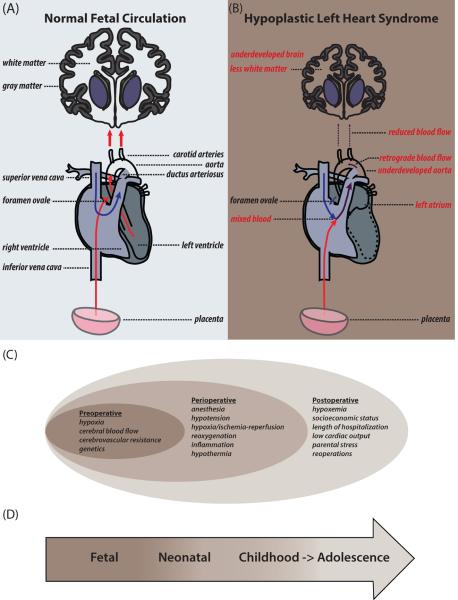
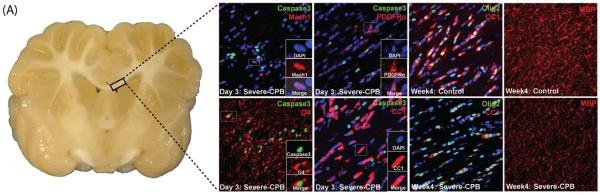
Cardiac abnormalities are the most common birth defects. Derangement of circulatory flow affects many vital organs; without proper supply of oxygenated blood, the brain is particularly vulnerable. Although surgical interventions have greatly reduced mortality rates, patients often suffer an array of neurological deficits throughout life. Neuroimaging provides a macroscopic assessment of brain injury and has shown that white matter (WM) is at risk. Oligodendrocytes and myelinated axons have been identified as major targets of WM injury, but still little is known about how congenital heart anomalies affect the brain at the cellular level. Further integration of animal model studies and clinical research will define novel therapeutic targets and new standards of care to prevent developmental delay associated with cardiac abnormalities.
Keywords: glial cells; heart; myelin; neuroimaging; oligodendrocyte.
Copyright © 2015 Elsevier Ltd. All rights reserved.
Figures
References
-
- Marelli AJ, et al. Congenital heart disease in the general population: changing prevalence and age distribution. Circulation. 2007;115:163–172. - PubMed
-
- Khairy P, et al. Changing mortality in congenital heart disease. J Am Coll Cardiol. 2010;56:1149–1157. - PubMed
-
- Tabbutt S, et al. Neurodevelopmental outcomes after congenital heart surgery and strategies for improvement. Curr Opin Cardiol. 2012;27:82–91. - PubMed
Publication types
MeSH terms
Grants and funding
LinkOut - more resources
Full Text Sources
Other Literature Sources
Medical
