Review
. 2015 Mar-Apr;26(2):70-81.
doi: 10.5830/CVJA-2015-017.

HIV-associated large-vessel vasculopathy: a review of the current and emerging clinicopathological spectrum in vascular surgical practice

Affiliations
Review

HIV-associated large-vessel vasculopathy: a review of the current and emerging clinicopathological spectrum in vascular surgical practice

Balasoobramanien Pillay et al. Cardiovasc J Afr. 2015 Mar-Apr.

Abstract

An established relationship exists between human immunodeficiency virus (HIV) and the vascular system, which is characterised by clinical expressions of aneurysmal and occlusive disease that emanate from a common pathological process. The exact pathogenesis is currently unknown; attempts to implicate opportunistic pathogens have been futile. Theories converge on leucocytoclastic vasculitis with the vaso vasora as the vasculopathic epicentre. It is thought that the virus itself or viral proteins trigger the release of inflammatory mediators that cause endothelial dysfunction and smooth muscle proliferation leading to vascular injury and thrombosis. The beneficial effects of highly active anti-retroviral therapy alter the natural history of the disease profile and promote longevity but are negated by cardiovascular complications. Atherosclerosis is an emerging challenge. Presently patients are managed by standard surgical protocols because of non-existent universal surgical interventional guidelines. Clinical response to treatment is variable and often compounded by complications of graft occlusion, sepsis and poor wound healing. The clinical, imaging and pathological observations position HIV-associated large-vessel vasculopathy as a unique entity. This review highlights the spectrum of HIV-associated large-vessel aneurysmal, occlusive and atherosclerotic disease in vascular surgical practice.


Figures
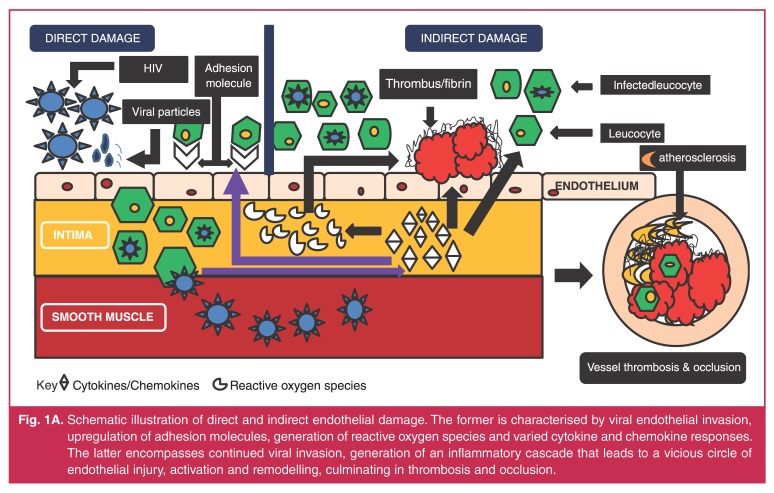
Fig. 1A.
Fig. 1A.
Schematic illustration of direct and indirect endothelial damage. The former is characterised by viral endothelial invasion, upregulation of adhesion molecules, generation of reactive oxygen species and varied cytokine and chemokine responses. The latter encompasses continued viral invasion, generation of an inflammatory cascade that leads to a vicious circle of endothelial injury, activation and remodelling, culminating in thrombosis and occlusion.
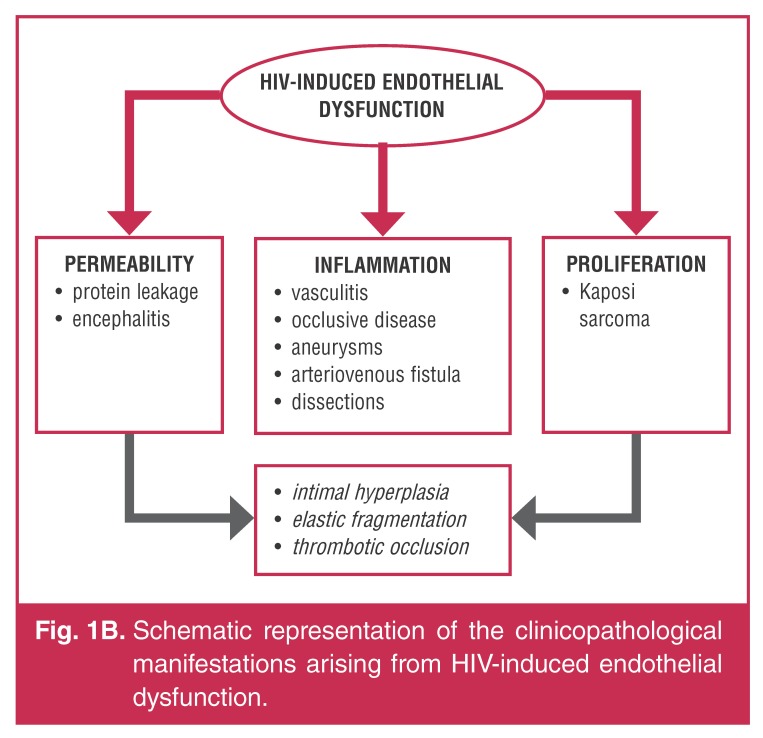
Fig. 1B.
Fig. 1B.
Schematic representation of the clinicopathological manifestations arising from HIV-induced endothelial dysfunction.
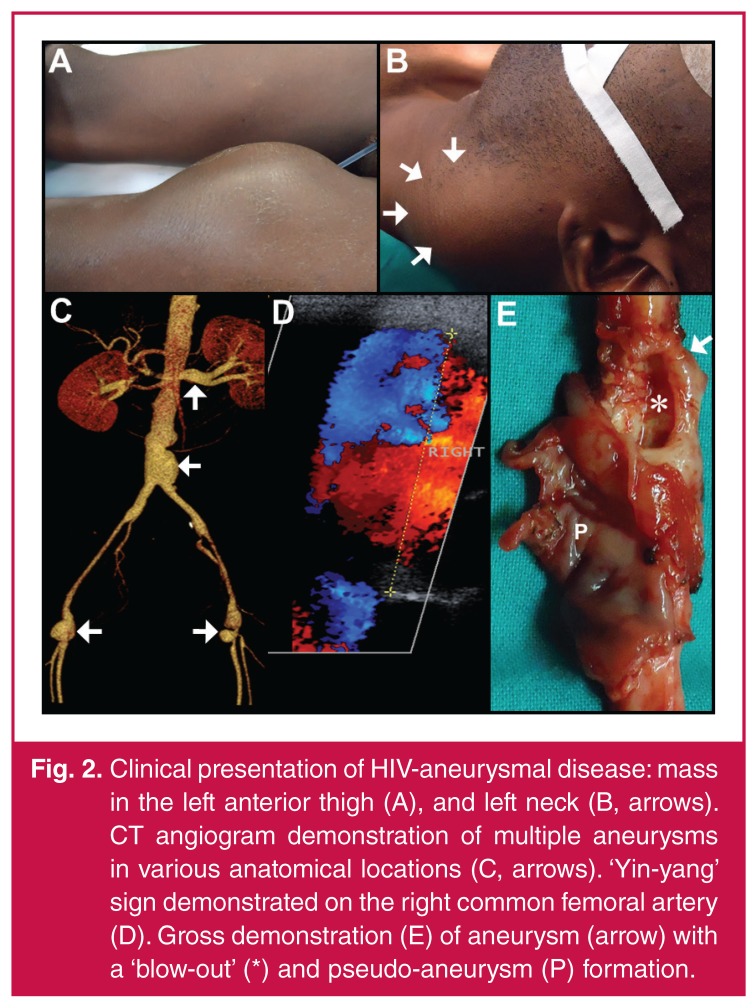
Fig. 2.
Fig. 2.
Clinical presentation of HIV-aneurysmal disease: mass in the left anterior thigh (A), and left neck (B, arrows). CT angiogram demonstration of multiple aneurysms in various anatomical locations (C, arrows). ‘Yin-yang’ sign demonstrated on the right common femoral artery (D). Gross demonstration (E) of aneurysm (arrow) with a ‘blow-out’ (*) and pseudo-aneurysm (P) formation.
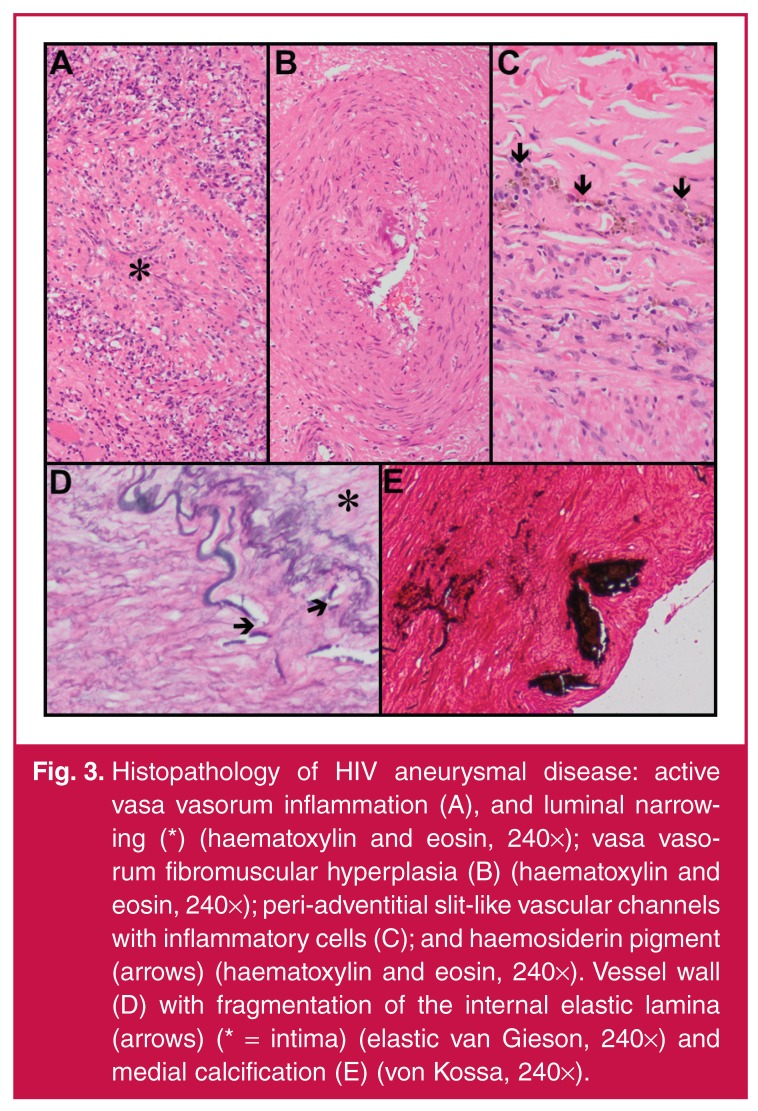
Fig. 3.
Fig. 3.
Histopathology of HIV aneurysmal disease: active vasa vasorum inflammation (A), and luminal narrowing (*) (haematoxylin and eosin, 240×); vasa vasorum fibromuscular hyperplasia (B) (haematoxylin and eosin, 240×); peri-adventitial slit-like vascular channels with inflammatory cells (C); and haemosiderin pigment (arrows) (haematoxylin and eosin, 240×). Vessel wall (D) with fragmentation of the internal elastic lamina (arrows) (* = intima) (elastic van Gieson, 240×) and medial calcification (E) (von Kossa, 240×).
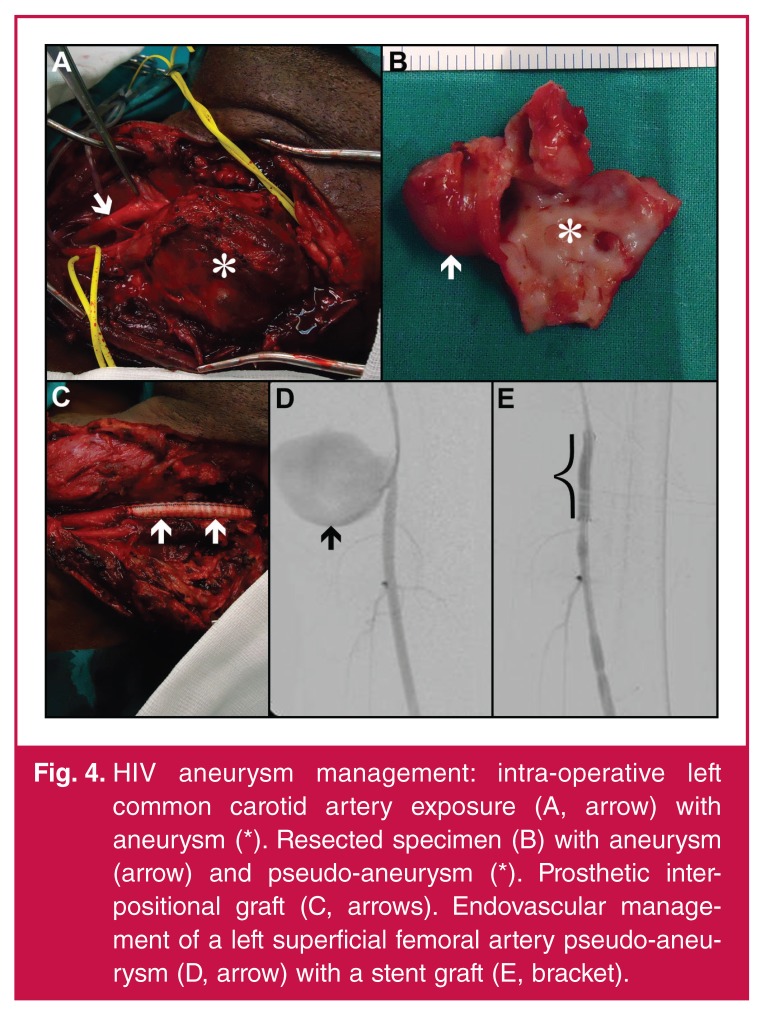
Fig. 4.
Fig. 4.
HIV aneurysm management: intra-operative left common carotid artery exposure (A, arrow) with aneurysm (*). Resected specimen (B) with aneurysm (arrow) and pseudo-aneurysm (*). Prosthetic interpositional graft (C, arrows). Endovascular management of a left superficial femoral artery pseudo-aneurysm (D, arrow) with a stent graft (E, bracket).
Fig. 5.
Fig. 5.
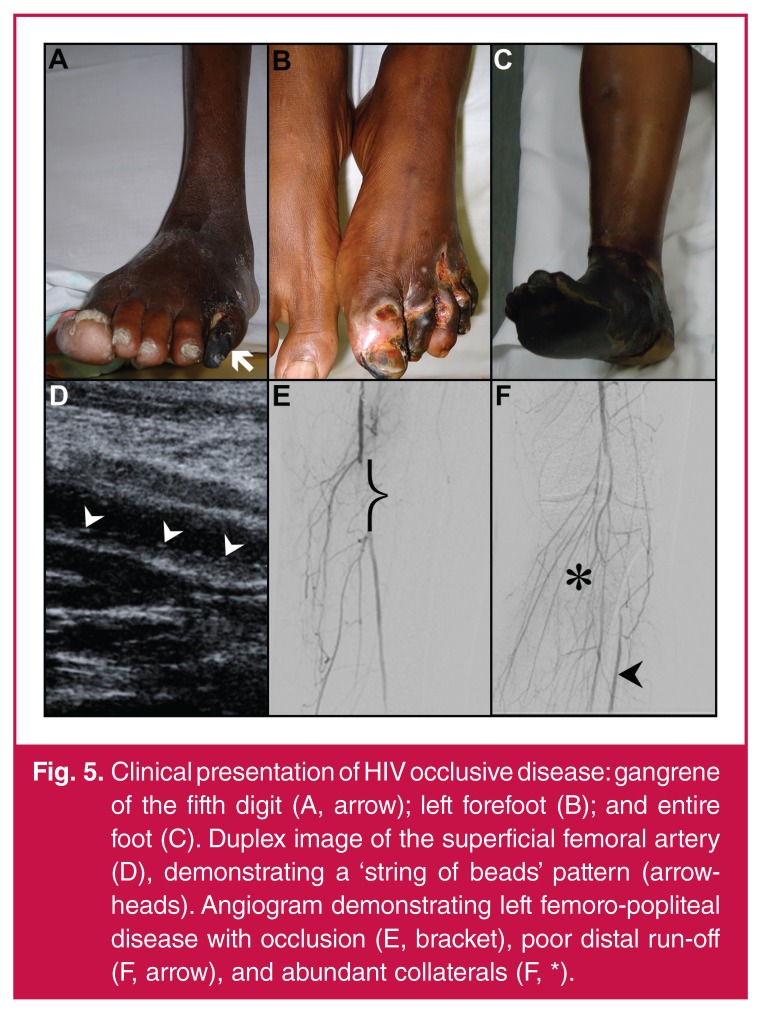
Clinical presentation of HIV occlusive disease: gangrene of the fifth digit (A, arrow); left forefoot (B); and entire foot (C). Duplex image of the superficial femoral artery (D), demonstrating a ‘string of beads’ pattern (arrowheads). Angiogram demonstrating left femoro-popliteal disease with occlusion (E, bracket), poor distal run-off (F, arrow), and abundant collaterals (F, *).
Fig. 6.
Fig. 6.
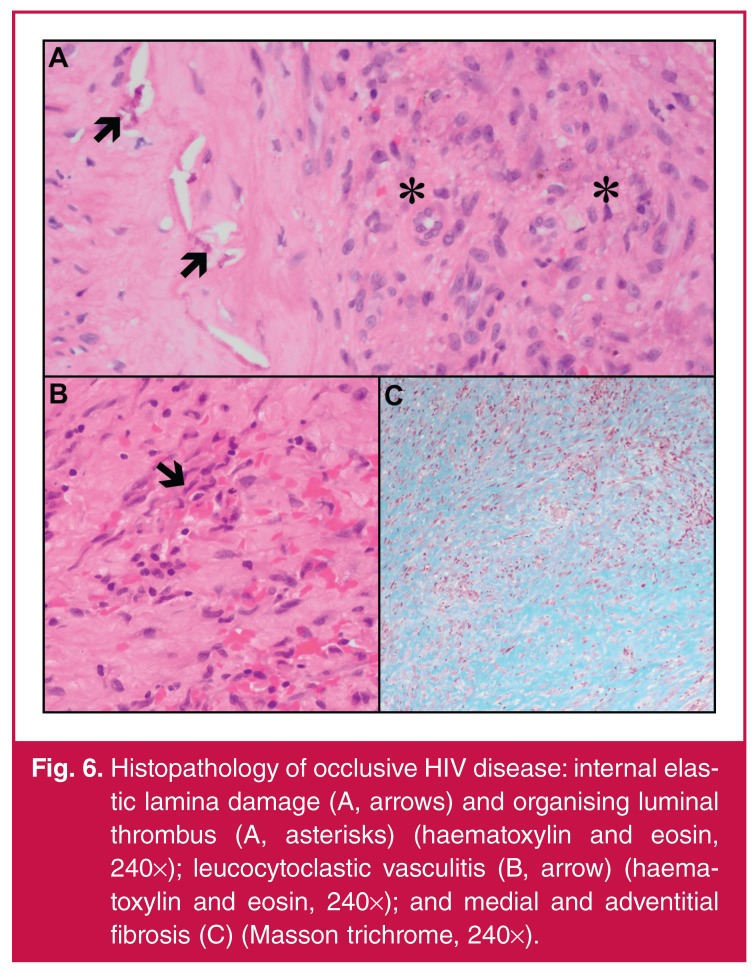
Histopathology of occlusive HIV disease: internal elastic lamina damage (A, arrows) and organising luminal thrombus (A, asterisks) (haematoxylin and eosin, 240×); leucocytoclastic vasculitis (B, arrow) (haematoxylin and eosin, 240×); and medial and adventitial fibrosis (C) (Masson trichrome, 240×).
Fig. 7.
Fig. 7.
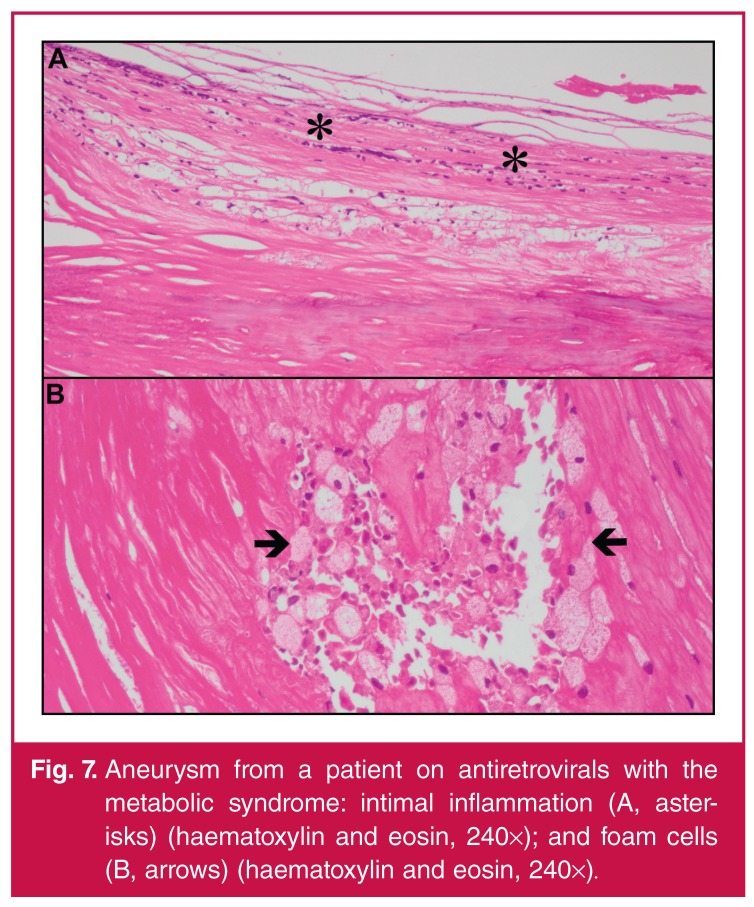
Aneurysm from a patient on antiretrovirals with the metabolic syndrome: intimal inflammation (A, asterisks) (haematoxylin and eosin, 240×); and foam cells (B, arrows) (haematoxylin and eosin, 240×).

References

    1. Bennet NJ, Gilroy SA, Bronze MS, Glatt A, Windle ML. HIV disease. emedicine.medscape.com.2011.http://emedicine.medscape.com/article/211316... Accessed December 23/2013.
    1. Busari O, Opadijo O, Adeyemi O. Cardiac diseases in HIV and AIDS. Internet J Cardiol. 2008;5(2):1–13.
    1. Mulaudzi TV. HIV-associated vasculopathy. CME. 2009;27(7):320–322.
    1. Robbs JV, Paruk N. Management of HIV vasculopathy – a South African experience. Eur J Vasc Endovasc Surg. 2010;39(Suppl 1):S25–S31. - PubMed
    1. Joshi VV, Pawel B, Connor E. et al. Arteriopathy in children with acquired immune deficiency syndrome. Pediatr Pathol. 1987;7(3):261–275. - PubMed

Publication types

MeSH terms

Supplementary concepts

LinkOut - more resources