


Review of PCBs in US schools: a brief history, an estimate of the number of impacted schools, and an approach for evaluating indoor air samples
- PMID: 25940477
- PMCID: PMC4635108
- DOI: 10.1007/s11356-015-4574-8
Review of PCBs in US schools: a brief history, an estimate of the number of impacted schools, and an approach for evaluating indoor air samples
Abstract
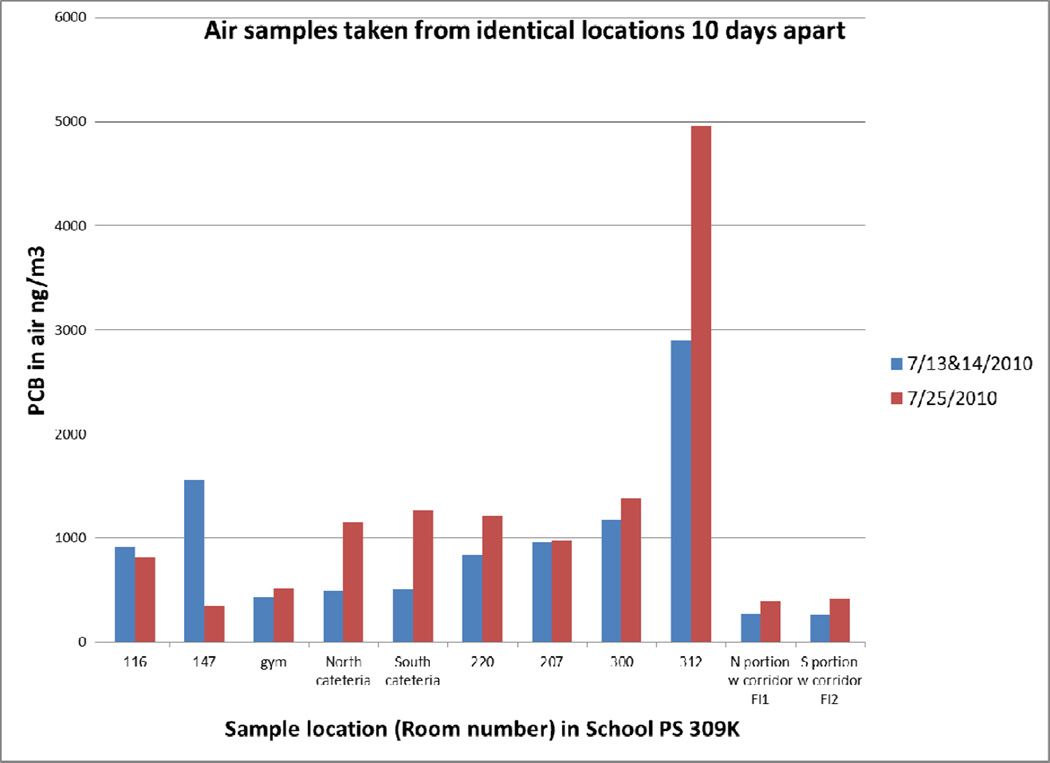
PCBs in building materials such as caulks and sealants are a largely unrecognized source of contamination in the building environment. Schools are of particular interest, as the period of extensive school construction (about 1950 to 1980) coincides with the time of greatest use of PCBs as plasticizers in building materials. In the USA, we estimate that the number of schools with PCB in building caulk ranges from 12,960 to 25,920 based upon the number of schools built in the time of PCB use and the proportion of buildings found to contain PCB caulk and sealants. Field and laboratory studies have demonstrated that PCBs from both interior and exterior caulking can be the source of elevated PCB air concentrations in these buildings, at levels that exceed health-based PCB exposure guidelines for building occupants. Air sampling in buildings containing PCB caulk has shown that the airborne PCB concentrations can be highly variable, even in repeat samples collected within a room. Sampling and data analysis strategies that recognize this variability can provide the basis for informed decision making about compliance with health-based exposure limits, even in cases where small numbers of samples are taken. The health risks posed by PCB exposures, particularly among children, mandate precautionary approaches to managing PCBs in building materials.
Keywords: Air PCB levels; Bayesian statistics; Caulk; Exposure; Exposure guidelines; PCB; Sealant.
Figures
References
-
- AIHA. A Strategy for Assessing and Managing Occupational Exposures. 2006.
-
- Balfanz E, Fuchs J, Kieper H. Sampling and Analysis of Polychlorinated Biphenyls (PCB) in Indoor Air due to Permanently Elastic Sealants. Chemosphere. 1993;26(5):871–880.
-
- Benthe Chr, Heinzow B, Jessen H, Mohr S, Rotard W. Polychlorinated Biphenyls. Indoor air contamination due to thiokol-rubber sealants in an office building. Chemosphere. 1992:1481–1486. 1992.
-
- Burkhardt U, Bork M, Balfanz E, Leidel J. Indoor Air Pollution by Polychlorinated Biphenyl Compounds in Permanently Elastic Sealants. Offentl Gesundheitweis. 1990;52(10):567–574. - PubMed
-
- Coghlan KM, Chang MP, Jessup DS, Fragala MA, McCrillis K, Lockhart TM. Characterization of Polychlorinated Biphenyls in Building Materials and Exposures in the Indoor Environment. Proceedings: Indoor Air 2002. The 9th International Conference on Indoor Air Quality and Climate; June 30–July 5, 2002; Monterey, CA, USA. 2002.
Publication types
MeSH terms
Substances
Grants and funding
LinkOut - more resources
Full Text Sources
Other Literature Sources
Medical
