


The biology and treatment of oligometastatic cancer
- PMID: 25940699
- PMCID: PMC4496163
- DOI: 10.18632/oncotarget.3455
The biology and treatment of oligometastatic cancer
Abstract
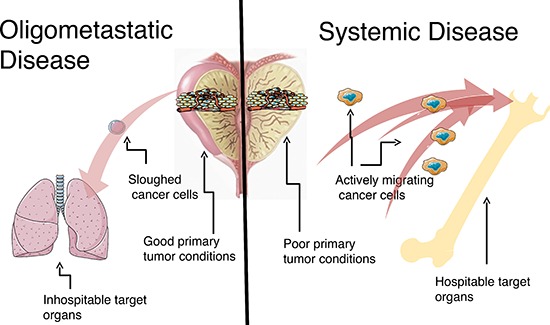
Clinical reports of limited and treatable cancer metastases, a disease state that exists in a transitional zone between localized and widespread systemic disease, were noted on occasion historically and are now termed oligometastasis. The ramification of a diagnosis of oligometastasis is a change in treatment paradigm, i.e. if the primary cancer site (if still present) is controlled, or resected, and the metastatic sites are ablated (surgically or with radiation), a prolonged disease-free interval, and perhaps even cure, may be achieved. Contemporary molecular diagnostics are edging closer to being able to determine where an individual metastatic deposit is within the continuum of malignancy. Preclinical models are on the outset of laying the groundwork for understanding the oligometastatic state. Meanwhile, in the clinic, patients are increasingly being designated as having oligometastatic disease and being treated owing to improved diagnostic imaging, novel treatment options with the potential to provide either direct or bridging therapy, and progressively broad definitions of oligometastasis.
Keywords: diaspora; metastasis; spectrum theory; therapy; tumor.
Figures
References
-
- Weigelt B, Peterse JL, van't Veer LJ. Breast cancer metastasis: markers and models. Nature reviews Cancer. 2005;5:591–602. - PubMed
-
- Paget S. Distribution of secondary growths in cancer of the breast. Lancet. 1889;1:571–573. - PubMed
-
- Tait CR, Waterworth A, Loncaster J, Horgan K, Dodwell D. The oligometastatic state in breast cancer: hypothesis or reality. Breast. 2005;14:87–93. - PubMed
-
- Ewing J. MetastasisNeoplastics. Philadelphia: Saunders; 1928. pp. 77–89.
Publication types
MeSH terms
Substances
Grants and funding
LinkOut - more resources
Full Text Sources
Other Literature Sources
