


Alteration of the rat cecal microbiome during colonization with the helminth Hymenolepis diminuta
- PMID: 25942385
- PMCID: PMC4615828
- DOI: 10.1080/19490976.2015.1047128
Alteration of the rat cecal microbiome during colonization with the helminth Hymenolepis diminuta
Abstract
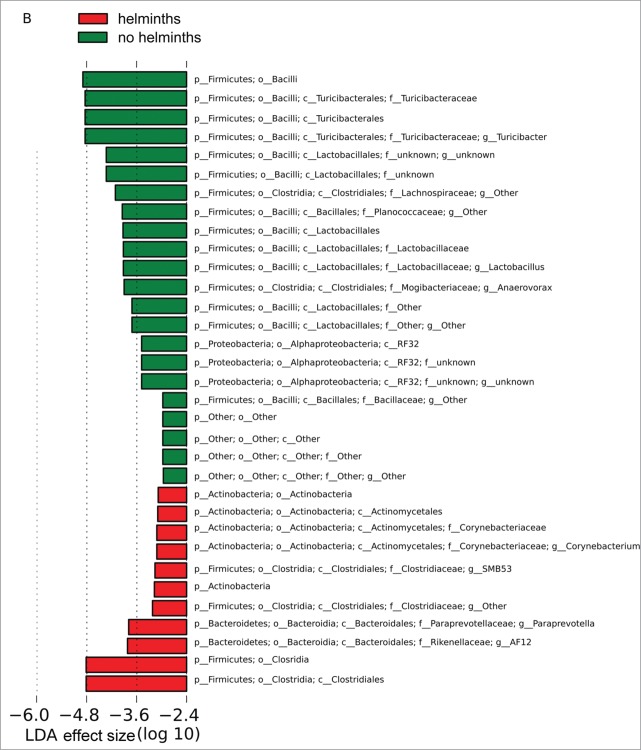
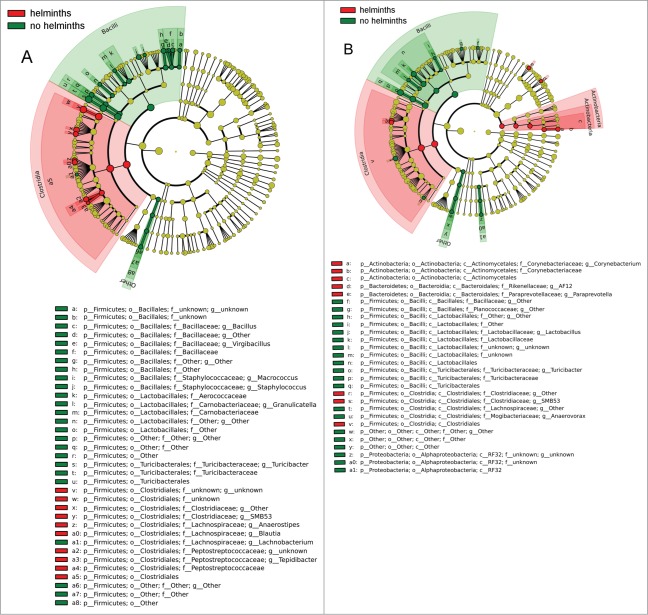
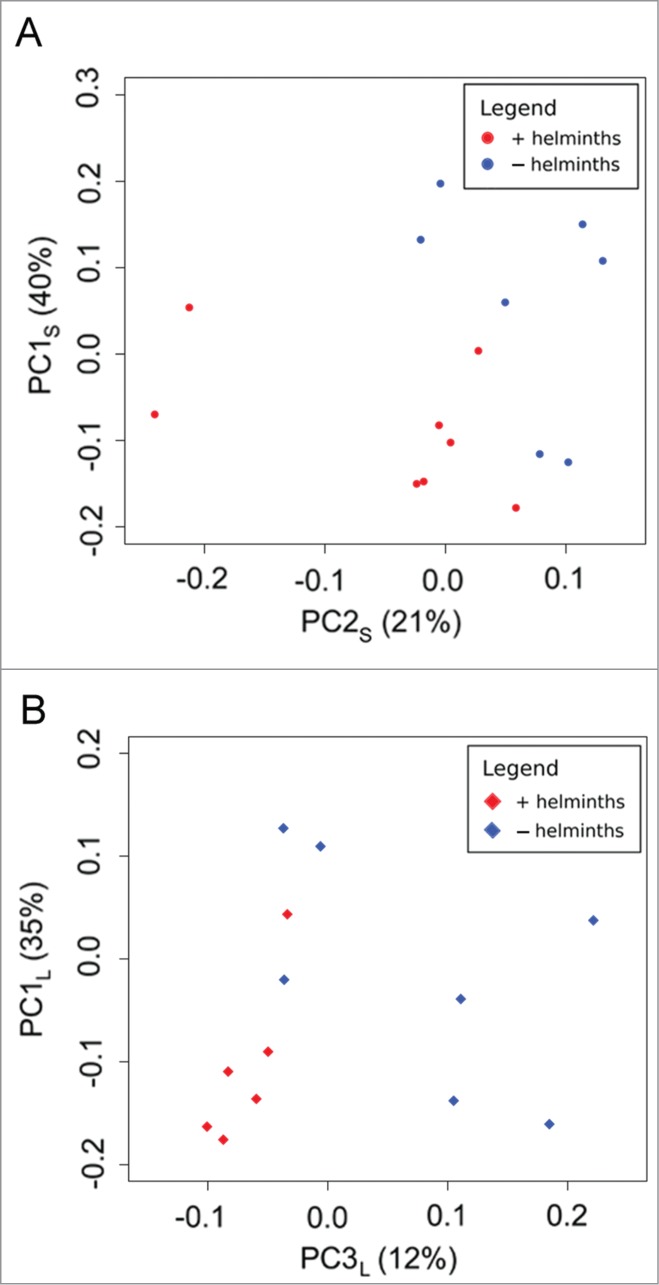
The microbiome is now widely recognized as being important in health and disease, and makes up a substantial subset of the biome within the ecosystem of the vertebrate body. At the same time, multicellular, eukaryotic organisms such as helminths are being recognized as an important component of the biome that shaped the evolution of our genes. The absence of these macroscopic organisms during the early development and life of humans in Western culture probably leads to a wide range of human immunological diseases. However, the interaction between the microbiome and macroscopic components of the biome remains poorly characterized. In this study, the microbiome of the cecum in rats colonized for 2 generations with the small intestinal helminth Hymenolepis diminuta was evaluated. The introduction of this benign helminth, which is of considerable therapeutic interest, led to several changes in the cecal microbiome. Most of the changes were within the Firmicutes phylum, involved about 20% of the total bacteria, and generally entailed a shift from Bacilli to Clostridia species in the presence of the helminth. The results point toward ecological relationships between various components of the biome, with the observed shifts in the microbiome suggesting potential mechanisms by which this helminth might exert therapeutic effects.
Keywords: ELB, enzymatic lysis buffer; GIT, gastrointestinal tract; Hymenolepis; LEfSe, Linear discriminant analysis Effect Size; OTU, operational taxonomic unit; PCoA, principle coordinate analysis; QIIME, Quantitative Insights Into Microbial Ecology; clostridia; helminths; microbiome; rat.
Figures
References
-
- Parker W, Ollerton J.. Evolutionary biology and anthropology suggest biome reconstitution as a necessary approach toward dealing with immune disorders. Evol Med Public Health 2013; 2013:89-103; PMID:24481190; http://dx.doi.org/ 10.1093/emph/eot008 - DOI - PMC - PubMed
-
- Fumagalli M, Pozzoli U, Cagliani R, Comi GP, Riva S, Clerici M, Bresolin N, Sironi M.. Parasites represent a major selective force for interleukin genes and shape the genetic predisposition to autoimmune conditions. J Exp Med 2009; 206:1395-408; PMID:19468064; http://dx.doi.org/ 10.1084/jem.20082779 - DOI - PMC - PubMed
-
- Crompton DWT. How much human helminthiasis is there in the world? J Parasitol 1999; 85:397-403; PMID:10386428; http://dx.doi.org/ 10.2307/3285768 - DOI - PubMed
-
- Bowlby J. Attachment and Loss. Vol. 1. Attachment. New York: Basic Books, 1969.
-
- Jackson JA, Friberg IM, Little S, Bradley JE.. Review series on helminths, immune modulation and the hygiene hypothesis: Immunity against helminths and immunological phenomena in modern human populations: coevolutionary legacies? Immunology 2009; 126:18-27; PMID:19120495; http://dx.doi.org/ 10.1111/j.1365-2567.2008.03010.x - DOI - PMC - PubMed
Publication types
MeSH terms
LinkOut - more resources
Full Text Sources
Other Literature Sources
